



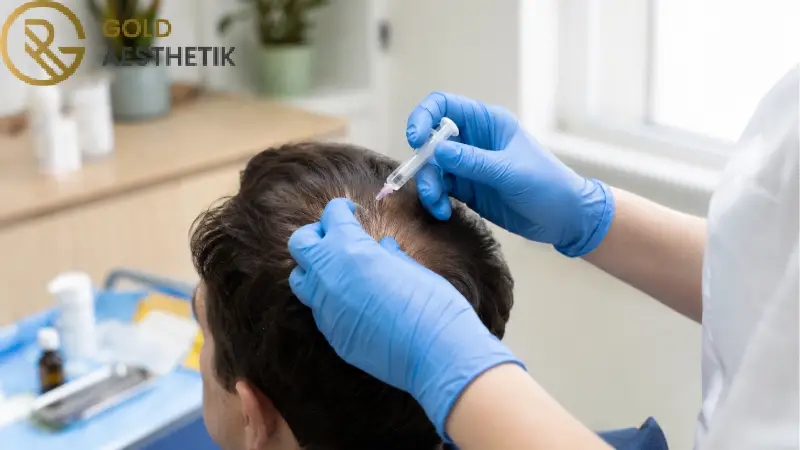
Hair loss does not always have the same cause, and therefore the results of mesotherapy are not the same for all individuals. One person may notice a reduction in hair loss and an improvement in hair quality after completing the sessions, while another person may see only limited changes. The cause of hair loss, the activity of the follicles, the condition of the scalp, the active ingredients used, and complete adherence to the treatment plan all play a role in the final outcome.
How Does Mesotherapy Work for Hair Loss?
In mesotherapy for hair loss, specific active ingredients are injected into the desired areas of the scalp using very fine needles. The main goal of this method is to deliver the selected substances close to the hair follicles and create optimal conditions for strengthening weak hair. However, mesotherapy should not be regarded as a definitive treatment for all types of hair loss. Before beginning treatment, the primary cause of hair loss, the condition of the follicles, and the person’s overall health status must be assessed.
What Substances Are Injected into the Scalp During Hair Mesotherapy?
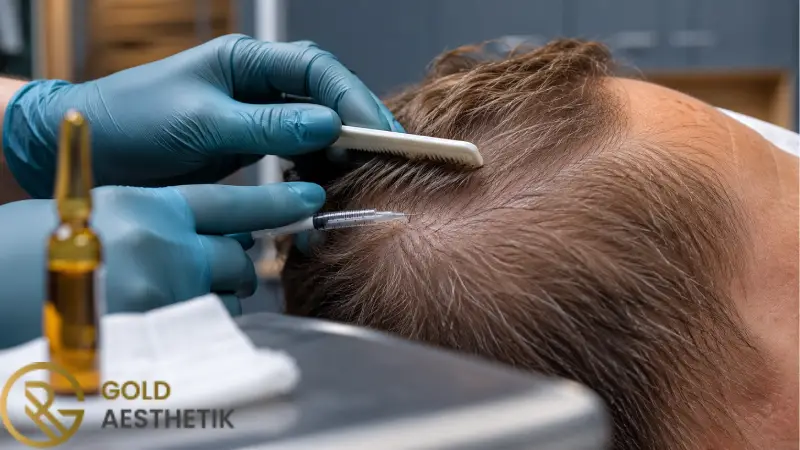
The active ingredients used in hair mesotherapy may include vitamins, amino acids, minerals, peptides, and certain pharmaceutical agents. The selection of these substances should be made taking into account the type of hair loss, the condition of the scalp, medical history, and medications being taken. Therefore, using an identical cocktail for all individuals does not necessarily lead to an optimal result.
| Active Ingredient Group | Common Examples | Possible Role |
|---|---|---|
| Vitamins | B vitamins and panthenol | Supporting hair nutrient supply |
| Amino Acids | Cysteine, arginine, and glycine | Supporting hair structure |
| Minerals | Zinc, copper, and magnesium | Supporting normal follicle function |
| Peptides | Strengthening peptides | Helping to improve conditions for weak follicles |
| Pharmaceutical Agents | According to medical diagnosis | Targeted use under specific conditions |
The presence of a substance in a mesotherapy cocktail does not mean it is suitable for everyone. For example, if hair loss is related to iron deficiency, thyroid dysfunction, or hormonal changes, injecting strengthening substances alone will not address the primary cause. In such cases, treating the underlying cause is more important.
How Does Mesotherapy Help Strengthen Active Follicles?
The hair follicle is a living structure in the scalp from which hair grows. If the follicle is still active but the hair produced has become thin, weak, or brittle, the likelihood of responding to strengthening treatments is higher. Superficial mesotherapy injections can help improve the conditions around the follicle by delivering selected active ingredients and providing local stimulation to the scalp.
The expected result is usually not a sudden change. The hair growth cycle is time-consuming, and evaluation of the outcome should take place within an appropriate timeframe. In the initial phases, the person may first notice a reduction in the intensity of hair loss. Changes in thickness, strength, or appearance of the hair are typically assessable only later.
| Type of Change | Actual Meaning | Evaluation Timepoint |
|---|---|---|
| Reduction in Hair Loss | Decrease in the number of hairs shed | Usually earlier than visual change |
| Hair Strengthening | Increase in strength or thickness of existing hair | After part of the growth cycle |
| Increase in Visual Density | Fuller appearance of thinning hair | Dependent on follicle condition |
| Regrowth | Hair production from an active follicle | Not to be expected in all individuals |
What Is the Difference Between Hair Loss Reduction, Hair Thickening, and Regrowth?
These three outcomes should not be confused. A reduction in hair loss means that the number of hairs lost daily is decreasing. Hair thickening means an improvement in the diameter and appearance of hair that is still growing. Regrowth occurs when an active follicle re-enters the growth phase and produces hair.
Sometimes a person feels that their hair has become fuller after treatment, but this change may be due to the thickening of thin hair rather than the formation of new follicles. Explaining this difference before treatment prevents unrealistic expectations. Standardized scalp photography under the same lighting and angle conditions can also make outcome evaluation more precise.
Can Mesotherapy Restore a Dead Follicle?
Mesotherapy cannot restore a completely dead follicle. If an area has been completely bald for a long time or the follicles have been permanently damaged due to scarring, burns, or certain scalp conditions, the likelihood of a response is limited. In these cases, the physician may consider other methods.
For further information, read the article Mesotherapy for the Face.
| Condition of Follicles and Hair | Expected Outcome |
|---|---|
| Active follicles and thin hair | Higher likelihood of improved hair quality and thickness |
| Mild to moderate hair loss | Possibility of reducing hair loss after clarifying the cause |
| Early-stage hereditary hair loss | Can be used as a supportive treatment |
| Untreated underlying condition | The result may be limited or temporary |
| Completely bald area without active follicles | Very low likelihood of regrowth |
| Hair loss with scarring | Cause and scalp condition must be examined first |
At Gold Aesthetik Hamburg, the choice of treatment should be made after individual assessment. The goal of the consultation is to clarify the possible cause of hair loss, the condition of the scalp, and the person’s expectations, and then decide whether mesotherapy is suitable or whether other methods are required. Such a realistic assessment helps tailor the treatment to the patient’s actual needs and not merely to the name of an aesthetic procedure.
Who Benefits Most from Mesotherapy for Hair Loss?
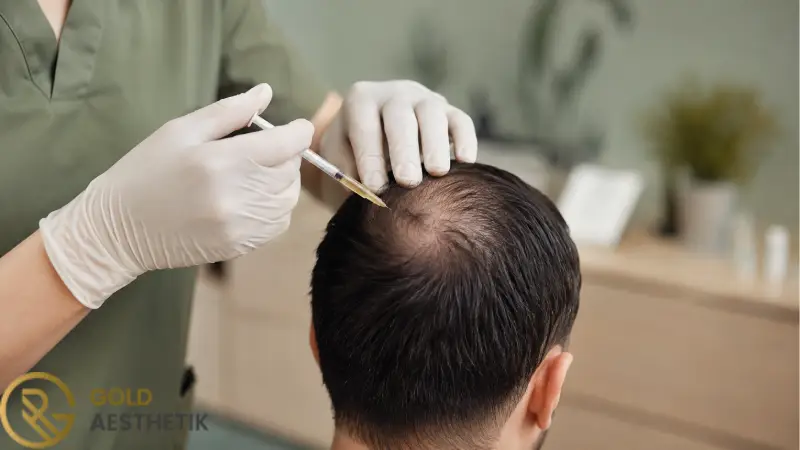
The outcome of mesotherapy for hair loss depends more on the cause of hair loss and the condition of the hair follicles than on the person’s age or gender. Individuals who still have active follicles and begin treatment in the early stages of thinning are generally better candidates. If the primary cause of hair loss has not been identified or the follicles are completely dead, only limited effects can be expected from mesotherapy.
Individuals with Mild to Moderate Hair Loss
Individuals who have recently noticed an increase in hair loss, a decrease in hair volume, or a widening of the part may have better conditions for mesotherapy than those who have suffered from widespread baldness for years. In the early stages, more follicles are alive, and there is still the possibility of strengthening thin and weak hair.
However, mild hair loss alone is not sufficient. The physician must assess whether the hair loss is temporary or persistent and whether a specific factor such as severe stress, weight loss, hormonal changes, iron deficiency, taking certain medications, or a thyroid disorder has played a role. If the underlying cause remains active, the outcome of mesotherapy may remain limited or temporary.
Do not miss the complete guide to Mesotherapy for the Eye Area.
| Type of Hair Loss | Relative Likelihood of Response | Important Note |
|---|---|---|
| Early-stage hair thinning | Higher | Follicles are usually still active |
| Diffuse hair loss | Dependent on the cause | The underlying cause must be identified and controlled |
| Telogen Effluvium | Variable | May improve after eliminating the trigger |
| Early hereditary hair loss | Limited to moderate | Usually requires a combined treatment plan |
| Long-standing and pronounced baldness | Low | Number of stimulatable follicles is limited |
| Hair loss with scarring | Low | Scalp condition must be examined first |
Individuals with Thin Hair but Active Follicles
One of the most important signs of suitable conditions is the presence of thin and weak hair in the thinning area. This hair indicates that the follicle is still active, even if it may be producing weaker and thinner hair than before. In such a situation, the goal of mesotherapy may be to support the existing follicles and improve hair quality.
This differs from an area that has become completely smooth and hairless. Mesotherapy does not create new follicles and cannot restore a completely dead follicle. Therefore, examining the scalp before beginning sessions is an important part of the treatment decision.
Mesotherapy for Stress-Related Hair Loss and Telogen Effluvium
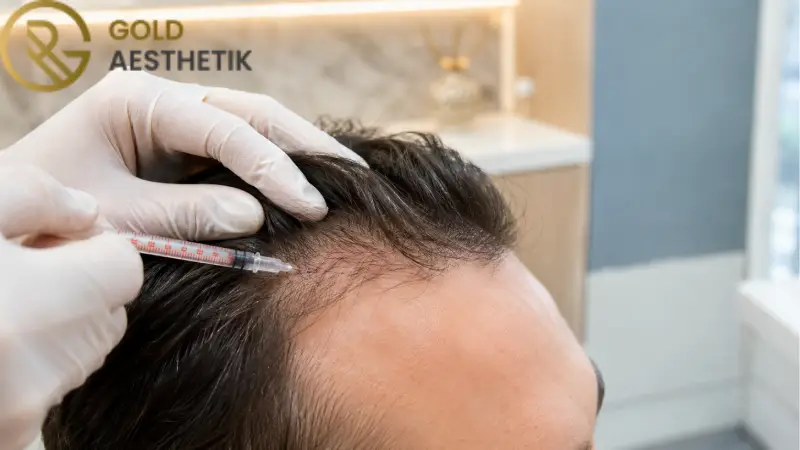
Telogen effluvium is a type of diffuse hair loss that can occur after severe stress, illness, surgery, fever, rapid weight loss, childbirth, or certain nutritional deficiencies. In this condition, many hairs simultaneously enter the resting phase, and hair loss usually increases several weeks or months later.
Mesotherapy may be considered as a supportive treatment in some individuals, but the main treatment should focus on controlling the trigger. For example, if iron deficiency or thyroid dysfunction is present, mesotherapy is not a substitute for medical treatment. In some cases, telogen effluvium gradually improves after eliminating the trigger and does not require extensive treatments.
We also recommend reading the article How Many PRP Sessions Are Required for Hair and Face?
| Signs of a More Suitable Candidate | Signs of an Unsuitable Candidate or One Requiring Further Examination |
|---|---|
| Presence of thin hair in the thinning area | Completely bald area without hair |
| Early-stage onset of hair loss | Widespread and long-standing baldness |
| Known possible cause of hair loss | Sudden hair loss of unknown cause |
| Relatively healthy scalp | Active inflammation, infection, or wound |
| Realistic expectation of treatment | Expectation of new follicle formation |
| Willingness to complete all sessions | Frequent or irregular discontinuation of treatment |
Mesotherapy for Hereditary Hair Loss in Women and Men
In hereditary hair loss, the follicles gradually shrink and produce thinner hair. This process can be observed in men with receding hairline or thinning at the crown and in women with widening of the part. If treatment begins in the early stages and the follicles are still active, mesotherapy may be considered as part of a treatment plan.
However, mesotherapy is generally not considered the primary treatment for hereditary hair loss. The physician may also suggest approved medical treatments or complementary methods depending on individual circumstances. Gender alone is not decisive for the outcome; the stage of hair loss, family history, hormonal status, and the person’s response to treatment are more important.
Influence of Age, Treatment Initiation, and Cause of Hair Loss on Outcome
A specific age cannot be named as the best age for mesotherapy for everyone. A young person with severe hair loss and an uncontrolled underlying condition will not necessarily achieve better results than an older person with active follicles. What is important is initiating treatment before widespread baldness occurs and correctly diagnosing the cause of hair loss.
Learn more by reading PRP for Facial Rejuvenation.
| Factors That Increase the Likelihood of an Outcome | Factors That Decrease the Likelihood of an Outcome |
|---|---|
| Early-stage treatment initiation | Long delay and widespread baldness |
| Presence of active follicles | Death of follicles |
| Correct diagnosis of hair loss cause | Treatment without clarifying the cause |
| Control of deficiencies and underlying conditions | Persistence of the primary cause of hair loss |
| Selection of individualized active ingredients | Use of an identical cocktail for everyone |
| Regular completion of the treatment plan | Irregular or incomplete sessions |
| Realistic expectation | Expectation of complete regrowth in bald area |
Signs of a Suitable Candidate for Hair Mesotherapy
A suitable candidate is typically a person whose hair has become thinner or sparser but still has active follicles. The cause of their hair loss has been investigated, an underlying disease or deficiency is under control, and they understand that the result will become visible gradually. Such a person does not view mesotherapy as a definitive single-session treatment but as part of a patient-centered treatment plan.
At Gold Aesthetik Hamburg, the decision regarding the suitability of mesotherapy is made after examining the hair and scalp condition. This evaluation helps identify individuals who have a better chance of responding and avoids unrealistic expectations in those who require a different method.
Who Should Not Have High Expectations for Hair Mesotherapy?
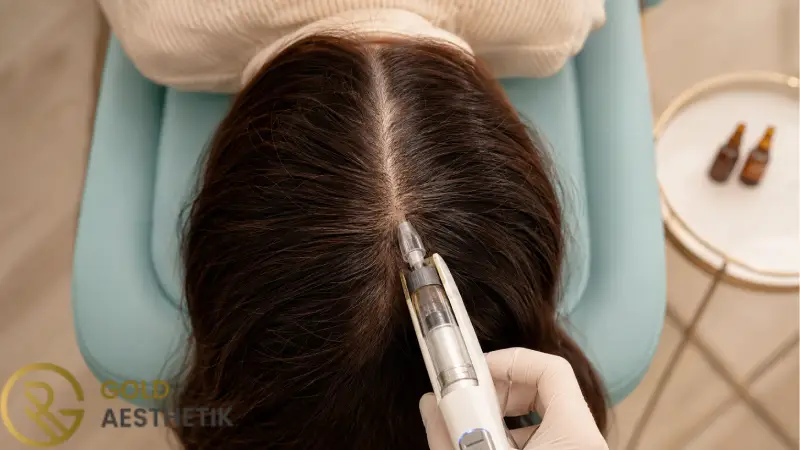
Mesotherapy may be considered as a supportive method for some individuals to reduce hair loss or strengthen thin hair, but it is not suitable for all types of hair loss. The outcome of this method depends on the presence of active follicles, the cause of hair loss, the condition of the scalp, and the person’s overall health. If the primary factor of hair loss remains active or the follicles are dead, even completing multiple sessions will not necessarily lead to a significant outcome.
Understanding the limitations of mesotherapy is as important as understanding its benefits. Before beginning treatment, the person should know that the actual goal is to strengthen existing follicles, not to create new follicles or definitively treat every type of baldness.
Individuals with Completely Bald Areas and Dead Follicles
If thin, short, or light hair is still visible in an area, some follicles may be active. However, if the scalp has been completely smooth and hairless for a long time, it is likely that most of the follicles have lost the ability to produce hair. Mesotherapy cannot create new follicles under such conditions.
This limitation is even more important in hair loss with scarring. Certain inflammatory conditions, burns, deep wounds, or skin damage can permanently destroy the follicle structure. In these cases, the condition of the scalp should first be examined by a physician, and self-initiated mesotherapy may be inappropriate.
For further information, read the article How Long Does a Thread Lift Last?
| Person’s Condition | Possible Impact on Outcome |
|---|---|
| Long-standing and widespread baldness | Likelihood of response is very limited |
| Absence of thin hair in bald area | Possibly insufficient active follicles present |
| Hair loss with scarring | Permanent damage to follicles is likely |
| Persistent scalp inflammation | May hinder treatment or appropriate response |
| Advanced hereditary hair loss | Mesotherapy is usually not sufficient alone |
| Expectation of complete regrowth in bald area | Not compatible with the actual effect of mesotherapy |
Hair Loss Due to Untreated Disease or Deficiency
Sometimes hair loss is a symptom of another problem. Iron deficiency, thyroid disorders, hormonal changes, severe weight loss, inadequate nutrition, chronic stress, or taking certain medications can disrupt the hair growth cycle. If these factors are not identified and controlled, the effect of topical or injectable treatments may be short-lived or minimal.
For example, if a person has iron deficiency, injecting strengthening substances into the scalp is not a substitute for correcting the iron deficiency. Also, in hair loss due to thyroid disease, controlling thyroid status should take priority. Mesotherapy may be considered after medical evaluation and in addition to the primary treatment, but it should not obscure the underlying cause.
Contraindications for Mesotherapy and Precautions
Before treatment, medical history, medications taken, allergies, and the condition of the scalp must be reviewed. The presence of infection, open wounds, or active inflammation at the injection site may prevent treatment. Conditions such as pregnancy, breastfeeding, coagulation disorders, or taking blood-thinning medications also require careful evaluation.
Read supplementary information in Thread Lift Cost in Hamburg.
| Condition | Appropriate Action Before Mesotherapy |
|---|---|
| Pregnancy or breastfeeding | Treatment should be postponed until medical approval |
| Active infection or wound of the scalp | The skin problem must be treated first |
| Allergy to injectable substances | The active ingredients must be carefully reviewed |
| Blood coagulation disorder | Medical approval is essential |
| Taking blood-thinning medications | Medications must not be discontinued without authorization; medical advice is required |
| Autoimmune or chronic disease | Individual circumstances must be assessed separately |
| Sudden and severe hair loss | The cause of hair loss must be clarified first |
These cases do not always mean an absolute prohibition. Some merely require caution, adjustment of the plan, or medical approval. The final decision should be based on the person’s actual circumstances, not on a general list on the internet.
Why Is Diagnosing the Cause of Hair Loss Essential Before Beginning Treatment?
Hereditary hair loss, diffuse hair loss, alopecia areata, telogen effluvium, and hair loss due to scalp inflammation do not have a uniform appearance or course. Applying a fixed method to all these cases is not sensible. The physician can narrow down the possible causes by examining the pattern of hair loss, onset, family history, scalp condition, and medications taken.
In some cases, blood tests to check iron, thyroid, or other factors may be necessary. This evaluation prevents wasting time and money and increases the likelihood of choosing an appropriate treatment. It also helps avoid overlooking symptoms that require more serious medical investigation.
When Are Medical Treatment, PRP, or Hair Transplantation the Better Choice?
The choice between mesotherapy, PRP, medical treatment, or hair transplantation depends on the cause and severity of hair loss. No method is the best choice for all individuals, and sometimes a combination of treatments is suggested.
For further information, read the article Thread Lift or HIFU.
| Method | Possible Application | Important Limitation |
|---|---|---|
| Mesotherapy | Strengthening thin hair and active follicles | Not suitable for complete baldness |
| PRP for Hair | Using one’s own platelets to support follicles | The outcome depends on follicle condition and individual response |
| Medical Treatment | Controlling certain types of hair loss, especially hereditary hair loss | Requires diagnosis, regular intake, and monitoring of side effects |
| Hair Transplantation | Covering certain areas with stable baldness | Requires suitable hair density and specialized evaluation |
If hereditary hair loss is active, medical treatment may play a more important role in controlling the course. If the follicles are dead but a suitable donor area is present, hair transplantation may be considered. PRP for the scalp or mesotherapy for hair loss may also be chosen as a supportive treatment for some individuals.
At Gold Aesthetik Hamburg, the goal of the consultation is not merely to recommend a specific method. First, the possible cause of hair loss, the condition of the follicles, and the person’s expectations are reviewed to clarify whether mesotherapy is the right choice or whether another method should take priority. This approach avoids unrealistic promises and keeps the treatment course patient-centered.
Informed Decision for Health and Beauty at Gold Aesthetik Hamburg
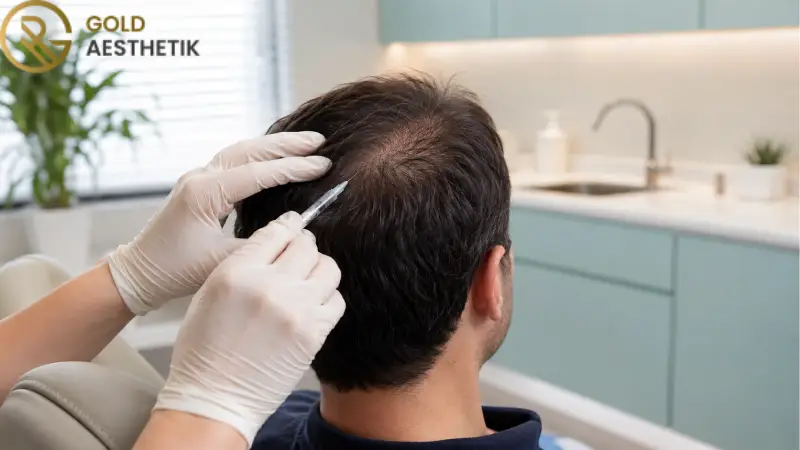
At Gold Aesthetik, beauty begins with a precise understanding of each person’s individual circumstances. Dr. Mohammadreza Hagh-Dadah, specialist in vascular surgery and aesthetic medicine, and his professional team strive to ensure that every patient receives clear and realistic information about suitable options, limitations, and expected outcomes before beginning treatment. Our goal is not to offer a one-size-fits-all treatment but to choose a method that corresponds to your needs, your physical condition, and your actual wishes.
If you are suffering from hair loss or hair thinning, the possible cause of hair loss, the condition of the scalp, and the activity of the follicles are first examined. After this evaluation, it is clarified whether mesotherapy, PRP, a combined treatment, or in suitable cases a hair transplantation could be an option for you. This patient-centered approach helps tailor the treatment plan to the actual condition of your hair without unrealistic promises.
The services of Gold Aesthetik are not limited to hair treatments alone. Our practice offers a range of medical-aesthetic services, including Botox, fillers, microneedling, thread lift, eyelid tightening, 3D HIFU, and lipolysis. In all these services, we emphasize preserving the natural facial and body shape, adhering to medical principles, and carefully accompanying the patient through all treatment phases.
Gold Aesthetik practice is located at Barmbeker Str. 40, 22303 Hamburg-Winterhude. If you live in Hamburg or other German cities and have questions about the suitability of mesotherapy or other medical-aesthetic services, we cordially invite you to a personal consultation. The documented experiences of our patients at Gold Aesthetik can also give you a clearer picture of the consultation approach, the quality of team support, and the practice atmosphere.

