



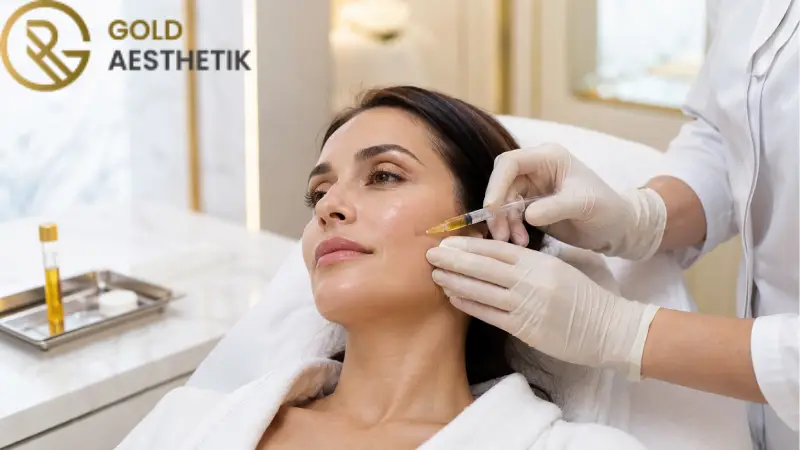
PRP facial treatment is a minimally invasive method for skin rejuvenation that uses platelet-rich plasma from the patient’s own blood. The goal of this treatment is to stimulate the skin’s natural repair and regeneration processes. The result typically manifests gradually in the quality, freshness, and texture of the skin. Unlike fillers, PRP is not designed to create specific volume or directly alter the shape of facial features.
The extent of PRP results is not the same for all individuals. Age, initial skin condition, cause of the problem, plasma preparation method, number of sessions, and individual conditions can influence the response to treatment. For this reason, the suitability of PRP facial treatment and the treatment plan must be determined by the doctor after a skin examination and medical history.
What is PRP facial treatment and how does it help with skin rejuvenation?
For facial rejuvenation with PRP, a small amount of the patient’s own blood is first drawn, and platelet-rich plasma with a higher platelet concentration is prepared. After injecting this plasma into the target areas, the compounds contained in the platelets play a role in the tissue repair process and can stimulate the activity of cells involved in skin regeneration.
The main goal of the treatment is not a sudden change in appearance. PRP is rather intended for individuals seeking a gradual improvement in freshness, tissue quality, fine lines, or certain superficial irregularities.
PRP should not be advertised as a treatment to eliminate all signs of skin aging. Significant facial volume loss, dynamic wrinkles, and severe sagging each have different mechanisms and may require other treatments.
How is platelet-rich plasma produced?
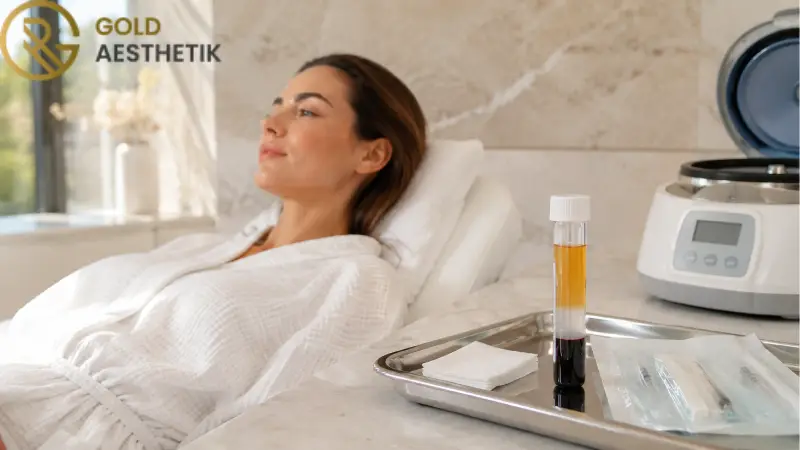
To produce PRP, a specific amount of blood is first drawn, similar to a normal laboratory blood draw. The sample is placed in special tubes and then separated into its components using a centrifuge. The required plasma component is prepared for treatment.
The properties of the final product can depend on the kit used, the centrifugation method, and the type of sample preparation. Therefore, the PRP production method is not necessarily the same in all centers. The use of appropriate equipment and adherence to sterile principles are an important part of the treatment process.
After preparation, the skin is cleansed and disinfected, and if necessary, local anesthesia is applied. Subsequently, the PRP is introduced into the desired areas through controlled injections.
Since the injected substance is derived from the patient’s own blood, the likelihood of an allergy to a foreign substance is lower; nevertheless, the treatment may be accompanied by temporary redness, swelling, sensitivity, or bruising.
What role do platelets and growth factors play in skin regeneration?
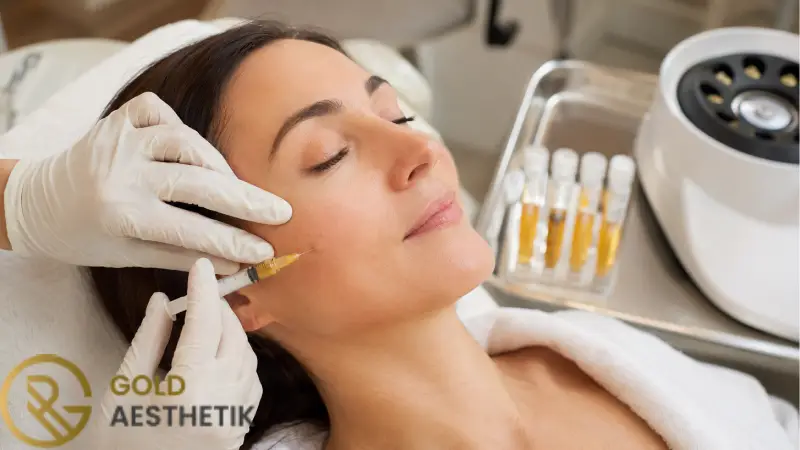
Platelets are not only important for their known role in blood clotting but also involved in the tissue repair process. The compounds released from platelets can transmit signals to the cells involved in tissue regeneration.
Fibroblasts are cells involved in the production of collagen and structural components of the skin. The stimulation of repair processes can influence the quality, elasticity, and appearance of skin tissue over time.
This process takes time, and the main result of PRP treatment is not fully apparent immediately after injection. Possible changes are usually better assessable in the following weeks, and the regeneration process can continue for a while.
For a more comprehensive understanding of the application of PRP for face and hair, the article Complete Guide to PRP in Hamburg illuminates the general structure of this treatment and the differences in its applications.
Which problems can PRP facial treatment improve?
PRP facial treatment is primarily used for the gradual improvement of skin quality, dull skin, fine lines, and certain superficial irregularities. For some individuals, it can also be used for the skin under the eyes, on the neck, or as part of the treatment for certain types of acne scars.
The extent of the response depends on the cause and severity of the problem. For example, not all dark circles have the same cause, and PRP cannot improve all types of dark circles equally.
| Skin Problem | Possible PRP Application | Important Limitation |
|---|---|---|
| Fine Lines | Helps improve skin quality and the appearance of lines | Not sufficient for deep or dynamic wrinkles |
| Dull Skin | Helps improve freshness and texture uniformity | Result is gradual |
| Acne Scars | Supports the tissue repair process | Deep scars may require combination treatment |
| Skin Quality Under the Eyes | Can help improve fine lines and texture | Cause of dark circles or tear troughs must be investigated separately |
What does PRP not do?
Understanding the limitations of PRP is just as important as understanding its benefits. This method is not designed to compensate for direct volume loss, change facial shape, or restrict muscle activity in the face.
| What can PRP help with? | What is PRP not a substitute for? |
|---|---|
| Gradual improvement of skin quality and freshness | Compensating for volume loss as with fillers |
| Helps with the appearance of certain fine lines | Reducing muscle activity as with Botox |
| Stimulation of regeneration for certain skin irregularities | Correction of significant skin sagging |
If your main goal is choosing between several different methods for skin improvement, the page Skin Rejuvenation in Hamburg can provide a more comprehensive overview of the available options.
Benefits and Applications of PRP Facial Treatment
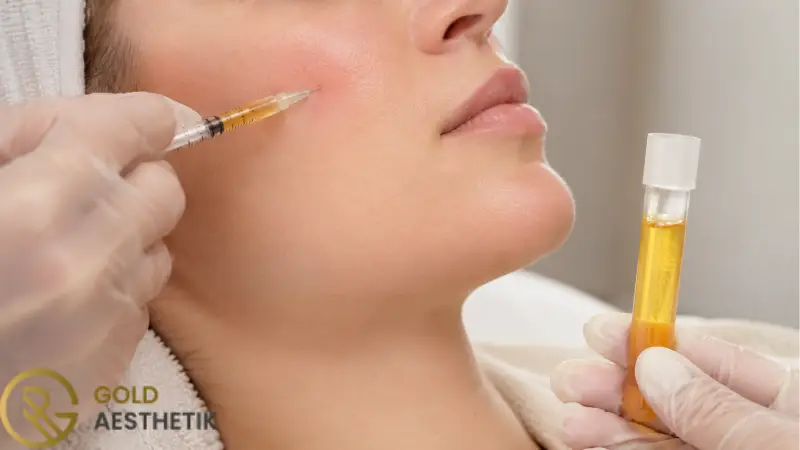
One of the characteristics of PRP is the use of an autologous blood sample. This distinguishes the treatment in its nature from many external injectable materials. However, the use of autologous blood does not mean that there are no side effects or that the treatment is suitable for everyone.
Another advantage of PRP is the gradual result. This method typically does not change the original facial shape and focuses more on tissue quality. For individuals who desire a more natural change without significant volumization, this characteristic can be important.
The recovery period is also limited for many individuals, and the treatment can be considered for various skin areas. The intensity of redness, swelling, or bruising varies from person to person.
Who is PRP facial treatment suitable for?
PRP facial treatment can be considered for individuals suffering from dull skin, fine lines, a relative loss of elasticity, or certain superficial irregularities. Individuals who prefer a gradual result over a significant and rapid change in facial shape may also be suitable candidates.
Realistic expectations are very important. The person should know that PRP typically takes several weeks for results to be assessed, and more than one treatment session may be required depending on the skin condition.
In contrast, if the main problem is significant volume loss, severe sagging, or wrinkles whose cause is not directly related to the surface quality of the skin, PRP alone may not achieve the desired result.
What is PRP used for under the eyes?
The skin under the eyes is thin, and changes in this area can have various causes. PRP can be considered for suitable individuals for the gradual improvement of skin quality and fine lines in this area.
However, dark circles can be caused by pigmentation, visible vessels, tear troughs, genetic factors, or a combination of several factors. For this reason, PRP should not be advertised as a one-size-fits-all treatment for all types of dark circles.
If the main problem in this area is dark circles or fine lines, a comparison with options such as mesotherapy for the eye area can also be considered after medical assessment. The choice of method should be based on the main cause of the problem.
What effect does PRP have on acne scars?
PRP can be used in some treatment programs for acne scars to stimulate tissue regeneration, but the response of superficial and deep scars is not the same. The shape of the scar, its depth, skin quality, and treatment history must be examined before choosing the method.
In some cases, the doctor may consider PRP in combination with methods such as microneedling. If your main concern is scars and skin irregularities, the guide Microneedling in Hamburg explains the difference in the application of this method for rejuvenation and acne scars.
Is PRP suitable for pigment spots on the face?
PRP should not be advertised as a definitive treatment for pigment spots. Uneven skin tone can have various causes, such as sun exposure, melasma, hormonal changes, or previous inflammation, and each of these may require a different treatment plan.
A general improvement in skin quality can improve the appearance of some irregularities, but for pronounced pigment spots, diagnosing the cause before choosing the treatment is more important.
Who should not undergo PRP facial treatment?
PRP is not suitable for all individuals. Active infections in the treatment area, certain blood or platelet disorders, and some uncontrolled diseases are conditions that require a precise medical evaluation.
Medications and supplements taken must also be disclosed to the doctor before treatment. Some medications can affect bleeding, bruising, or the course of treatment. No prescription medications should be discontinued without medical approval and solely for the purpose of undergoing PRP.
Pregnancy or breastfeeding, fever or active infections, a history of significant illnesses, and current medical treatments must also be addressed during the consultation so that the doctor can decide whether to proceed with or postpone the treatment.
| Conditions to Consider | Reason for Importance | Appropriate Action |
|---|---|---|
| Taking certain anticoagulant medications | Increased risk of bleeding or bruising | Full disclosure of medications to the doctor |
| Active skin infection | Increased risk of complications | Examination and, if necessary, postponement of treatment |
| Blood or platelet disorders | Affects the safety and quality of the final product | Medical evaluation before treatment |
| Uncontrolled illness | Can impair treatment safety | Review of medical condition |
What is the PRP facial treatment procedure?
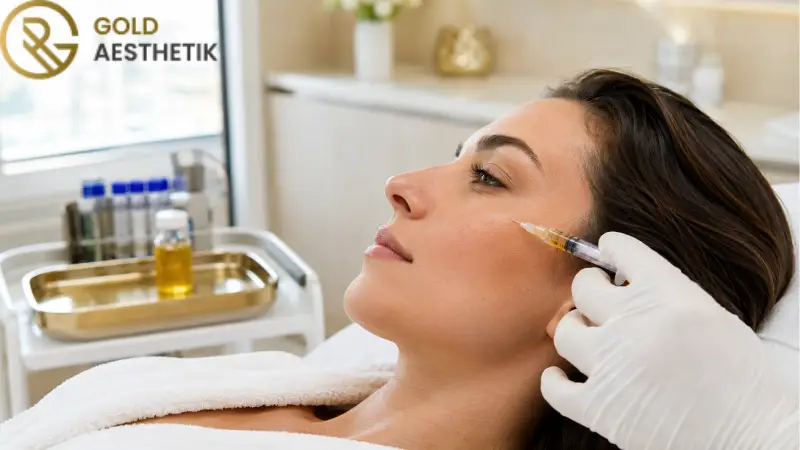
PRP facial treatment is a multi-stage medical process that begins with a skin examination and medical history, followed by blood collection, plasma preparation, and injection into the target areas.
Phase one; Consultation and Skin Assessment
The doctor first examines the skin type and quality, fine lines, acne scars, the condition under the eyes, and other relevant issues. The goal of this phase is to determine whether PRP is suitable for the person’s problem or if another method might provide a more logical answer.
Medical history, medications, supplements, allergies, and previous cosmetic treatments must also be reviewed. Providing this information is important to minimize risks and create a treatment plan.
Phase two; Blood Draw and PRP Preparation
A specific amount of blood is drawn and placed in special tubes. Subsequently, the sample is placed in a centrifuge to separate the blood components and prepare the desired plasma component for treatment.
The quality of the final product can be influenced by the preparation method. The use of disposable materials, appropriate equipment, and adherence to sterile conditions are important for the safety of the treatment.
Phase three; PRP Injection into the Skin
After cleansing and disinfecting the skin, local anesthesia is applied if necessary. The doctor then injects the PRP into the desired points with controlled injections.
The size of the treatment area, the number of injection points, and individual conditions can influence the duration of the session. Therefore, a uniform time cannot be assumed for all treatments.
How many sessions are required for a PRP facial treatment?
The number of PRP sessions is not the same for all individuals. Age, skin condition, severity of the problem, treatment goal, and the person’s response to the first session can play a role in determining the plan.
In many treatment plans, several sessions spaced a few weeks apart are considered, but a fixed number for all patients is not precise. After completing the initial cycle, the doctor must review the result and decide on the possible need for continuation or maintenance therapy.
More sessions do not necessarily mean better results. Continuing treatment is only advisable if the skin’s response and the treatment goal support conducting further sessions.
When are the results of PRP facial treatment visible?
Immediately after the injection, the skin may appear somewhat fuller or fresher due to temporary swelling, but this condition should not be confused with the actual result of the PRP treatment.
Changes related to skin regeneration typically develop gradually. For individuals who respond to the treatment, changes in freshness, texture, or the appearance of certain fine lines may be visible in the following weeks.
| Timeframe | What can be observed | Important Note |
|---|---|---|
| First Days | Redness, swelling, or sensitivity | Treatment result not yet assessable |
| Following Weeks | Possible beginning of change in freshness and skin texture | Response speed varies from person to person |
| Following Months | Possibility of continued regeneration process | Intensity of results depends on skin condition and treatment plan |
What are the side effects of PRP facial treatment?
Since the treatment involves blood drawing and injections, redness, swelling, sensitivity, bruising, or discomfort at the injection site may occur. These reactions are usually temporary, but their intensity is not the same for all individuals.
Infections are also a possible complication of any injection procedure, and adherence to sterile principles is important. If pain or swelling worsens instead of subsiding, or if symptoms such as fever, spreading redness, or discharge occur, a doctor should be contacted.
Aftercare for PRP Facial Treatment
Detailed recommendations after treatment should be given by the doctor based on the individual’s condition and the injection area. It is advisable not to expose the skin to pressure, massage, or manipulation without medical instruction.
Regarding the use of active skincare products, sports, sauna, intense heat, or makeup, the specific instructions of the doctor should be followed. Protecting the skin from sun exposure and using appropriate skincare products contribute to maintaining overall skin health.
Is PRP facial treatment better than other skin rejuvenation methods?
No single treatment is the best option for all skin problems. PRP focuses more on skin regeneration and quality, while other methods may have a different goal.
For example, microneedling may be considered in some treatment programs for tissue and acne scars, and sometimes a combination with PRP is evaluated by the doctor. Fillers have a different application for compensating volume loss, and methods like HIFU are more considered in situations where the main problem is skin tightening or sagging.
If you are still unsure whether PRP or another method is better suited for your skin problem, the page Comparison of Skin Rejuvenation Methods can provide a more comprehensive understanding of the differences in the application of available treatments.
Frequently Asked Questions about PRP Facial Treatment
Does PRP facial treatment add volume?
No, the main goal of PRP is not to create specific volume as with fillers. Short-term swelling after injection may temporarily make the face appear fuller, but this condition should not be confused with a volumizing effect.
How many sessions are required for a PRP facial treatment?
The number of sessions depends on the skin condition and the treatment goal. The plan is usually determined after an initial assessment, and the doctor can adjust it based on the skin’s response.
Are the results of PRP facial treatment permanent?
No. The natural process of skin changes continues, and the treatment result is not permanent. The timing for follow-up examinations or maintenance therapy should be based on the actual skin condition.
Is PRP suitable for the eye area?
For some individuals, it can be considered for skin quality and fine lines under the eyes, but not all dark circles and tear troughs respond equally to PRP. The main cause of the problem should be clarified before treatment.
Is PRP facial treatment better than microneedling?
These two methods do not have exactly the same mode of action. The choice depends on the skin problem, the depth of the scars, tissue quality, and the treatment goal, and in some cases, a combined application may also be considered.
PRP Facial Treatment at Gold Aesthetik Hamburg
At Gold Aesthetik, the decision for a PRP facial treatment is made after an assessment of the skin condition, the cause of the problem, and the patient’s medical history. The goal is to determine whether PRP truly meets the person’s needs or if another method can achieve a more logical result.
Dr. Mohammadreza Haghdadeh, a specialist in vascular surgery and aesthetic medicine, works together with the Gold Aesthetik team in Hamburg. During the consultation, the skin condition, previous treatments, medications taken, and the patient’s expectations are discussed, and the benefits, limitations, and possible treatment procedure are explained.
The Gold Aesthetik practice is located at Barmbeker Str. 40, 22303 Hamburg-Winterhude. PRP facial treatment is part of the skin rejuvenation services offered by this facility, and the treatment plan is determined individually.

