



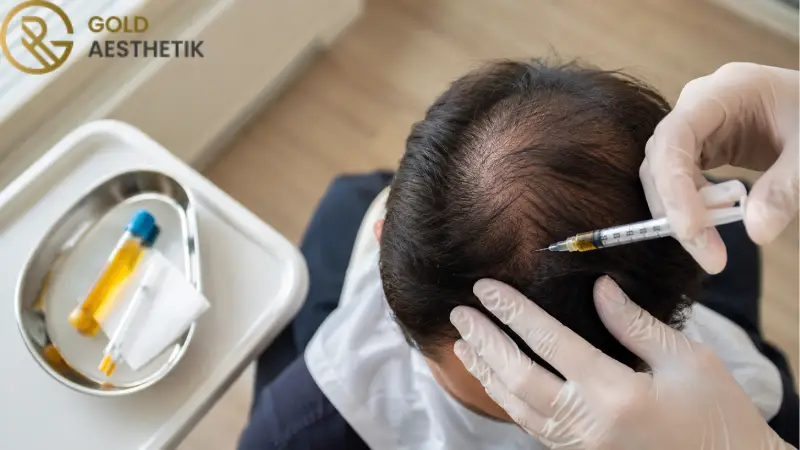
PRP for hair loss is a minimally invasive medical procedure in which platelet-rich plasma is obtained from your own blood and injected into selected areas of the scalp. The aim of this treatment is not to create new follicles; rather, PRP is primarily considered to support follicles that are still present but weakened, producing thinner hair, or in the early to mid stages of hair thinning.
PRP results are not the same for everyone. The cause of hair loss, the time since thinning began, follicle activity, scalp health, underlying conditions, and the treatment plan can all influence the response. For this reason, before starting sessions it should be clarified what type of hair loss is present and whether PRP truly fits the individual situation.
What is PRP for hair loss and how does it work?
In addition to their role in blood clotting, platelets contain a range of growth factors and biological molecules involved in tissue repair processes. With PRP, part of the blood is processed to prepare plasma with a higher platelet concentration for therapeutic use.
In the field of hair loss, clinical studies have focused primarily on whether PRP can influence the environment around the follicle and, in some patients, contribute to improved hair density or hair characteristics. The available evidence for androgenetic hair loss is promising; however, PRP preparation, platelet concentration, number of sessions, and assessment criteria are not standardized across studies.
Therefore, PRP should not be presented as a definitive treatment for baldness. This procedure does not recreate a completely lost follicle, and the outcome for someone with still-thinning hair and active follicles will not match that of someone who has been completely bald in an area for years.
How is PRP obtained from your own blood?

At the beginning of the session, a specific amount of blood is drawn. The blood sample is placed into a special system, and a centrifuge is used to separate the components based on physical properties. The appropriate plasma portion is then prepared for injection.
After examining the scalp and the pattern of hair thinning, the physician defines the target areas; PRP is then administered with small injections into selected areas of the scalp. The exact preparation and injection protocol may vary depending on the system and treatment center.
| Step | Measure | Goal |
|---|---|---|
| Blood draw | Taking a blood sample | Obtaining the starting material for PRP |
| Centrifugation | Separation of blood components | Preparing the desired platelet-rich fraction |
| PRP preparation | Selecting the appropriate plasma portion | Preparing the material for injection |
| Scalp examination | Determining the pattern of hair thinning and target areas | Planning treatment tailored to the individual situation |
| Injection | Injecting PRP into selected areas | Supporting existing follicles |
The quality of treatment does not depend on the injection alone. Correct diagnosis of the cause, PRP preparation, the properties of the final product, injection technique, and appropriate patient selection are all important.
If you would like to learn about other applications of PRP in addition to PRP for hair, the guide PRP in Hamburg provides a more comprehensive overview of the treatment.
What role do growth factors play in PRP for hair?
After activation, platelets can release a range of growth factors. These molecules play a role in repair processes and cellular signaling and are considered one of the biological explanations for using PRP for hair loss.
However, the clinical effect cannot be predicted solely based on platelet count or the names of growth factors. The hair cycle is complex, and genetics, hormones, inflammation, nutritional status, underlying conditions, and the duration of hair loss can also affect follicle condition.
For which type of hair loss has PRP been studied most often?
A substantial portion of studies on PRP for hair relates to androgenetic hair loss, i.e., male and female pattern hair loss. In this process, follicles gradually become smaller and produce thinner hair. The presence of active follicles and miniaturized hairs may be one reason why strengthening treatments are mainly studied in early to mid stages.
| Type or situation of hair loss | Possible role of PRP | Important note |
|---|---|---|
| Male pattern hair loss | May be considered for selected individuals | Stage of hair loss and active follicles are crucial |
| Female pattern hair loss | May be considered for selected individuals | Underlying causes and diffuse hair loss should also be assessed |
| Diffuse or sudden hair loss | Depending on the cause | Diagnosing the cause takes priority before PRP |
| Complete, long-standing baldness | Expectations for PRP are more limited | PRP does not recreate lost follicles |
| Scarring scalp conditions | Not a routine treatment and not a substitute for disease control | Inflammation and underlying disease must be assessed by a specialist |
| Alopecia areata | Requires specialist assessment | PRP should not be considered standard therapy for all patients |
Does PRP for hair loss differ for women and men?
In men, androgenetic hair loss is often associated with a receding hairline, thinning in the frontal area, or at the crown. In women, the pattern may be more diffuse; assessing hormonal factors, nutritional deficiencies, and other medical causes then becomes more important.
Sex alone does not determine whether a person responds to PRP. The cause of hair loss, disease stage, follicle health, and overall condition are more important criteria.
Who is suitable for PRP treatment for hair loss?
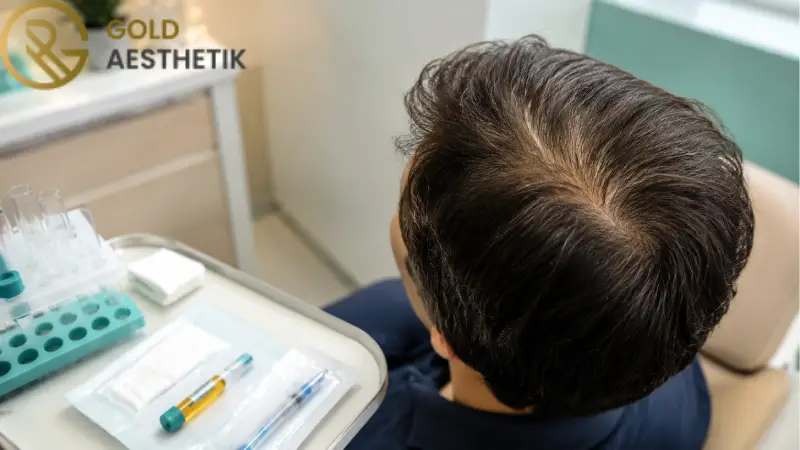
PRP is primarily worth considering when there are still follicles that can be supported and the cause of hair loss has been clarified as far as possible. Anyone who has only recently noticed decreasing density or gradual thinning should first come in for diagnostic assessment and should not choose treatment based solely on visible appearance.
| Situation | General assessment | Rationale |
|---|---|---|
| Early to mid-stage hair loss with active follicles | May be a more suitable candidate | Existing follicles are the main target of treatment |
| Thin and miniaturized hairs | Requires assessment of the hair loss pattern | Existing hair may indicate that the follicle is still active |
| Complete, long-standing baldness | Expectations for the outcome should be more limited | A lost follicle is not restored by PRP |
| Sudden hair loss without a diagnosis | Requires medical assessment first | PRP should not replace investigating the cause |
| Active scalp infection or inflammation | Requires treatment and assessment before PRP | An active condition should be evaluated first |
| Expectation of immediate or guaranteed growth | Not a suitable candidate from an expectations perspective | The PRP response is gradual and variable |
Who needs a more detailed medical assessment before PRP?
Pre-existing blood conditions, platelet or clotting disorders, active infections, certain uncontrolled diseases, and the use of specific medications can influence the decision for PRP. Therefore, before treatment the patient should provide the physician with their medication list, supplements, and medical history.
Prescription medications—especially those that affect clotting or platelet function—should not be discontinued independently for the purpose of PRP treatment.
Hair loss with significant scalp inflammation, unusual scaling, wounds, pain, pronounced itching, or suddenly appearing bald patches should also first be assessed to determine the cause.
When will PRP results for hair loss become visible?
PRP results are not visible immediately. The hair growth cycle takes time; therefore, an assessment in the first days or weeks is not meaningful. In some people, hair shedding decreases first, while changes in density or hair thickness become noticeable later.
PRP studies often assess results at intervals of several months. Nevertheless, no exact, guaranteed timeline can be defined for all patients, as the type of hair loss, baseline follicle condition, and treatment protocol differ.
What happens in the first weeks after PRP?
In the first few days, the injection sites may be sensitive; redness, limited swelling, or mild discomfort may occur. These changes are related to the injection process and should not be mistaken for the onset of hair growth.
The expected biological processes around the follicle occur at a level that is not immediately visible in the mirror. Therefore, the absence of visible changes in the first weeks alone does not mean the treatment was successful or unsuccessful.
| Approximate time | What might be observed? | Assessment note |
|---|---|---|
| First days | Redness, sensitivity, or limited swelling | Far too early to assess the treatment outcome |
| First weeks | Possibly no clear visible change | The hair growth cycle takes time |
| Following months | In responders, shedding patterns or hair characteristics may change | Results should be compared with the baseline |
| Follow-up over several months | Better assessment of hair density and thickness possible | Standardized photos make comparisons more accurate |
When does hair shedding begin to decrease?
Some patients notice a change in the amount of shedding before an increase in density becomes visible. However, counting shed hairs in a day or after a single wash is not a precise measure of treatment success.
The natural hair cycle, washing intervals, stress, illness, nutrition, and seasonal changes can influence the amount of hair visible when combing or washing. Therefore, progression should be assessed over time and together with an examination.
When can hair growth or thickening be assessed?
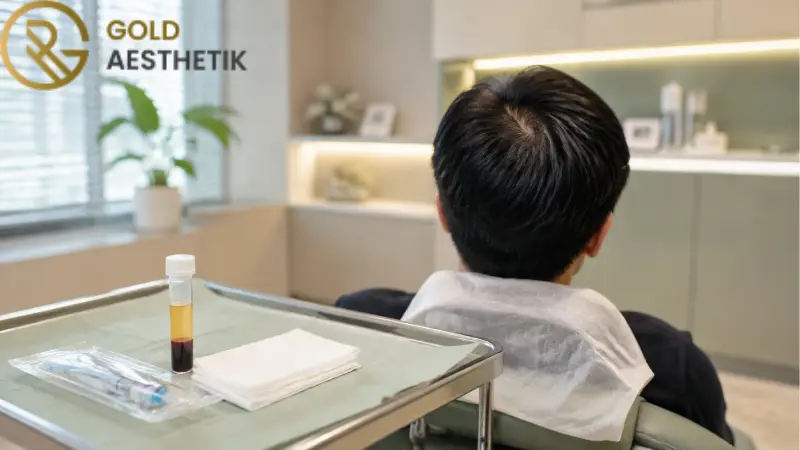
Changes in density or hair shaft diameter are generally assessed later than early reactions to treatment. For this reason, with PRP for hair, follow-up over several months is more important than comparing the first few days.
The best way to assess change is with photos taken with as similar lighting, distance, angle, and a comparable hairstyle as possible. Photos taken in different light or with hair positioned differently can create a misleading impression of more or less density.
After how many sessions does PRP for hair work?
The required number of sessions is not the same for everyone. Studies and clinical protocols use different programs, and there is not yet a standardized protocol that is best for all patients.
Therefore, results should not be predicted solely with phrases such as “after the second session” or “after the third session.” In addition to the number of sessions, the time elapsed since treatment began, the cause of hair loss, and the course of changes must also be considered.
After the initial phase, the physician can assess whether continuing treatment, a maintenance session, an adjustment to the plan, or the use of another method is appropriate.
How can you tell whether PRP for hair is working?
Assessment should be based on multiple criteria—not just seeing a few new hairs. A scalp examination, standardized images, and—if possible—assessment of hair density and hair shaft characteristics can provide a more accurate picture of the therapy response.
| Assessment criterion | Assessment method | Important note |
|---|---|---|
| Course of hair shedding | Comparison over several weeks or months | Daily fluctuations are not reliable |
| Visible density | Standardized photos | Lighting and angle should be similar |
| Hair thickness | Close examination and periodic comparison | Changes are usually gradual |
| Appearance of the scalp | Comparison of before-and-after images | Hairstyle and hair length can visually change perceived density |
| Overall course of hair thinning | Medical follow-up | Must be assessed together with the underlying cause |
Which factors influence PRP results for hair loss?
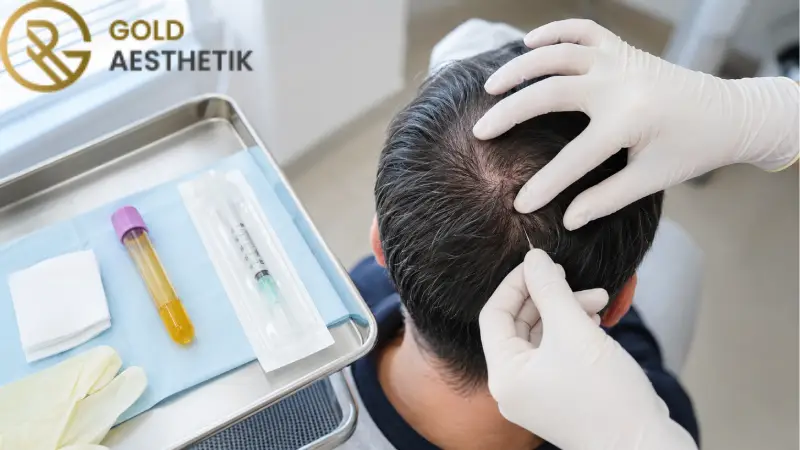
Different results between individuals do not necessarily mean the method itself is good or bad. What matters is that PRP is chosen for the right cause and the right person. The stage of hair loss, follicle condition, comorbidities, preparation protocol, and concurrent treatments can influence the outcome.
Cause and severity of hair loss
PRP has primarily been studied to support existing follicles. Someone who still has thin hairs in the thinned area has different prerequisites than someone who has been completely hairless there for years.
If hair loss is caused by an active scalp condition, a hormonal issue, a nutritional deficiency, or another medical factor, treatment of the primary cause should not be replaced by PRP.
Time since the onset of hair loss
As some types of hair loss progress, follicles can gradually become smaller and the ability to produce thick hair decreases. Therefore, early assessment of hair thinning can open up more options for diagnosis and for choosing between different treatments.
This does not mean that PRP is certainly successful for recent hair loss or useless for all long-standing forms. The actual condition of the follicles must be assessed.
Activity of hair follicles
A key limitation of PRP is that it does not create new follicles. If a follicle is still active but producing thinner hair, the treatment goal is different than in an area where the follicle has been lost.
In long-standing bald areas, in terms of the treatment goal, it may be more appropriate to consider a hair transplant rather than continuing strengthening treatments; however, whether a transplant is suitable depends on the donor area, the cause of hair loss, and the individual situation.
To learn about this treatment pathway, you can read the guide Hair transplantation in Hamburg.
Iron deficiency, thyroid, and hormonal factors
Hair loss is not always purely androgenetic. Nutritional deficiencies, thyroid disorders, hormonal changes, certain medications, illnesses, and physical stress can be associated with diffuse hair loss.
Laboratory tests are not equally necessary for all patients, but depending on the medical history and hair loss pattern, the physician may recommend additional assessments. The goal is to ensure PRP is not used in place of diagnosing the primary cause.
Quality of PRP preparation
One challenge in PRP research is the high variability of preparation methods. Kit type, centrifugation speed and duration, platelet concentration, leukocyte content, and other properties of the final product can differ depending on the protocol.
For this reason, it is not always easy to compare a patient’s or clinic’s results with a study that used a completely different protocol. This lack of standardization is one reason why no specific outcome can be guaranteed for everyone.
| Factor | How can it influence the outcome? |
|---|---|
| Diagnosis of the cause | Shows whether PRP is suitable for the issue at all |
| Stage of hair thinning | Active follicles influence expectations for treatment |
| Condition of the scalp | Inflammation or active disease can change the treatment plan |
| Preparation protocol | The properties of the final PRP are not the same across all systems |
| Number and spacing of sessions | Should be chosen to fit the treatment plan |
| Treatment of the underlying cause | Essential for disease- or deficiency-related hair loss |
Number of sessions and intervals
PRP for hair is usually considered a multi-step process, and many protocols include several initial sessions. However, the exact number and spacing should be determined based on the patient’s situation and the protocol used.
More sessions or shorter intervals do not necessarily lead to better results. The treatment plan should allow sufficient time to assess the follicle response; if an appropriate response is not observed, the cause should be reviewed again.
Pre- and post-treatment care for PRP for hair

Before treatment, illnesses, allergies, medications taken, and supplements should be disclosed to the physician. No prescription medication should be discontinued or changed without consulting the physician.
After treatment, instructions on washing the scalp, exercise, the use of hair products, and other measures should also be followed according to medical advice or the practice protocol. Recommendations may vary depending on the patient’s situation and how the procedure is performed.
PRP or mesotherapy for hair—which method is more suitable for hair loss?
PRP and mesotherapy for hair are both administered as injections into the scalp, but the substance used and the treatment logic are not identical. PRP is obtained from your own blood, whereas in mesotherapy the compositions used vary depending on the treatment protocol.
The choice between the two is not based solely on the number of sessions or less pain. The cause of hair loss, follicle condition, treatment history, and the person’s goal should be assessed.
To learn about the second method, you can view the page Mesotherapy for hair loss. The guide Mesotherapy in Hamburg also explains various areas of application for this method.
| Criterion | PRP for hair | Mesotherapy for hair |
|---|---|---|
| Substance used | Plasma from your own blood | Depends on composition and treatment protocol |
| Goal | Biological support of existing follicles | Depends on the type of mesotherapy and the therapeutic goal |
| Patient selection | After diagnosing the cause and assessing the follicles | After clarifying the cause and scalp condition |
| Outcome | Gradual and variable | Gradual and dependent on protocol and individual situation |
Is PRP performed together with minoxidil or other treatments?
For some patients, PRP is considered as an adjunct treatment alongside other therapies. In androgenetic hair loss, depending on sex, medical history, and the individual situation, the physician may decide on medication-based treatments such as minoxidil or other suitable options.
The fact that there is evidence on combination therapies does not mean they are suitable for everyone. Medication choice, concentration, application, and side-effect monitoring should be individualized.
Starting or stopping minoxidil on your own can not only cause problems, but also make it harder to assess PRP results. If you are already using a hair loss treatment, this should be discussed with the physician before starting PRP.
What side effects does PRP for hair have?
Because PRP is obtained from your own blood, side effects are not comparable to injecting a filler or an external medication. However, blood draw and injection are still medical procedures and can be associated with reactions.
Pain or sensitivity at the injection site, redness, limited swelling, a feeling of pressure, and bruising are reactions that can occur after treatment. Extent and duration are not the same for everyone.
Sterile technique, reviewing the medical history, and appropriate technique are important. If severe or increasing pain, unusual swelling, discharge, fever, or other concerning symptoms occur after treatment, the treating physician should be contacted.
Why does PRP not lead to a satisfactory result for some people?
A lack of results can have various reasons and does not always mean PRP was performed incorrectly. Sometimes the cause of hair loss was not suitable from the outset, sometimes not enough follicles remain, and in some patients the underlying disease or triggering factor is still active.
| Possible cause | Explanation | Next step |
|---|---|---|
| Misdiagnosis of the cause | PRP does not address the main problem | Reassess the cause |
| Advanced baldness | Not enough active follicles are present | Consider other options such as hair transplantation |
| Untreated disease or deficiency | The underlying factor persists | Assess and treat the primary cause |
| Assessment too early | Not enough time has passed for the hair cycle | Follow-up at the appropriate time |
| Limited individual response | Not all patients respond the same way | Review the treatment plan with the physician |
| Differences in the PRP protocol | Preparation and product properties vary by method | Review the approach and treatment plan |
If, after completing the plan and allowing sufficient time, no relevant response is apparent, automatically continuing sessions without reassessment is not advisable. The physician should reassess the cause, follicle status, and further options.
PRP for hair or hair transplantation—when should another method be considered?
PRP and hair transplantation are not direct substitutes for each other. PRP focuses on existing follicles, whereas in hair transplantation suitable follicles are transferred from the donor area to thinned or bald areas.
If many thin hairs and active follicles are still present, non-surgical treatments may play a role in the treatment plan. By contrast, in an area that has been bald for a long time and where hardly any active follicles remain, it is not reasonable to expect PRP to create new hair.
Frequently asked questions about PRP for hair loss
Does PRP lead to hair growth in a completely bald area?
If the follicles in an area have been completely lost, PRP cannot create new follicles. Therefore, scalp condition and the duration of baldness are important before starting treatment.
Can PRP permanently stop hair loss?
No. PRP is not a permanent treatment for all causes of hair loss. Androgenetic hair loss, for example, is chronic, and long-term or combined treatment planning may be required for control.
Is PRP suitable for hereditary hair loss?
Androgenetic hair loss is one of the forms for which PRP has been studied most frequently. However, the response is variable; stage, follicle condition, and the person’s other treatments should be considered.
Is PRP also performed for women?
Yes, PRP has also been studied in women with certain forms of hair thinning. However, diffuse hair loss in women can have many causes, which is why assessing the underlying cause is very important.
Is one PRP session for hair enough?
As a rule, PRP is assessed based on a treatment plan and follow-up over several months. The number of sessions should be determined for each person depending on the cause, baseline situation, and treatment protocol.
Is PRP better than mesotherapy for hair?
It cannot be said that one method is better for everyone. Both differ in injection substance and therapeutic approach; selection should be made after diagnosing the cause. A more detailed comparison can be found in the article PRP or mesotherapy for hair.
Is PRP useful before or after a hair transplant?
PRP may be considered as an adjunct method in some treatment plans, but it is not necessary for everyone before or after a transplant. The decision should be made based on scalp condition, existing hair, and the physician’s plan.
PRP for hair loss at Gold Aesthetik Hamburg
At Gold Aesthetik, assessing hair loss does not begin with selecting a pre-defined method. First, the pattern of hair thinning, scalp condition, course, previous treatments, and the individual situation are evaluated to define the role of PRP in the treatment plan.
If PRP is suitable for the individual situation, the session plan and follow-up timing are set accordingly. If the issue is more related to a marked decline in follicles, an untreated underlying cause, or a situation that PRP cannot address sufficiently, other options should also be discussed.
Gold Aesthetik is located at Barmbeker Str. 40, 22303 Hamburg-Winterhude. The goal of the consultation is for the patient to know, before starting treatment, what PRP can achieve, what its limitations are, and when the outcome should be assessed.

