




The choice between thread lift and HIFU depends on the cause and extent of facial laxity, skin quality, soft tissue position, and expected outcome. HIFU is primarily used for gradual skin tightening and stimulation of collagen regeneration, while thread lift can more directly lift descended tissue in selected individuals. For this reason, neither method can be considered superior for all individuals.
If the main concern is limited skin laxity and the individual desires treatment without inserting threads beneath the skin, HIFU may be a viable treatment option. In contrast, if there is limited displacement of cheek tissue or reduced jawline definition, the physician may consider thread lift more appropriate. Severe laxity, significant skin excess, substantial volume loss, or fat accumulation can also influence the choice of treatment.
Thread Lift or HIFU: How Do These Two Methods Differ?
The most important difference between HIFU and thread lift lies in their mechanism of action. HIFU uses focused ultrasound energy to create controlled thermal points at a specific tissue depth. The goal of this process is to stimulate the repair response and gradually alter tissue consistency. The treatment is performed without inserting threads or making surgical incisions.
In thread lift, specialized threads are placed beneath the skin along a planned trajectory and can mechanically lift and stabilize descended tissue to a limited extent in suitable individuals. For this reason, part of the change is typically visible earlier than with HIFU, although initial swelling may affect the appearance in the first days.
| Comparison Criterion | HIFU | Thread Lift |
|---|---|---|
| Primary Goal | Gradual tightening and improvement of tissue consistency | Limited mechanical tissue displacement and support |
| Mechanism of Action | Focused ultrasound energy | Insertion of threads along specific pathways beneath the skin |
| Type of Treatment | Non-surgical and non-invasive | Minimally invasive |
| Onset of Visible Change | Rather gradual | Part of the change may be visible earlier |
| Recovery Phase | Typically shorter | Higher likelihood of swelling and bruising |
| Better Suited for Laxity | Rather limited skin laxity in selected individuals | Limited to moderate tissue displacement in selected individuals |
| Replacement for Surgical Lift | No | No |
How Does HIFU Tighten the Skin?
HIFU uses focused ultrasound waves to deliver energy to a specific tissue depth. The energy creates controlled heat at the target points while the skin surface remains intact. This process can stimulate the tissue repair response and collagen regeneration.
For this reason, the result of HIFU is typically not complete on the same day as treatment. The changes may become more visible over weeks and months. The extent of the response depends on the intensity of skin laxity, individual characteristics, treatment area, device, and treatment execution.
HIFU should not be promoted as a non-surgical alternative with the same result as a facelift. The expected change is typically more limited, and proper patient selection plays an important role in satisfaction with the outcome.
If you would like to examine this method more closely, the guide to HIFU in Hamburg offers further explanations on applications, treatment process, and patient selection.
How Does Thread Lift Elevate Lax Facial Tissue?
In thread lift in Hamburg, the physician places specialized and typically absorbable threads along planned pathways beneath the skin. The thread design and its anchoring structure can enable controlled support and displacement of part of the tissue.
This method may be considered in selected individuals for limited improvement of jaw contour, midface, or cheeks. Part of the change is visible after treatment because the mechanism does not rely solely on collagen production but also has a mechanical effect.
Subsequently, a repair response also occurs around the threads. However, the result depends on the type of thread, number and trajectory of threads, tissue weight, skin quality, facial anatomy, and the physician’s technique.
Thread lift does not remove significant skin excess and cannot reproduce the changes of surgical facelift. In cases of severe laxity, the expectation of significant change through an increased number of threads may not be realistic.
Difference Between Skin Tightening and Tissue Displacement in the Face
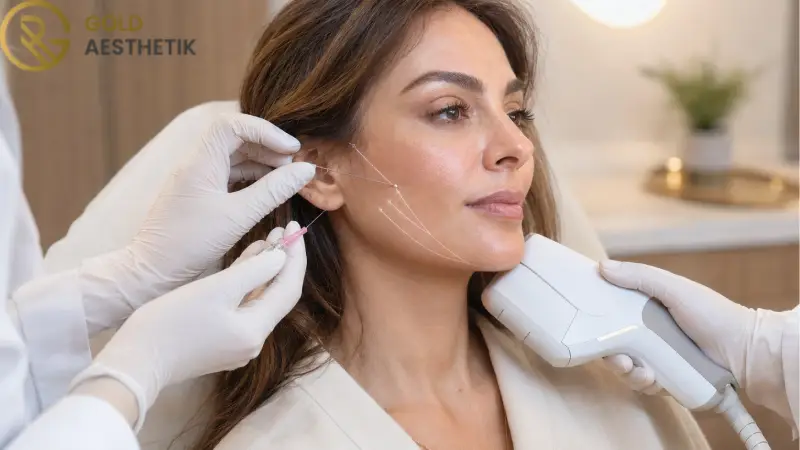
Skin tightening and tissue displacement are not identical concepts. If the main concern is a limited reduction in tissue consistency and laxity, stimulation of collagen regeneration can gradually improve the appearance of the area. HIFU primarily works in this direction.
However, if part of the soft tissue in the face has descended, skin tightening alone may produce only limited change. Thread lift can mechanically support the tissue in a different position in suitable individuals, which is why the nature of the result is not identical to HIFU.
On the other hand, not every undefined jawline is due to laxity. Volume loss, a recessed chin, or an increase in adipose tissue can also contribute to lower facial contour. Therefore, before choosing between HIFU or thread lift, the physician should determine the primary cause of the facial change.
Differences Between HIFU and Thread Lift Regarding Invasiveness
HIFU is non-invasive; this means no threads or cannulas are inserted into the tissue to achieve the primary effect of the treatment. For many individuals, return to normal activities is rapid, although redness, sensitivity, limited swelling, or pain sensations in the treatment area may occur.
Thread lift is minimally invasive and requires the insertion of threads at entry and passage points beneath the skin. Therefore, bruising, swelling, sensitivity, and a feeling of tightness are more likely afterward, and the initial care phase will typically be longer than with HIFU.
| Comparison Point | HIFU | Thread Lift |
|---|---|---|
| Insertion of Instruments Beneath the Skin | No | Yes |
| Initial Change | Often limited | Typically more visible |
| Complete Result | Gradual | Reduction of swelling together with gradual tissue changes |
| Bruising | Typically less likely | More likely |
| Swelling | Often more limited | May be more pronounced |
| Return to Daily Activities | Often faster | Dependent on swelling, bruising, and individual conditions |
Which Is Better: HIFU or Thread Lift?
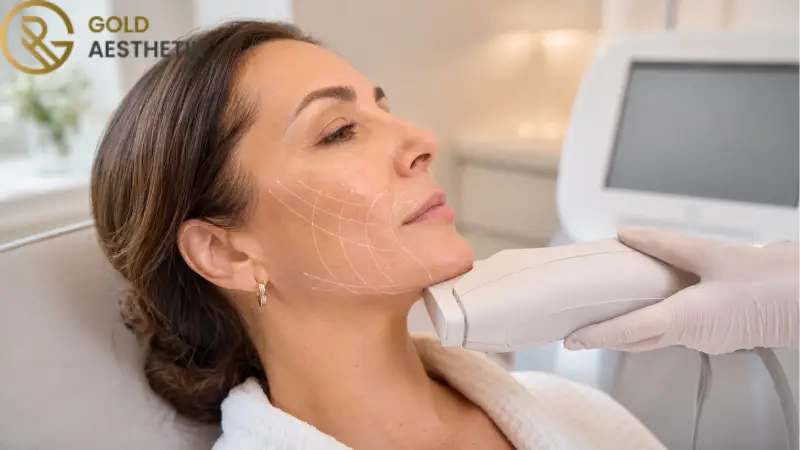
Which method is more suitable cannot be reliably determined without an individual medical assessment of the face. The extent of skin laxity, degree of tissue descent, fat volume, bone structure, skin thickness, and the patient’s treatment expectations must be evaluated together.
It is also advisable to make the choice between these two methods in the broader context of skin rejuvenation methods. Sometimes a person’s aesthetic concern is not fully addressed by either of these two treatments.
For Whom Is HIFU More Suitable?
HIFU is more suitable for individuals whose skin laxity is limited and whose skin and facial tissue still have good capacity to respond to treatment. This method may be more attractive for individuals who desire non-invasive treatment and a gradual result.
A limited reduction in jawline definition, mild laxity in the lower facial area or neck, and some initial age-related changes may be factors the physician considers when evaluating HIFU.
However, if the primary cause of facial change is significant tissue displacement, substantial volume loss, skin excess, or considerable fat accumulation, HIFU alone may achieve a more limited result.
For Whom Is Thread Lift the More Suitable Choice?
Thread lift is more suitable for individuals who, in addition to skin laxity, also have limited or moderate displacement of soft tissue and in whom the physician determines that mechanical support can contribute to contour improvement.
Reduced jawline definition, limited descent of the cheeks, or changes in the midface may be cases worth evaluating. However, very thin skin, very heavy tissue, severe laxity, or the expectation of surgically similar change may limit the result.
A suitable candidate should have realistic expectations and understand that the result of thread lift is temporary and the final outcome can be better assessed after swelling subsides.
Choice of Method Based on the Extent of Facial Laxity
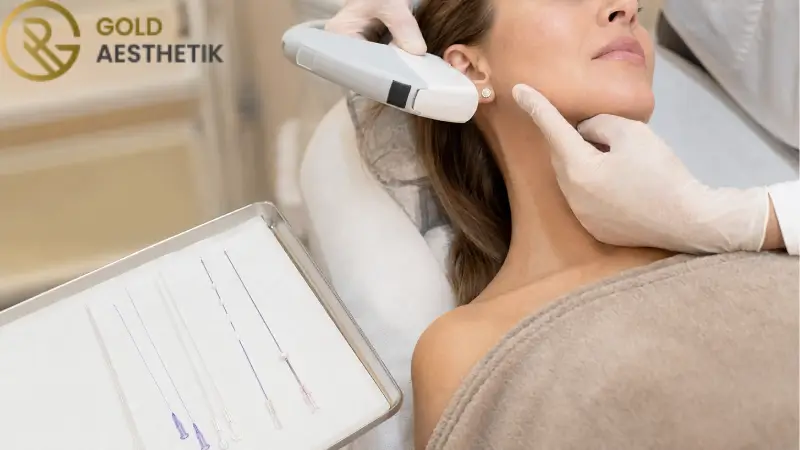
| Facial Condition | Method Worth Evaluating | Important Note |
|---|---|---|
| Limited Reduction in Skin Firmness | HIFU | Goal is rather tissue stimulation and gradual tightening |
| Mild Laxity and Reduced Jawline Definition | HIFU or other rejuvenation methods | The cause of reduced jawline definition must be clarified |
| Limited Laxity with Tissue Displacement | Thread lift in selected individuals | Skin quality and tissue weight are important |
| Combination of Skin Laxity and Limited Tissue Displacement | Individual or combined plan | One method alone may not address all concerns |
| Severe Laxity and Skin Excess | Evaluation of other methods | HIFU and threads are not a replacement for surgical lift |
Which Method Is Better for Lax Cheeks, Jawline, and Neck?
For the cheeks, HIFU may be considered if the main concern is a limited reduction in skin firmness. If the soft tissue has descended more noticeably and the anatomical conditions are suitable, the physician may suggest thread lift.
For the jawline as well, the cause of the undefined contour is important. Skin laxity is not the same as chin volume loss, fat accumulation under the chin, or weak bone structure. Therefore, mere blurring of the jawline is not sufficient to choose thread lift or HIFU.
In the neck area, HIFU may be considered for some individuals with limited skin laxity. With significant skin excess or severe laxity, substantial change through non-surgical methods is not realistic.
Thread Lift or HIFU for Double Chin?
A double chin is an external feature and can have various causes. Sometimes the main concern is fat accumulation under the chin, sometimes the skin is lax, and in some individuals the shape of the chin and jaw causes the boundary between face and neck to be less defined.
If the predominant concern is limited skin laxity, HIFU may be considered in the treatment plan. If limited tissue laxity has led to reduced jawline definition, thread lift may be suggested in selected individuals. However, neither method directly removes a significant amount of fat under the chin.
For this reason, treatment of a double chin should be based on its cause, and adding a lifting method without considering the amount of fat and the shape of the lower face may not produce the desired result.
Can HIFU and Thread Lift Be Combined?
In some individuals, the physician may consider a combined or staged plan, as HIFU and thread lift do not have the same mechanism. However, a combination of treatments is not necessary for everyone, and more methods do not necessarily lead to better results.
The sequence and timing of treatments must also be determined by the physician. The tissue condition, possible thread trajectory, treatment area, and previous skin response must be considered before any supplementary treatment.
If the goal is only limited skin laxity, a single method may suffice. If, on the other hand, multiple factors such as reduced firmness, volume loss, and tissue displacement are present simultaneously, the physician should evaluate the appropriate method for each factor separately.
When Are These Two Methods Not a Primary Choice?
In cases of severe laxity, extensive skin excess, significant volume loss, or large fat accumulations, HIFU and thread lift may not achieve sufficient results. In such cases, the cause of facial change must be clarified and other options considered.
Active infections or inflammation in the treatment area, certain medical conditions, and circumstances that make performing the treatment unsafe must also be clarified before making a decision. Medical history, medications, and previous treatments must be disclosed to the physician during the consultation.
For individuals whose primary goal is a change in facial structure or volume, other treatments may be more relevant. Therefore, the choice between HIFU or thread lift should not be made solely based on age, advertising, or before-and-after photos of others.
Does Thread Lift or HIFU Last Longer?
Longevity is one of the main questions when comparing thread lift and HIFU, but no fixed number can be given for all individuals. The type of device and treatment parameters with HIFU, the type and number of threads with thread lift, skin quality, age, extent of laxity, and the natural aging process all influence the duration of the result.
With HIFU, the changes occur gradually, and the result gradually diminishes with the ongoing aging process and tissue changes. With thread lift as well, absorbable threads are broken down over time, and the initial mechanical effect is not permanent.
For this reason, when choosing the method, in addition to the duration of the result, the extent of change the method can produce for the person’s actual concern should also be considered.
For more specific information on thread longevity, you can read the article Thread Lift Longevity and Aftercare.
When Is the Result of HIFU Visible?
After HIFU, a limited change may be noticeable, but the main result is typically gradual. Tissue regeneration and collagen-related changes take time, and the result is better assessable over weeks and months after treatment.
The speed and extent of change are not the same for all individuals. Skin quality, extent of laxity, treatment area, device used, and treatment execution can influence the result.
When Is the Result of Thread Lift Visible?
Part of the change from thread lift may be visible immediately after thread insertion, as the tissue is mechanically supported or displaced. However, the appearance on the first day is not the final result.
Swelling, bruising, feelings of tightness, and temporary asymmetries can affect the appearance in the first days. After these changes subside, the more natural facial contour can be better assessed.
Are the Side Effects of HIFU or Thread Lift Stronger?

Since HIFU is non-invasive and thread lift is minimally invasive, the types of side effects of these two methods are not identical. With HIFU, redness, limited swelling, sensitivity, pain on touch, or a tingling sensation may occur after treatment.
With thread lift, due to the insertion of threads beneath the skin, bruising, swelling, pain, a feeling of tightness, and temporary skin dimpling may occur more frequently. Infections, visible or palpable threads, asymmetries, or thread displacement are also side effects that require medical examination.
| Comparison Point | HIFU | Thread Lift |
|---|---|---|
| Redness and Sensitivity | May occur and is often limited | May be accompanied by swelling and sensitivity |
| Bruising | Typically less likely | More likely |
| Swelling | Often more limited | May be more pronounced |
| Feeling of Tightness | Is not the primary effect of treatment | May be present in the first days |
| Infection | Due to non-insertion of threads, there is a different risk | Due to entry points and presence of threads, this must be considered |
| Thread-Related Issue | Not present | Visibility, palpability, or displacement of thread may occur |
Is the Recovery Phase Shorter with HIFU or Thread Lift?
In most cases, HIFU has a shorter recovery phase, and many individuals can return to their normal activities relatively quickly. However, the extent of redness, swelling, or sensitivity varies from person to person.
After thread lift, more time may be required to reduce swelling, bruising, or sensitivity. The physician may also recommend avoiding pressure on the face, vigorous movements, massages, and certain athletic activities for a specified period.
Aftercare Following HIFU
The precise aftercare must be determined by the physician based on the device, treatment area, and individual conditions. If sensitivity or swelling occurs, unnecessary manipulation of the area should be avoided and the physician’s recommendations followed.
In case of unusual pain, muscle weakness, unexpected changes in sensation in the area, or skin damage, the treating physician should be contacted.
Aftercare Following Thread Lift
After thread insertion, it is important to avoid pressure and self-massage of the area. Vigorous facial movements, strenuous exercise, or sleeping with direct pressure on the area may be restricted for a specified period depending on the technique used.
Swelling and limited asymmetries in the first days do not always indicate a poor result. Assessment of the outcome should occur after initial reactions subside and at the time determined by the physician.
Are the Costs Higher for Thread Lift or HIFU?
The costs for HIFU and thread lift are not a fixed number for all individuals. With HIFU, factors such as the device used, the extent of the area, and the treatment plan can influence costs. With thread lift, the number and type of threads, treatment area, and complexity of execution are important.
| Method | Cost Factors |
|---|---|
| HIFU | Treatment area, device used, treatment scope, and session plan |
| Thread Lift | Type and number of threads, treatment area, extent of laxity, and complexity of execution |
| Both Methods | Medical assessment, individual conditions, and possible need for supplementary treatment |
A cost comparison without considering the treatment goal can be misleading. A less expensive method does not mean it is more suitable, especially if it cannot address the primary cause of laxity.
If the cost of thread lift is one of your decision criteria, the article Thread Lift Costs in Hamburg illuminates the price-determining factors of this treatment in greater detail.
Quick Comparison: Thread Lift and HIFU
| Individual Conditions and Expectations | HIFU | Thread Lift |
|---|---|---|
| Desire for Non-Invasive Method | More suitable for evaluation | Requires insertion of threads beneath the skin |
| Limited Skin Laxity | May be considered | Not necessarily required |
| Limited Tissue Displacement | Has less direct influence on displacement | Worth evaluating in selected individuals |
| Expectation of Faster Change | Result is rather gradual | Part of the change is visible earlier |
| Desire for Shorter Recovery Phase | Typically more suitable | Higher likelihood of swelling and bruising |
| Severe Laxity | Limited result | Limited result and not a replacement for surgery |
| Significant Skin Excess | Not sufficient | Not sufficient |
| Severe Fat Accumulation or Severe Volume Loss | Does not correct the primary cause alone | Does not correct the primary cause alone |
Thread Lift or HIFU: Which Method Is More Suitable for You?
If the main concern is a limited reduction in skin firmness and non-invasive treatment is important to you, HIFU may be a suitable option for evaluation. If the soft tissue in the face has descended to a limited extent and the physician determines that mechanical displacement can improve the contour, thread lift could be more relevant to the treatment goal.
However, the decision based solely on the extent of laxity is not sufficient. The face may simultaneously suffer from volume loss, changes in adipose tissue, reduced skin quality, and laxity. In such cases, a single method does not necessarily correct all concerns.
The choice of treatment should occur after an examination and analysis of the actual facial structure. The result of both methods is also limited, individual, and temporary, and no specific degree of lift or specific duration can be guaranteed for all patients.
Thread Lift and HIFU at Gold Aesthetik Hamburg
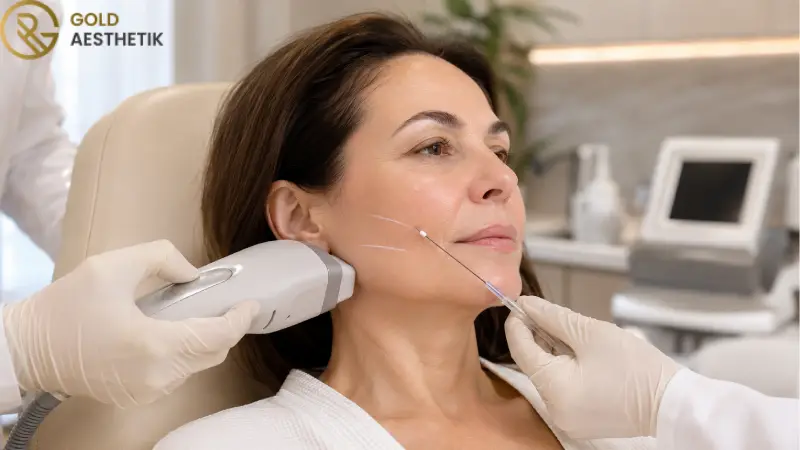
At Gold Aesthetik Hamburg, the choice between HIFU and thread lift is based on facial shape, skin condition, extent of laxity, tissue volume, and the patient’s treatment expectations. The goal of the consultation is to determine whether the main concern is primarily due to skin laxity, tissue displacement, volume loss, or another factor.
If HIFU is suitable, you can discuss HIFU treatment at Gold Aesthetik and its limitations with the physician. If tissue displacement is a more important concern, the conditions for thread lift are evaluated separately.
Gold Aesthetik practice is located at Barmbeker Str. 40, 22303 Hamburg-Winterhude. The desired result should harmonize with the natural facial structure, and the choice of treatment should be based on the actual needs of the individual, not solely on the popularity of a technique.

