



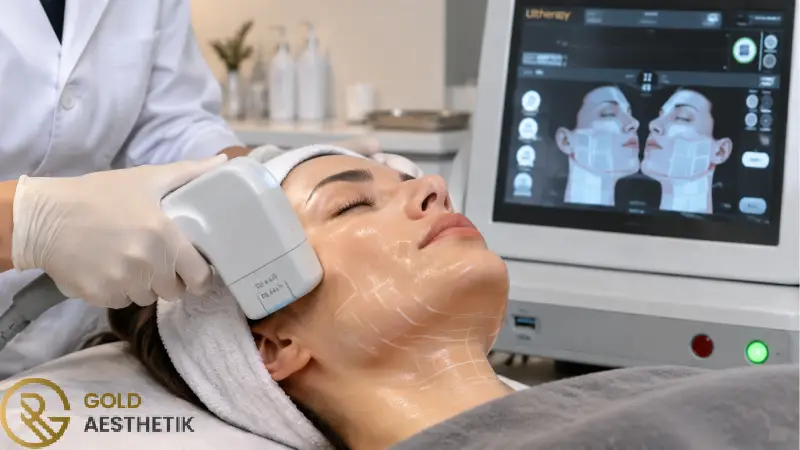
Who is HIFU not suitable for? This question cannot be answered based on age or visible skin condition alone. Key factors include the degree of skin laxity, active skin issues, medical history, medications, previous aesthetic treatments, and expectations regarding the result.
HIFU uses focused ultrasound energy and is primarily used for non-surgical tightening in cases of mild to moderate skin laxity. The treatment can stimulate tissue remodelling processes and new collagen formation, but it does not replace surgical tightening and is not equally suitable for every starting situation. For this reason, a physician should assess before treatment whether HIFU matches your individual skin condition and treatment goal.
Who is HIFU not suitable for, or only advisable after medical assessment?
There is an important difference between a situation in which a HIFU treatment should be postponed temporarily and a baseline situation in which the method is unlikely to match the desired aesthetic goal.
Active skin issues, for example, may first require medical treatment or complete healing. In other cases, HIFU is not fundamentally ruled out medically, but due to pronounced skin laxity or unrealistic expectations it may not be the most appropriate method.
Active inflammation, infections, or open areas of skin
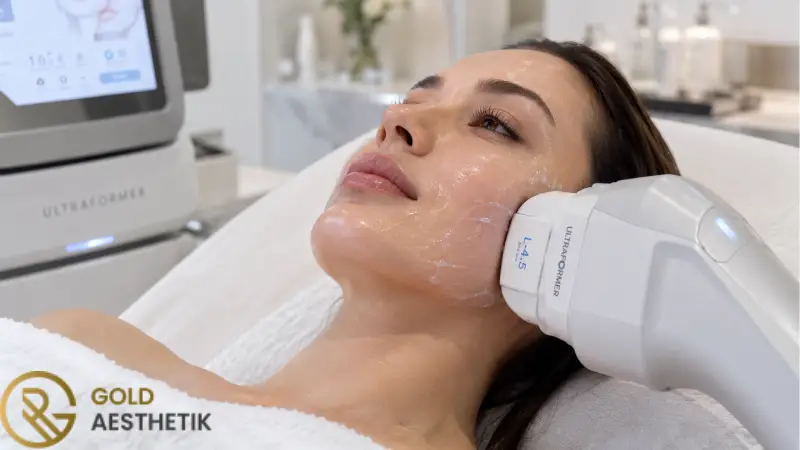
In cases of active inflammation, infections, open wounds, or other acute skin changes in the planned treatment area, it may be advisable to postpone the HIFU treatment initially.
In this situation, treating and/or allowing the current skin issue to heal is the priority. Once the skin condition has stabilised, it can be reassessed whether a HIFU treatment is an option.
| Skin condition | Why is an assessment important? | Possible next step |
|---|---|---|
| Active skin inflammation | The tissue is already irritated | Clarify the cause and postpone treatment if necessary |
| Open wound | The skin is still in the healing phase | Wait for complete healing |
| Active infection | The underlying issue should be treated first | Medical treatment and later reassessment |
| Uncontrolled skin condition | The skin response may be harder to predict | Individual medical assessment |
Disclose pre-existing conditions and medications before HIFU
Certain pre-existing conditions or medications do not automatically mean that HIFU is ruled out. However, they can influence the decision, timing, or specific treatment planning.
For this reason, existing conditions, regularly taken medications, previous issues with wound healing, and relevant medical specifics should be fully disclosed during the consultation.
Medications should not be discontinued or changed on your own in order to undergo an aesthetic treatment. Whether adjustments are necessary must be decided individually by a physician.
| Factor to be assessed | Why is it relevant? |
|---|---|
| Chronic or acute conditions | May affect timing or suitability of the treatment |
| Regularly taken medications | May be relevant for medical assessment |
| Notable wound-healing history | May need to be considered during planning |
| Previous aesthetic treatments | May affect timing and treatment area |
When should HIFU be postponed?
Sometimes HIFU is generally a possible treatment, but the current timing is unfavourable. This may be the case, for example, with active inflammation, an infection, a recent injury, or a reaction to a previous treatment that has not yet subsided.
Postponing does not automatically mean that HIFU is permanently unsuitable. After complete healing or stabilisation, the baseline situation can be medically reassessed.
| Situation | Why can postponing be advisable? |
|---|---|
| Active inflammation | Avoid additional strain on already irritated tissue |
| Infection in the treatment area | The active medical issue takes priority |
| Recent skin injury | The natural healing process should be allowed to complete |
| Reaction to a previous treatment | Stabilise the skin condition first and reassess |
For whom might HIFU be unsuitable due to the expected outcome?
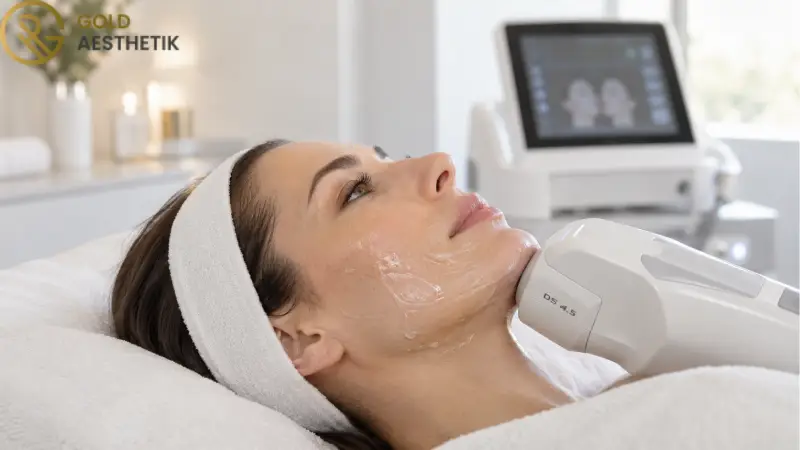
The question “Who is HIFU not suitable for?” does not only concern medical limitations. A person can be generally healthy and still not have an ideal baseline situation for the treatment.
Scientific studies on focused or micro-focused ultrasound show the best use cases primarily for mild to moderate skin laxity. With pronounced excess skin or significantly lax tissue, the achievable result may be more limited. :chatgpt-content-reference{index=”1″}
Severe skin laxity and pronounced excess skin
HIFU is a non-surgical method. It therefore cannot achieve the same structural changes as surgical skin tightening.
With mild or moderate laxity, gradual tightening or improved tissue firmness may be achievable. With severe laxity or significant excess skin, however, it should be assessed particularly critically whether the possible result matches expectations.
| Baseline situation | How HIFU fits |
|---|---|
| Mild skin laxity | May generally fit the typical area of use well |
| Moderate skin laxity | Individual assessment is advisable |
| Severe skin laxity | Result may be limited; alternatives should be discussed as well |
| Pronounced excess skin | Non-surgical procedures may not meet expectations |
Unrealistic expectations of HIFU
A common reason for dissatisfaction with aesthetic treatments is expectations that do not match the method’s actual capabilities.
HIFU typically does not produce an immediate, dramatic change in facial shape and it does not remove all wrinkles. Changes may develop gradually and vary in extent and speed from patient to patient. Overall, studies predominantly report moderate or gradual improvements and also show that individual response can vary significantly. :chatgpt-content-reference{index=”2″}
| Expectation | More realistic perspective |
|---|---|
| Immediate strong facelift | Changes usually develop gradually |
| Complete change in facial structure | Basic anatomical structures are not reshaped |
| Complete removal of all wrinkles | The goal is more an improvement in firmness and skin appearance |
| Identical result for every patient | Individual response can vary significantly |
When might another treatment be a better fit?
Not every aesthetic concern is primarily caused by skin laxity. Volume loss, pronounced excess skin, fat distribution, muscle activity, or natural facial structure can also influence appearance.
For this reason, it should first be clarified what issue is actually to be treated. Depending on the baseline situation, other non-surgical or surgical procedures may be better suited to the individual goal.
Which limitations should be assessed before a HIFU treatment?
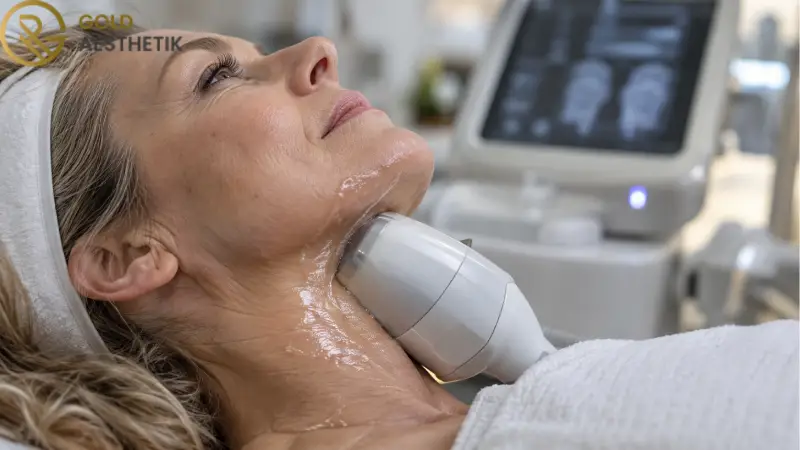
Before a HIFU treatment, the visible degree of skin laxity should not be the only factor assessed. Medical history, medications, previous aesthetic treatments, and current skin changes should also be included in treatment planning.
Pregnancy and breastfeeding
During pregnancy, this is an elective aesthetic treatment without medical urgency. In this situation, it is generally advisable to postpone HIFU to a later time and avoid unnecessary aesthetic procedures during pregnancy.
During breastfeeding, the individual situation should also be discussed with a physician before treatment. Postponing may be advisable, particularly if there is no medical reason for immediate treatment.
| Situation | Cautious approach |
|---|---|
| Pregnancy | Generally postpone elective aesthetic treatment |
| Breastfeeding | Individual medical assessment and postponement if necessary |
| Significant hormonal changes | Reassess skin condition and treatment goal |
HIFU after fillers, Botox, or other aesthetic treatments
A previous filler or Botox treatment does not automatically mean that HIFU cannot be performed. However, the timing, treatment area, and type of previous treatment should be known.
Depending on the combination, a time interval may be advisable. Rather than a fixed schedule for all patients, the sequence of different treatments should be determined based on tissue condition, treatment goal, and medical assessment.
| Previous treatment | What should be assessed before HIFU? |
|---|---|
| Fillers | Treatment area, timing, and the treatment concept used |
| Botox | Injection area and time interval |
| Other energy-based treatments | Skin response and full recovery |
| Additional rejuvenation treatments | Appropriate sequence and actual added benefit |
Why is medical consultation important before HIFU?
A consultation should not automatically end with HIFU being performed. Its primary purpose is to determine whether the method truly matches the skin concern and the desired result.
In doing so, the degree and type of skin laxity, tissue quality, medical history, medications, previous treatments, and personal expectations can be assessed together.
| Assessment point | Significance |
|---|---|
| Skin condition | Assess whether HIFU matches the actual skin concern |
| Degree of skin laxity | Helps define realistic expectations |
| Medical history | Identify possible risks or reasons to postpone |
| Medications | Important for the overall medical assessment |
| Previous treatments | Coordinate timing and treatment plan |
| Treatment goal | Assess whether HIFU can achieve the desired change at all |
How is it assessed whether HIFU is suitable for you?
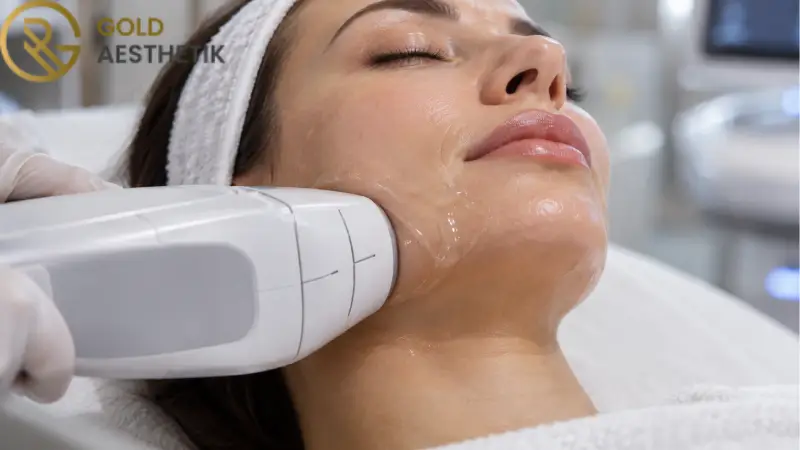
The decision for HIFU should not be based solely on the desire for tighter skin. First, it should be clarified whether skin laxity is actually the main issue or whether, for example, volume loss or other anatomical factors contribute more to the appearance.
Two patients of the same age can have completely different prerequisites. Therefore, age alone is not a reliable criterion for whether HIFU is suitable.
Which factors are assessed during the examination?
During the medical assessment, factors such as skin quality, extent of laxity, desired treatment area, and personal expectations may be considered. At the same time, relevant pre-existing conditions, medications, and previous aesthetic treatments should be known.
| Examination step | Goal |
|---|---|
| Skin assessment | Estimate the type and extent of skin laxity |
| Medical history | Identify possible limitations |
| Previous treatments | Assess suitable timing and combinations |
| Discussion of the treatment goal | Align expectations with actual possibilities |
Which questions should you ask before HIFU?
- Is the degree of my skin laxity suitable for HIFU?
- What extent of change is realistic for my baseline situation?
- Are there any limitations due to my medical history?
- Do previous filler, Botox, or other treatments need to be taken into account?
- Is there an alternative that better matches my treatment goal?
- Which possible side effects and limitations should I be aware of?
- When should the result be medically assessed?
Why are correct indication and treatment technique important?
The safety and quality of a HIFU treatment do not depend on the device alone. Patient selection, knowledge of anatomy, appropriate treatment parameters, and correct application are equally important.
The scientific literature predominantly describes temporary symptoms such as redness, swelling, tenderness, or pain. However, rare, more serious complications are possible, especially with inappropriate use. :chatgpt-content-reference{index=”3″}
An individual medical assessment and professional performance are therefore more important than advertising claims about particularly strong, immediate, or guaranteed results.
Frequently asked questions: Who is HIFU not suitable for?
Is HIFU suitable for everyone?
No. Suitability depends, among other things, on skin condition, degree of skin laxity, medical history, previous treatments, and the desired result.
Is HIFU advisable for severe skin laxity?
With severe skin laxity, HIFU is not necessarily medically prohibited, but the achievable result may be limited. Studies consider the typical use primarily for mild to moderate skin laxity. :chatgpt-content-reference{index=”4″}
Can HIFU be performed with an active skin condition?
Active inflammation, infections, or open wounds in the treatment area should first be medically assessed and treated if necessary. In such situations, HIFU can be postponed to a later time.
Is HIFU suitable during pregnancy?
As this is an elective aesthetic treatment, postponing to a later time is generally the more cautious approach. The individual situation should be discussed with a physician.
Can HIFU be performed after fillers or Botox?
A previous filler or Botox treatment does not fundamentally rule out HIFU. However, timing, treated area, and the individual treatment plan should be considered in advance.
What happens if HIFU is not the appropriate method?
If HIFU does not match the skin condition or treatment goal, this does not mean there are no other options. Depending on the cause, other procedures for skin rejuvenation or tightening may be more appropriate.
HIFU consultation at Gold Aesthetik Hamburg
At Gold Aesthetik, before a HIFU treatment, it is first assessed whether the method matches the individual baseline situation. Skin condition, degree of laxity, medical history, previous aesthetic treatments, and the desired result can be taken into account.
In addition to HIFU, Gold Aesthetik offers various treatments for skin rejuvenation and anti-ageing. Which method is appropriate should be guided by the skin’s actual needs and individual prerequisites.
Gold Aesthetik is located at Barmbeker Str. 40, 22303 Hamburg-Winterhude.

