



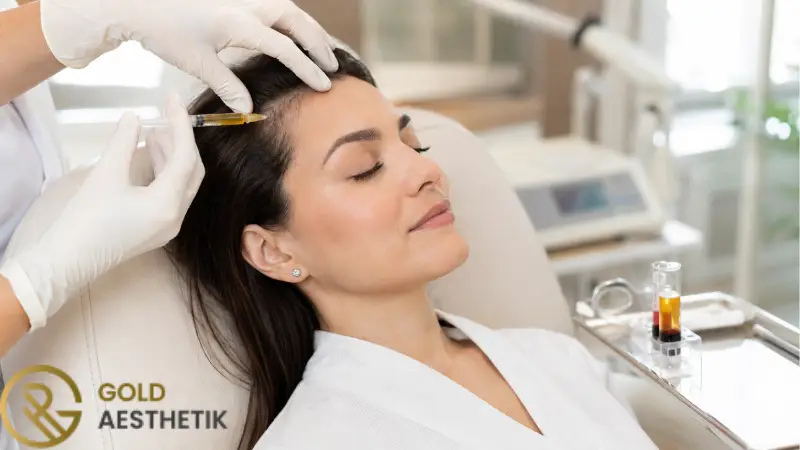
The number of PRP sessions is not the same for everyone and depends on the treatment area, the cause of the problem, the condition of the skin or hair, and the body’s response to the initial sessions. In many treatment plans, PRP for hair starts with an initial phase of about 3 to 4 sessions, and PRP for the face with about 2 to 3 sessions; however, these numbers are to be understood as a rough range, not as a fixed guideline for all patients.
The interval between sessions is usually also several weeks, so that the skin or hair follicles have sufficient time to respond to the treatment. Shortening the intervals on one’s own initiative or increasing the number of injections does not necessarily improve the result. The appropriate plan should be determined after examination and based on the actual individual response.
How many PRP sessions are needed for hair and face?
A precise answer is only possible if the treatment goal is known. The plan for a person seeking treatment for hair loss is not the same as for someone aiming for facial rejuvenation or improvement of acne scars.
Before determining the number of sessions, the doctor should assess the severity, duration, condition of the skin or follicles, medical history, and previous treatments. The outcome of the initial sessions is also important, and the initial plan can be adjusted during the course of treatment.
Quick Answer: How many PRP sessions are usually needed?
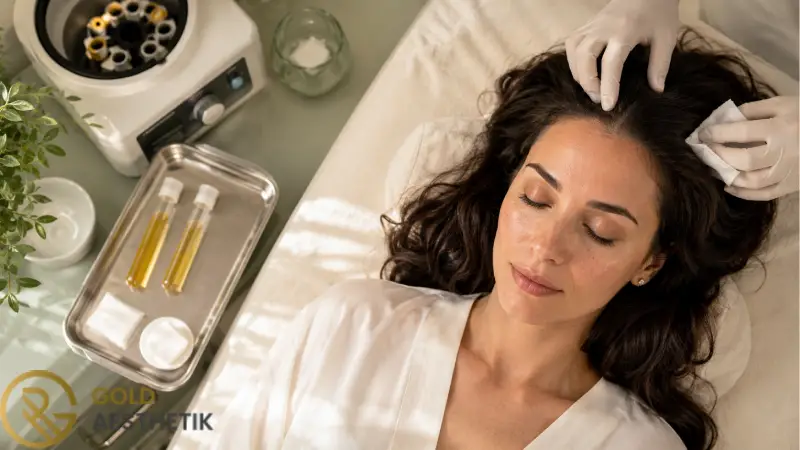
For PRP for hair, many plans consider an initial phase of about 3 to 4 sessions with an approximate interval of 4 to 6 weeks. However, the cause of hair loss and how active the follicles are is more important than the mere number of sessions.
For PRP for the face, a phase of about 2 to 3 sessions with an interval of several weeks is also often scheduled. If the goal is acne scars, a significantly uneven skin texture, or a more complex problem, the doctor may recommend a different regimen.
| PRP Application | Typical Initial Phase | Approximate Session Intervals | Main Goal |
|---|---|---|---|
| Hair Loss and Hair Thinning | often about 3 to 4 sessions | about 4 to 6 weeks | Support existing follicles and assess hair loss progression |
| Facial Rejuvenation | often about 2 to 3 sessions | about 4 to 8 weeks | gradual improvement of skin quality and texture |
| Acne Scars and Uneven Skin | depending on scar type and depth | as per medical assessment | Support tissue regeneration, sometimes combined with other procedures |
| Under-eye Area | depending on cause and skin condition | as per medical assessment | possible improvement of skin quality and fine lines |
This table is for orientation and does not replace a medical examination. PRP depends on the body’s regenerative capacity, and two individuals with seemingly similar conditions may react differently.
Why is the number of PRP sessions different for hair and face?
For PRP for hair, the goal is to support follicles that are still present. The hair growth cycle is slow, and assessing density, thickness, or shedding rate takes time. Therefore, the result cannot be evaluated a few days after the first session.
For PRP for the face, the focus is more on stimulating repair processes and improving skin quality. Those who only want more freshness and limited structural improvement may need a different regimen than someone with deep acne scars or significantly uneven skin.
Why is the number of sessions not the same for everyone?
Age alone is not the decisive factor. The cause of hair loss, the condition of the follicles, skin quality, scar depth, underlying diseases, certain medications, PRP preparation, and individual response can all influence the treatment plan.
For example, PRP cannot restore a follicle that is completely destroyed. In such cases, a higher number of sessions does not necessarily lead to better results. The same applies to the face: if the main problem is severe sagging or volume loss, a higher number of PRP sessions will not replace the appropriate treatment for that.
Is one PRP session sufficient?
One session may lead to an initial change in some individuals, but it is usually not enough to reliably assess the response. For PRP for hair, the hair cycle is time-consuming, and for PRP for the face, changes due to skin regeneration are generally gradual.
It is best to compare the result with the pre-treatment condition again after the initial phase is completed. Standardized photos, clinical controls, and medical assessment often provide more accurate information than daily mirror checks.
| Phase | Goal | Time of Evaluation | Next Decision |
|---|---|---|---|
| First Session | Start of Treatment Plan | after sufficient time | Check tolerability and initial response |
| Initial Phase | enable a sufficiently assessable response | after completion of sessions | Compare result with baseline condition |
| Control Phase | assess effectiveness | according to medical plan | Continue, adjust, or discontinue treatment |
| Maintenance Session | stabilize results in suitable individuals | depending on effect wearing off | adjust individual plan |
Number of PRP Sessions for Hair and Treatment Plan for Hair Loss
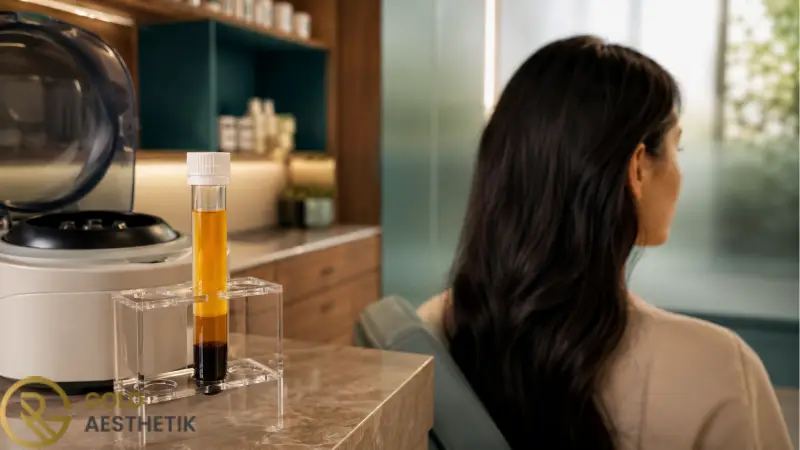
The PRP plan for hair should primarily be based on the cause of hair loss. Visible hair thinning alone is not sufficient to begin injections. A medical assessment must clarify whether supportable follicles are still present and whether PRP is suitable for the type of hair loss.
For a more precise assessment of suitable candidates, limitations, and the timing of visible results, you can also read the article PRP for Hair Loss.
How many PRP sessions are needed for mild hair loss?
In early stages of hair thinning, when many active follicles are still present, an initial phase of about 3 sessions can be considered to start and assess the response. The goal is not to form new follicles, but to support existing hair and evaluate a change in the course of hair loss.
If there is an appropriate response after the initial phase, the doctor can decide whether to continue treatment or extend the intervals.
How many PRP sessions are needed for moderate hair loss?
For moderate hair loss, a phase of about 3 to 4 sessions is often discussed. Afterwards, it should be checked whether the shedding has decreased, whether the characteristics of the existing hair have changed, or whether another measurable reaction has occurred.
Continuing sessions without evaluating results is not advisable. If the underlying cause remains active, controlling this factor may be more important than a higher number of injections.
Does severe hair loss require more PRP sessions?
More severe hair loss does not automatically mean more sessions are needed. In advanced hair thinning, it should first be clarified how many follicles are still active. If an area has been completely without active follicles for a long time, a higher number of PRP sessions cannot generate new follicles.
In such cases, it may be advisable to explore other options within hair loss treatments in Hamburg.
| Hair Loss Situation | Possible Approach | Important Note |
|---|---|---|
| Early hair thinning with active follicles | start with a limited phase and evaluate results | clarification of cause remains necessary |
| Moderate hair loss | often about 3 to 4 initial sessions | response should be evaluated after the phase |
| Severe hair loss with active follicles | individual plan | The result depends on the condition and activity of existing follicles. |
| Complete, long-standing baldness | consider other methods | PRP does not restore destroyed follicles |
What is the interval between PRP sessions for hair?
In many plans, an interval of about 4 to 6 weeks is set between initial sessions. This gives the scalp and follicles time to show their response without injecting too frequently.
If the scalp remains inflamed or sensitive, or another problem arises, the doctor may adjust the date of the next session. A difference of a few days also does not mean that the entire treatment plan is “lost.”
After how many sessions can one see the result of PRP for hair?
The result is not immediately visible. Some individuals first notice a gradual decrease in hair loss; changes in thickness or visible density often appear later. The result should be evaluated over several months and by comparing before/after.
| Treatment Phase | Possible Change | Suitable Assessment Method |
|---|---|---|
| After the first session | possibly no clear visible change | check side effects and tolerability |
| Further sessions | in responders, the course of hair loss may change | compare scalp condition and amount of shedding |
| After several months | better assessment of hair characteristics and density possible | comparison with baseline condition is important |
PRP or Hair Mesotherapy: Which requires fewer sessions?
The number of sessions alone is not a suitable criterion to choose between these two treatments. With PRP, plasma from one’s own blood is used, while with mesotherapy, the injected substance can vary depending on the product and protocol.
Before comparing the number of sessions, the cause of hair loss and the substance used should be clear. The article PRP or Hair Mesotherapy explains the mechanism of action, evidence, sessions, and selection criteria for both methods in more detail.
When are maintenance sessions for PRP for hair performed?

After the initial phase is completed, the result should be re-evaluated. If the treatment was accompanied by an acceptable response, the doctor may suggest a maintenance regimen for the future.
For some individuals, the interval between maintenance sessions can be several months, but a fixed plan for everyone is not correct. The cause of hair loss, its progression, and further treatments should always be taken into account.
When is it not advisable to continue PRP for hair?
If no measurable change in the course of hair loss or hair characteristics is observed after an appropriate phase, an automatic continuation of sessions should be re-evaluated. The initial diagnosis, the underlying cause, the follicle status, or the choice of PRP itself may need to be reassessed.
Even with active scalp diseases, sudden hair loss without diagnosis, or long-standing complete baldness, repeated injections should not replace clarifying the main cause.
Number of PRP Sessions for the Face and Treatment Plan for Skin Rejuvenation
The number of PRP facial sessions in Hamburg is determined by the treatment goal, skin quality, depth of skin problems, and individual response. PRP for the face is primarily used for gradual improvement of skin quality and should not be equated with fillers or volume-adding procedures.
For general rejuvenation, a phase of about 2 to 3 sessions is usually assessable. If the goal is a more specific problem like acne scars, the plan may differ.
How many PRP sessions are needed for facial rejuvenation?
For individuals whose main goal is an improvement in freshness, texture, and fine lines, about 2 to 3 sessions are often scheduled in an initial phase. The interval is usually several weeks to allow sufficient time for natural regeneration processes.
Changes can also be perceived after the first session, but the result of one session is not sufficient or permanent for everyone. The number of sessions should be determined based on the actual skin reaction.
If you also want to check applications, procedure, side effects, and aftercare of this method in addition to the number of sessions, the article PRP for Facial Skin Rejuvenation is a more specialized guide.
| Facial Treatment Goal | Assessable Initial Plan | Important Note |
|---|---|---|
| Freshness and general skin quality | often about 2 to 3 sessions | skin reaction should be evaluated |
| Fine lines | depending on severity and cause | PRP is not suitable for all types of wrinkles |
| Acne scars | more sessions or combination treatment may be needed | scar type and depth are crucial |
| Under the eyes | depending on skin quality and cause | dark circles and hollows have different causes |
How many PRP sessions are needed for acne scars and scars?
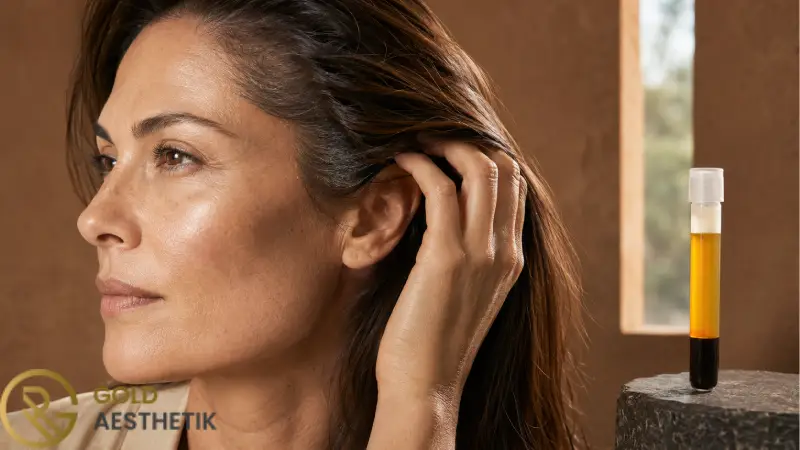
Acne scars are not a uniform problem. Superficial, depressed, deep, or old scars may require different treatments. Therefore, a uniform number of PRP sessions cannot be determined for all types of acne scars.
For some individuals, the doctor may consider PRP in combination with procedures such as microneedling. Even then, the number of sessions should be determined based on scar severity and tissue response. PRP is intended to support regeneration; one should not expect it to completely eliminate all deep scars alone.
How many PRP sessions are needed for the eye area?
The skin under the eyes is thin and delicate; the main cause should be clarified before making a decision. Fine lines and reduced skin quality are not the same as a structural hollow or pigment-related discoloration.
For some individuals, a phase with multiple sessions to improve skin quality in this area may be considered, but a fixed number before examination is not advisable. If the main cause of darkness or hollowness cannot be corrected with PRP, additional sessions will not lead to the expected result.
What is the interval between PRP sessions for the face?
In many plans, an interval of about 4 to 8 weeks is considered between sessions. The goal is to give the skin enough time to respond and to be able to evaluate the previous session.
If the skin remains irritated or inflamed, the doctor may postpone the next session. The appropriate interval is also not necessarily the same for general rejuvenation, scars, and the under-eye area.
After how many sessions can one see the result of PRP for the face?
Short-term swelling after the injection can temporarily make the skin appear different, but this is not the actual treatment result. Changes in skin quality and regeneration are usually gradual.
| Time | Possible Change | Note on Evaluation |
|---|---|---|
| First days | redness, swelling, or sensitivity | too early for result assessment |
| Weeks thereafter | a gradual improvement in skin quality may begin | reaction speed is individual |
| After completion of the phase | better assessment of freshness, texture, and superficial lines possible | comparison with baseline condition is important |
| Further control | check how well the result lasts | decision on maintenance or adjustment of treatment |
How often are PRP maintenance sessions performed?
A maintenance session should not be performed solely because a certain date has been reached. After the initial phase is completed, the extent of the response, the current condition of the skin or hair, and the persistence of the main cause should be re-evaluated.
In some plans, maintenance sessions may be considered at intervals of several months up to about a year, but this period does not suit everyone. Some individuals require different aftercare, and for others, continuation is not necessarily required.
| Session Type | Goal | Basis for Decision |
|---|---|---|
| Initial Sessions | generate and evaluate treatment response | depending on the initial problem |
| Maintenance Sessions | stabilize results in suitable individuals | depending on the durability of the effect and examination |
Which factors change the number of PRP sessions?
A PRP plan should be individualized. Factors that can change the number or interval of sessions include:
- Cause and severity of hair loss
- Presence of active follicles
- Type and depth of the skin problem
- Skin quality and baseline condition
- Body’s response to previous sessions
- Type of PRP preparation
- Underlying diseases and medications taken
- Presence of active inflammation or infection
- Patient’s goal and expectation
Therefore, choosing a fixed package for everyone is not medically advisable. The quality of the decision whether to continue or stop is more important than a higher number of sessions.
When should the number of PRP sessions not be increased?
If no measurable response is observed after an appropriate phase, it is better to investigate the cause instead of automatically continuing injections. PRP may not be the right choice for the main problem, or an underlying factor has not yet been addressed.
For hair loss, long-standing complete baldness, active scalp diseases, or hair loss without diagnosis require re-evaluation. For facial rejuvenation, severe sagging, significant volume loss, or certain scar types may require other procedures.
The goal of a medical treatment is not the maximum number of sessions, but a number of sessions that suits the individual conditions and available evidence.
Frequently Asked Questions about the Number of PRP Sessions
How many sessions are needed for PRP for hair?
Many plans involve about 3 to 4 initial sessions with an interval of several weeks, but the exact number depends on the cause, follicle status, and individual response.
How many sessions are needed for PRP for the face?
For general rejuvenation, a phase of about 2 to 3 sessions is usually assessable. Acne scars, under-eye problems, or other skin conditions may require a different regimen.
Does one PRP session yield a result?
An initial change may be visible, but one session is not sufficient for everyone to fully assess the response. PRP results are generally gradual.
What is the interval between PRP sessions?
For hair, an interval of several weeks is often set, and for the face, an approximate interval of several weeks is also applied. The exact timing should be determined based on the treatment area and individual response.
What happens if I have a PRP session later?
If an appointment is not possible exactly on the planned date, a new time should be coordinated with the doctor. A difference of a few days does not necessarily mean that the effect of the entire phase is lost.
Do more PRP sessions lead to better results?
No. If there is no appropriate response, it is not advisable to simply add more sessions without clarifying the cause. Continuation should be based on a real evaluation of results.
Number of PRP Sessions at Gold Aesthetik Hamburg

At Gold Aesthetik, the number of PRP sessions is not set as a uniform package for everyone. First, the type of problem, the condition of the skin or hair, medical history, and the expected outcome are assessed, then an initial plan is proposed.
Dr. Mohammadreza Hagh Dadeh, a specialist in vascular surgery and aesthetic medicine, works with the Gold Aesthetik team in Hamburg. For hair loss treatment, clarifying the cause and follicle status are crucial; for PRP for the face, the type of problem and skin quality should be assessed before determining the number of sessions.
If necessary, the result is re-evaluated during the course of treatment to avoid unnecessary sessions. If PRP alone is not sufficient for the individual problem, further options in skin rejuvenation or hair loss treatment can be explored.
The Gold Aesthetik practice is located at Barmbeker Str. 40, 22303 Hamburg-Winterhude.

