


Hair Transplant: Methods, Procedure and Key Decision Factors
A hair transplant is a surgical procedure that moves suitable hair follicles from a donor area to parts of the scalp affected by thinning or baldness. The procedure does not create new hair follicles. For that reason, the quality and long-term capacity of the donor area are fundamental to treatment planning.
A successful plan is not simply about transplanting the highest possible number of grafts. The cause and pattern of hair loss, donor density, hairline design, graft distribution, growth direction and the possibility of future hair loss all influence the final appearance.
This guide explains who may be suitable for a hair transplant, how FUE and FUT differ, what grafts are, why donor area management matters, how the procedure is performed and what to expect during recovery and hair growth.

What Is a Hair Transplant?
A hair transplant involves removing suitable follicular units from a donor area and placing them into selected recipient areas where additional hair coverage is needed.
It is important to understand that a hair transplant does not increase the total number of follicles available on the scalp. It redistributes part of the existing donor supply.
This means that every treatment plan must balance the desired improvement in the recipient area with preservation of the donor area.
Hair transplantation may be considered for rebuilding a receding hairline, restoring selected areas of the frontal scalp, increasing coverage in thinning regions or treating certain areas of advanced hair loss.
Who May Be a Suitable Candidate for a Hair Transplant?
Having hair loss does not automatically mean that hair transplantation is the right treatment. The cause, pattern and progression of hair loss should be considered together with scalp health and donor area quality.
More favourable factors may include
Closer assessment may be required with
Can Women Have a Hair Transplant?
Yes, hair transplantation can be considered in selected women. However, female hair loss is often more diffuse than the classic pattern seen in many men.
If the potential donor area is also affected by thinning, the number of reliably usable follicles may be limited. Identifying the cause and pattern of hair loss is therefore particularly important before planning surgery.
What Is the Donor Area and Why Does It Matter?
The donor area is the region from which follicles are harvested for transplantation. In many patients, suitable areas of the back and sides of the scalp are assessed for this purpose.
The donor supply is limited. Once a follicular unit has been removed, it is no longer available to contribute to the density of that donor site or to a potential future procedure.
Important factors in donor area assessment
Why can overharvesting be a problem?
Removing too many grafts from a limited donor area, or concentrating extraction in specific zones, can create visible thinning.
Excessive harvesting can also reduce the options available if additional treatment is required later in life.
How Does an FUE Hair Transplant Work?
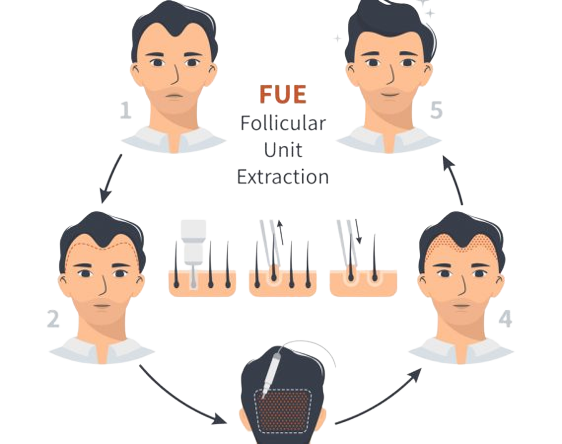
FUE stands for Follicular Unit Excision. During FUE, individual follicular units are carefully scored with a small circular instrument and then removed from the donor area.
The harvested grafts are inspected and prepared before being placed into the planned recipient areas.
Unlike Strip FUT, FUE does not involve removing a long strip of scalp. However, this does not make FUE scar-free. Small wounds are created at each extraction point and tiny dot-like scars can remain.
How Is a Hair Transplant Performed?
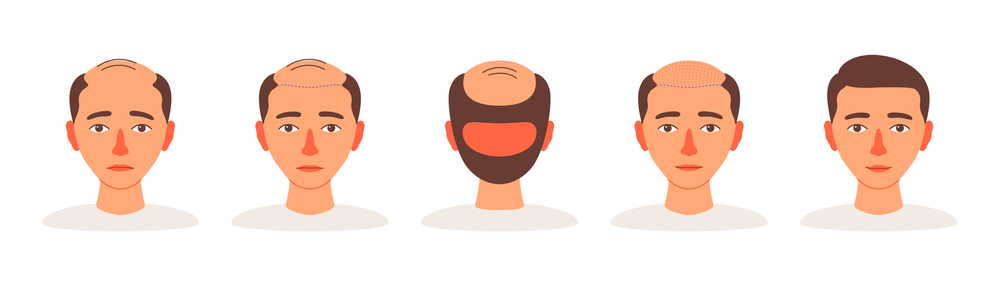
The exact procedure depends on the harvesting technique, number of grafts and individual treatment plan. However, most hair transplant procedures involve several key stages.
Hair Loss Assessment
The pattern and progression of hair loss, scalp condition, medical history and previous treatments are reviewed.
Donor Area Evaluation
Density, hair calibre, available harvesting area and long-term donor capacity are assessed.
Hairline Planning
The hairline and treatment priorities are planned according to facial proportions, age, donor supply and possible future hair loss.
Graft Harvesting
Selected follicular units are removed from the donor area using the planned harvesting technique.
Preparation and Implantation
Grafts are examined and positioned according to planned density, growth direction and recipient area.
Aftercare and Follow-Up
Patients receive guidance on washing, protecting the grafts, physical activity and the expected recovery process.
FUE, FUT and DHI: What Is the Difference?
Patients often encounter several different terms when researching hair transplantation. It is important to distinguish between the method used to harvest follicles and the technique used to place those follicles into the recipient area.
| Method | What Happens? | Important Point |
|---|---|---|
| FUE | Individual follicular units are excised and removed one at a time from the donor area. | There is no linear strip scar, although small dot-like scars can occur. |
| Strip FUT | A narrow strip of hair-bearing scalp is surgically removed and then divided into individual follicular units. | A linear scar usually remains in the donor area. |
| DHI | The term is commonly used to describe implantation of grafts with an implanter device. | DHI is not a separate follicle harvesting technique and should not automatically be considered a completely different type of hair transplant. |
No technique is automatically the best option for every patient. Donor area quality, hairstyle, number of required grafts, scalp characteristics and previous procedures can influence the choice.
What Is a Hair Graft and How Many Grafts Are Needed?
A graft should not be confused with a single hair. A naturally occurring follicular unit can contain one, two, three or more hairs.
This is why two patients receiving the same number of grafts may end up with a different total number of transplanted hairs and a different visual density.
What Determines the Number of Grafts?
Why Is Hairline Design So Important?
The hairline strongly influences how natural a hair transplant appears. Even a procedure with a high graft count can look artificial if the hairline is too low, too straight or poorly matched to the patient's facial proportions.
A natural-looking design should consider height, shape, temporal transitions, hair growth direction and the distribution of single-hair and multi-hair follicular units.
Facial Proportions
The hairline should complement the forehead, temples and overall facial structure.
Age and Future Hair Loss
An unnecessarily low hairline can consume donor grafts that may be needed later if hair loss continues.
Growth Direction
The angle and direction of implantation influence how naturally transplanted hair blends with existing hair.
When Will You See Hair Transplant Results?
A hair transplant does not produce its final cosmetic result immediately. The scalp and transplanted follicles first go through a healing and growth cycle.
How Permanent Is a Hair Transplant?
Appropriately selected and successfully transplanted follicles can continue to grow for a long period of time.
However, a hair transplant does not automatically stop the progression of hair loss in non-transplanted hair. Existing native hairs around the transplanted area may continue to thin over the years.
For this reason, the original treatment plan should consider not only the current appearance but also the likely future pattern of hair loss.
What Are the Risks and Side Effects of a Hair Transplant?
Hair transplantation is a surgical procedure. Even when treatment is carefully planned, side effects and complications can occur.
Temporary Reactions
Swelling, tenderness, tightness, itching, crusting and temporary numbness can occur during early recovery.
Surgical Complications
Possible risks include bleeding, infection, wound-healing problems and reactions related to anaesthesia or medication.
Aesthetic Risks
Poor graft growth, visible scarring, excessive donor harvesting or an unnatural hairline can negatively affect the cosmetic result.
Hair Transplant Aftercare: What Should You Know?
Care during the early healing period is important for both the donor and recipient areas. Exact instructions can vary depending on the technique used and the individual treatment plan.
During the Early Recovery Period
Exercise and Daily Activities
The appropriate time to return to intense exercise, swimming, sauna, hats and prolonged sun exposure can vary.
Individual postoperative instructions should take priority over generic advice found online.
What Is the Role of PRP and Mesotherapy in Hair Loss?
PRP, mesotherapy and hair transplantation do not have the same purpose.
Hair transplantation physically transfers follicles from one area to another. PRP and mesotherapy are generally considered in areas where active follicles are still present.
PRP for Hair Loss
PRP may be considered as part of a treatment plan for selected patients with active follicles and thinning hair. It cannot create new follicles in an area where follicles are no longer present.
Learn More About PRPMesotherapy for Hair
Mesotherapy involves introducing selected substances into the scalp. Whether it is suitable depends on the cause and pattern of hair loss.
Learn More About MesotherapyWhat Determines the Cost of a Hair Transplant?
The cost of a hair transplant cannot be determined accurately from a single standard price without first understanding the individual treatment requirements.
The number of grafts is important, but it is only one part of the calculation.
Factors That Can Affect Hair Transplant Cost
Why Is an Assessment Important Before Pricing?
Two people with a similar degree of visible hair loss can have very different donor density, hair calibre and follicular unit distribution.
Their treatment plans and realistically achievable density can therefore be very different.
Looking Specifically for a Hair Transplant in Hamburg?
Choosing a clinic involves more than comparing graft numbers or advertised techniques. Medical consultation, realistic donor assessment, follow-up care and access to the treating clinic are also important factors.
We cover these location-specific questions separately so this main guide can remain focused on hair transplantation itself.
Individual Planning Before a Hair Transplant
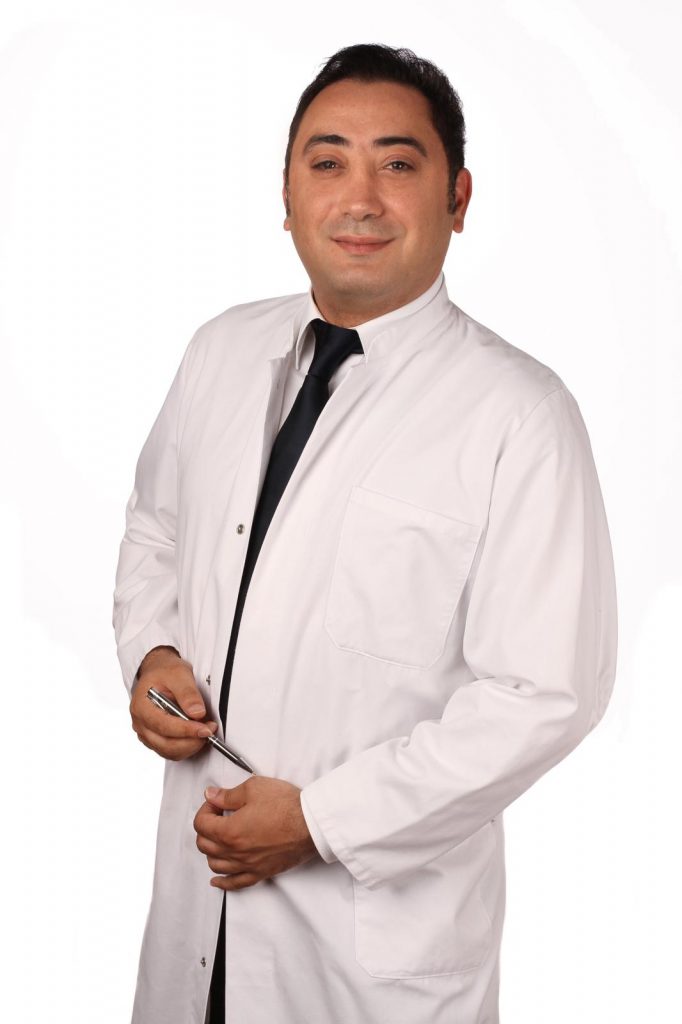
Dr. (IR) Mohammadreza Haghdadeh
Specialist in Vascular Surgery and Aesthetic Medicine
Before planning a hair transplant, the pattern of hair loss, scalp condition and donor area should be assessed carefully.
The key question is not simply how many grafts can technically be removed. It is how the available donor supply can be used effectively across the hairline, frontal scalp, mid-scalp and crown while preserving options for the future.
Possible progression of natural hair loss should also be considered when designing the initial treatment plan.
Gold Aesthetik is located at Barmbeker Str. 40, 22303 Hamburg-Winterhude.
More Information About Hair Transplants and Hair Loss
More specialised subjects are covered separately so that each guide can answer a clear question without making this main hair transplant page unnecessarily repetitive.
Frequently Asked Questions About Hair Transplants
What is a hair transplant?
A hair transplant moves suitable hair follicles from a donor area to selected thinning or bald areas.
What is the donor area?
The donor area is the region from which follicles are harvested. Its density, hair quality and long-term stability are important factors in treatment planning.
Can the donor area look thinner after a hair transplant?
Yes. Every harvested follicular unit reduces the number of follicles remaining in the donor area. Excessive or poorly distributed harvesting can create visible thinning.
What does FUE mean?
FUE stands for Follicular Unit Excision. Individual follicular units are scored with a small circular instrument and then removed from the donor area.
Is an FUE hair transplant scar-free?
No. FUE usually avoids the linear scar associated with Strip FUT, but small dot-like scars can remain at individual extraction sites.
What is the difference between FUE and FUT?
FUE harvests follicular units individually. Strip FUT removes a narrow strip of hair-bearing scalp that is then divided into individual grafts.
Is DHI a separate hair transplant method?
DHI is commonly used to describe graft placement with an implanter device. It is not a separate method for harvesting follicular units from the donor area.
What is a hair graft?
A graft is a transplanted follicular unit. One follicular unit may naturally contain one or several hairs.
How many grafts do I need?
There is no standard number for every patient. Treatment area, donor capacity, hair calibre, desired density, hairline design and future hair loss all influence planning.
When does transplanted hair start growing?
Some transplanted hair shafts may shed during the early weeks. New visible growth then develops progressively over the following months.
When will I see the final hair transplant result?
The timeline varies. Hair density and thickness continue to mature over many months, and complete assessment may require around a year or longer in some patients.
Is a hair transplant permanent?
Suitably selected transplanted follicles can continue growing long term. However, non-transplanted native hair can still become thinner as natural hair loss progresses.
Is everyone with hair loss suitable for a transplant?
No. The cause and pattern of hair loss, donor area, scalp condition and realistic expectations should be evaluated before surgery.
What are the risks of a hair transplant?
Potential risks include swelling, bleeding, infection, scarring, poor growth of some grafts, numbness and visible donor area thinning.
What determines the cost of a hair transplant?
Important factors include treatment area, estimated graft requirement, donor area condition and the complexity of the planned procedure.
Medical Information About Hair Transplant Surgery
Hair transplantation is a surgical procedure. The harvesting method, donor area capacity, risk of scarring, possible complications and postoperative care should be assessed individually.
For further information about terminology and surgical hair restoration methods, visit the International Society of Hair Restoration Surgery .
General information about recovery, risks and hair transplant results is also available from the NHS .
Is a Hair Transplant Suitable for Your Hair Loss?
The first step is a realistic assessment of the hair loss pattern, scalp and donor area. Only then can the suitability of surgery, treatment priorities and realistically achievable density be discussed.