



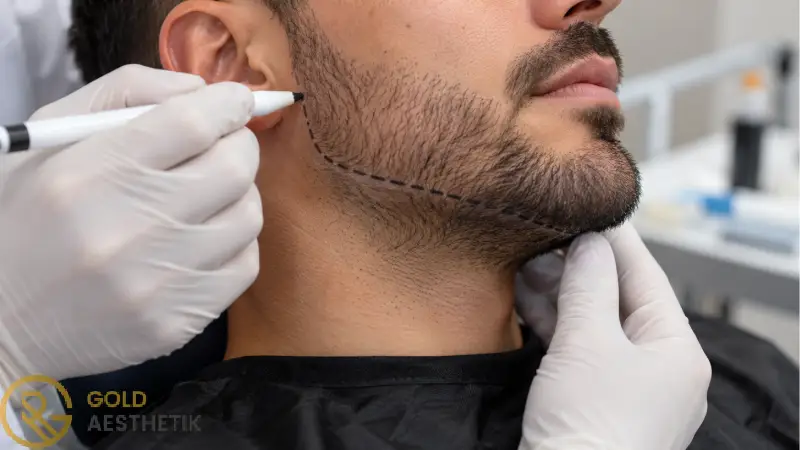
The costs of a beard transplant in Hamburg cannot be reliably stated with a uniform flat rate. The individual treatment effort depends, among other things, on which beard areas are to be densified or reconstructed, how many suitable grafts are needed, what density is desired, and the condition of the donor area.
Beard shape, existing hair growth, natural growth direction, skin condition, and desired treatment outcome also play a role in planning. A reliable cost estimate is therefore only meaningful once the recipient area, donor area, and medical prerequisites have been individually assessed.
Costs of a Beard Transplant in Hamburg: What factors determine the price?
The costs of a beard transplant in Hamburg are determined less by a fixed tariff and more by the actual scope of the treatment. Filling individual small gaps differs significantly in terms of graft requirements, planning, and treatment time from extensive densification or reconstruction of larger beard areas.
The goal of a beard transplant is also not merely the highest possible number of transplanted hairs. The cheek line, jawline, chin, mustache, and the transitions between individual beard zones should be planned so that the transplanted hairs integrate as harmoniously as possible into the existing growth pattern.
Size of the transplantation area and required graft count
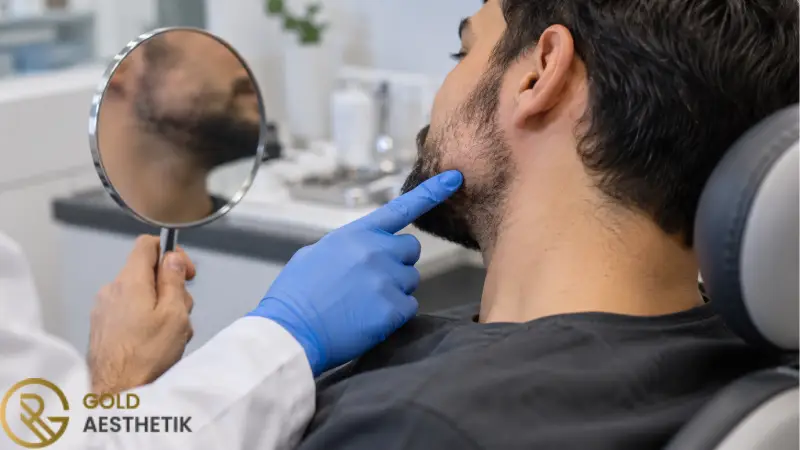
One of the most important factors for the treatment effort is the size of the area to be transplanted. For some patients, there are only individual sparse spots on the cheeks, chin, mustache, or beard line. In other cases, a significantly larger part of the beard is to be densified or reconstructed.
As the treatment area increases, the need for grafts can also rise. However, the required number should not be determined solely by the desired density. Equally important are the capacity of the donor area, hair structure, existing beard hairs, and how the available grafts can be meaningfully distributed across the individual areas.
| Treatment Area | Typical Goal | Significance for Planning |
|---|---|---|
| Small, limited gaps | Supplementing individual areas | Matching existing beard hairs and growth direction |
| Cheeks and beard line | Supplementing or densifying contour | Precise planning of shape, density, and implantation direction |
| Chin and mouth area | Increasing density or connecting individual beard zones | Special consideration of the natural growth pattern |
| Large beard area | More extensive densification or reconstruction | Higher graft requirement and careful planning of the donor area |
More grafts do not automatically mean a better result. The extraction should be planned to preserve the donor area as much as possible and to place the available follicular units where they are useful for shape and visual coverage.
Desired Density and Individual Beard Shape
The planned beard shape also influences the treatment effort. Cheek line, jawline, chin area, mustache, and the transitions between different zones should match the individual facial proportions and existing hair growth.
The desired density is also relevant. While one patient may only want smaller gaps filled, another may desire significantly more extensive densification. Whether this goal can be realistically achieved depends particularly on the number of suitable grafts and the capacity of the donor area.
| Planning Factor | What is assessed? | Significance |
|---|---|---|
| Density | Desired visual coverage | Should match available donor capacity |
| Cheek line | Upper contour of the beard | Influences the overall shape and natural appearance |
| Jawline | Course in the lower facial area | Should harmonize with facial proportions |
| Growth direction | Natural course of existing beard hairs | Important for the alignment of transplanted grafts |
A perfectly straight beard line or identical density in all areas does not necessarily look natural. The treatment plan should therefore be aligned with the existing hair pattern, facial proportions, and individual possibilities.
Condition of the Donor Area
Before a beard transplant, it should be checked whether sufficient suitable follicles are available for extraction in the donor area. This includes considering hair density, hair thickness, hair structure, and the possible extraction quantity.
The characteristics of the donor hairs can also influence the later appearance. Significant differences between the transplanted hairs and existing beard hairs should therefore be considered during planning.
Additionally, the condition of the facial skin plays a role. Active inflammations, skin diseases, or certain medical conditions may require further medical clarification before treatment is planned.
| Checklist Item | Why is it important? |
|---|---|
| Density of the donor area | Helps assess the possible extraction quantity |
| Hair structure and thickness | Influence visual coverage and graft selection |
| Quality of follicles | Relevant for selecting suitable follicular units |
| Condition of facial skin | Important for assessing the recipient area |
| Medical history | Can influence suitability and treatment planning |
What other factors influence the costs of a beard transplant?
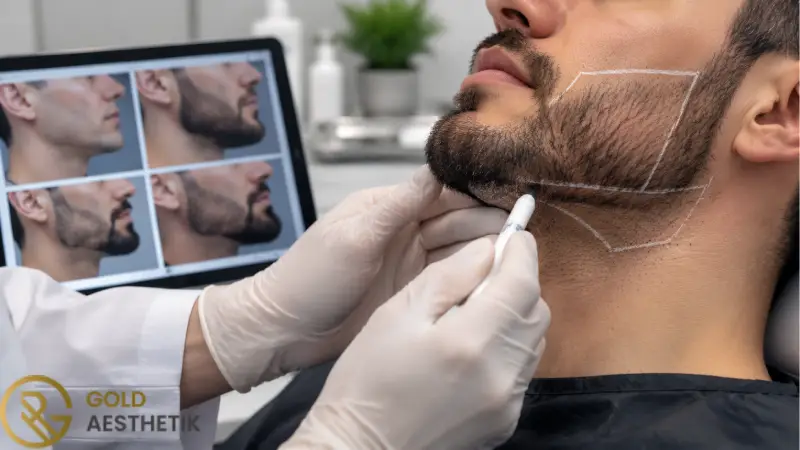
The graft count is only one component of cost planning. Additionally, technical effort, complexity of the desired beard shape, necessary treatment time, condition of the donor area, and the services included in the individual offer can play a role.
A mere price comparison between two clinics therefore provides only limited information if the scope of treatment, graft count, initial situation, or included services differ.
What influence does the transplantation technique have?
Depending on the treatment concept, the steps of follicle extraction, preparation, and implantation can differ. Which approach is appropriate in an individual case should be decided based on the donor area, the required grafts, the recipient area, and the planned beard shape.
In beard transplantation, the implantation direction plays a particularly important role. Beard hairs grow at different angles depending on the facial area. A method should therefore not be chosen solely based on its name, an advertising claim, or a price difference.
Complexity of Beard Shape and Precision of Planning
A beard transplant does not merely consist of transferring hair follicles. Before treatment, the cheek line, chin area, mustache, and transitions between different beard zones must be planned, among other things.
Especially at visible contours and transitions, the natural growth direction plays a major role. The grafts should be placed as much as possible so that they harmoniously integrate into the existing beard hairs after growth.
The more complex the desired shape and the larger the area to be treated, the higher the planning and treatment effort can be. Therefore, costs can differ even for patients with a similar graft count.
Medical Experience and Standards
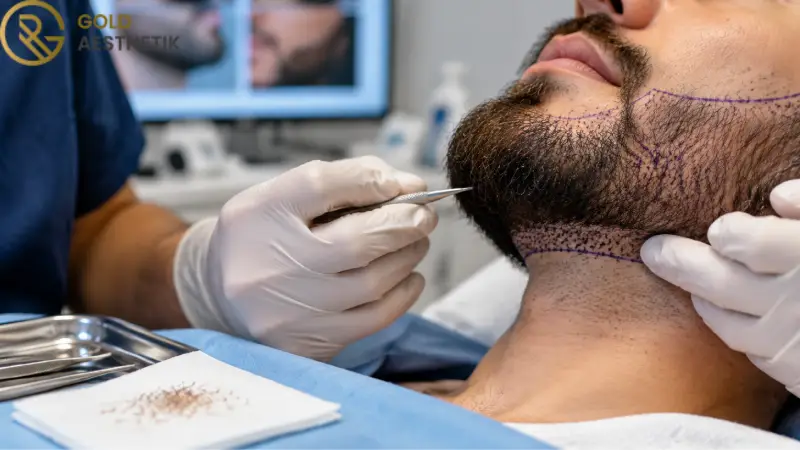
When comparing different clinics, price should not be the sole decision criterion. Equally relevant are the medical assessment of the donor area, the selection of suitable grafts, individual shape planning, consideration of the natural growth direction, and aftercare.
A careful medical assessment can help to realistically estimate the graft requirement, consider the limits of the donor area, and create a treatment plan that suits individual conditions.
| Criterion | Significance for Treatment |
|---|---|
| Assessment of the donor area | Basis for a realistic estimate of extraction capacity |
| Planning the beard shape | Alignment with facial proportions and existing hair growth |
| Handling of grafts | Careful extraction, preparation, and implantation |
| Medical and hygienic standards | Important component of a safe treatment process |
| Aftercare | Monitoring the healing process and assessing possible abnormalities |
A higher price alone does not guarantee a better treatment outcome. Conversely, a particularly inexpensive offer should not be chosen solely based on cost. What is crucial is whether the examination, treatment planning, medical prerequisites, and offered services are coherently aligned.
What services can be included in the treatment price?
When comparing prices, not only the total sum should be considered. It is also important which services are included in the individual offer and whether additional costs may arise for certain steps.
| Phase | Possible Components |
|---|---|
| Before treatment | Medical consultation, examination of donor and recipient areas, and shape planning |
| Treatment day | Extraction, preparation, and implantation of grafts |
| Immediate aftercare | Individual instructions for caring for the treated area |
| Follow-up appointment | Assessment of the healing process and further recommendations if needed |
Which of these services are actually part of an offer should be clarified transparently before treatment. Individual cost information is more meaningful if it is clear which services and scope of treatment have been considered.
How are the individual costs of a beard transplant determined?
An exact cost estimate without prior assessment can be inaccurate. For example, two patients may both desire a denser beard but require very different scopes of treatment.
During the consultation, it is first clarified which areas are to be treated and what conditions exist in the donor area. Subsequently, it can be assessed what density appears realistic and how many grafts are likely to be needed for the planned area.
Assessment of sparse or hairless areas
First, it is determined which beard areas are to be treated. Thinning can be limited to individual small zones, be unevenly distributed, or affect larger parts of the beard area.
For some patients, beard hairs are already present in most facial areas, and only minor additions are necessary. For others, more extensive reconstruction or densification may be required.
Assessment of the donor area
Afterward, it is checked how many suitable follicular units can be extracted without unnecessarily stressing the donor area. The need in the beard area should be balanced with the actually available donor capacity.
If the number of suitable grafts is limited, prioritizing individual areas may be sensible. Which strategy is appropriate depends on the individual initial situation and the planned beard design.
Shape Planning and Estimation of Graft Requirement
Based on the examined areas, a beard shape can be planned, and the approximate graft requirement can be estimated. Not only the total number should be considered, but also the question of which density and distribution are appropriate in which areas.
The graft count is therefore not an isolated value. It is always related to the available area, existing beard growth, desired shape, and the capacity of the donor area.
Defining the Individual Treatment Plan
Only when treatment areas, donor capacity, desired beard shape, skin condition, and technical procedure have been jointly assessed can the actual treatment effort be better estimated.
On this basis, individual cost information can then be prepared. Flat-rate price indications do not replace this personal assessment.
What should you look for when comparing prices and clinics?
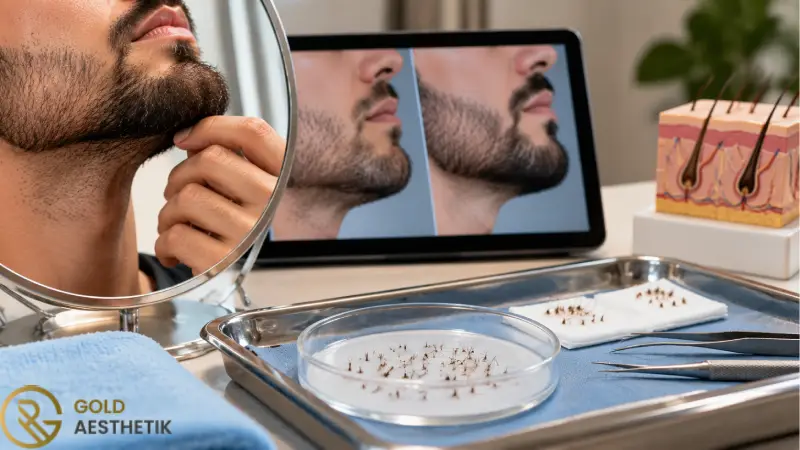
When deciding on a clinic, not only the total costs should be compared. Equally important are the quality of medical consultation, the assessment of the donor area, individual beard planning, explanation of possible limitations, and the planned aftercare.
Medical Consultation Before Beard Transplantation
The consultation offers the opportunity to jointly assess existing beard growth, donor area, skin condition, and individual wishes. It should also be discussed whether the desired density and beard shape are realistically achievable with the existing conditions.
A medically responsible consultation should not only describe potential benefits but also address limitations and individually relevant risks. A specific final result or an exactly defined density cannot be guaranteed independently of the donor area, graft survival, healing process, and other individual factors.
Natural-Looking Planning Instead of Maximum Graft Count
A natural beard does not have the same density and growth direction in all facial areas. Cheeks, jawline, chin, and mouth area differ in their growth pattern. These differences should be considered when distributing and aligning the grafts.
The goal should therefore not be the maximum possible number of transplanted grafts. A sensible distribution, appropriate implantation angles, and an individually suitable beard shape can be equally crucial for the later appearance.
Medical Standards and Suitable Equipment
Suitable instruments and technical equipment can support precise extraction and implantation but do not solely determine the course of treatment. Equally important are medical planning, professional handling of grafts, and adherence to hygienic and medical standards.
| Criterion | What should be considered? |
|---|---|
| Initial assessment | Are the donor area, skin condition, and treatment goal individually checked? |
| Beard planning | Is the shape adapted to facial proportions and existing hair growth? |
| Treatment method | Is the procedure justified based on individual conditions? |
| Aftercare | Are there clear care instructions and an option for follow-up? |
| Expectation management | Are realistic possibilities and limitations clearly explained? |
What questions help when comparing different offers?
Before exclusively comparing the final sum of different offers, it should be clarified which services are included and on what medical assessment the costs are based.
| Comparison Point | Relevant Question |
|---|---|
| Initial consultation | Are the donor and recipient areas examined before a cost estimate is given? |
| Beard design | How will the proposed shape be adapted to my existing beard growth? |
| Graft count | On what basis was the graft requirement estimated? |
| Treatment method | Why was this procedure chosen for my initial situation? |
| Aftercare | What follow-up appointments and care instructions are planned? |
| Expected outcome | Are possible limitations and individual influencing factors explained? |
Price is a legitimate part of the decision. However, for a medical treatment, it should be considered together with individual suitability, the quality of the medical assessment, the treatment plan, and the included services.
Consultation on the Costs of a Beard Transplant at Gold Aesthetik Hamburg
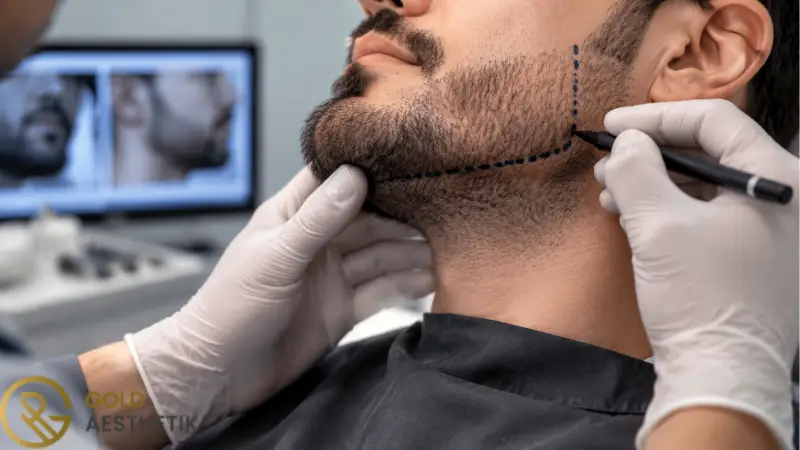
At Gold Aesthetik, the treatment plan for a beard transplant is created based on the individual initial situation. This includes considering existing beard growth, desired treatment area, donor area, skin condition, beard shape, and personal treatment goals.
During the medical consultation, the desired transplantation areas, the estimated graft requirement, possible coverage, and the appropriate procedure for the individual case can be discussed. The later result depends, among other things, on the donor area, graft survival, healing process, and individual hair growth.
The Gold Aesthetik clinic is located at Barmbeker Str. 40, 22303 Hamburg-Winterhude. If you would like to have your personal initial situation assessed and discuss the estimated treatment effort, you can request a consultation appointment via the Gold Aesthetik contact page or call +49 170 1732608.

