



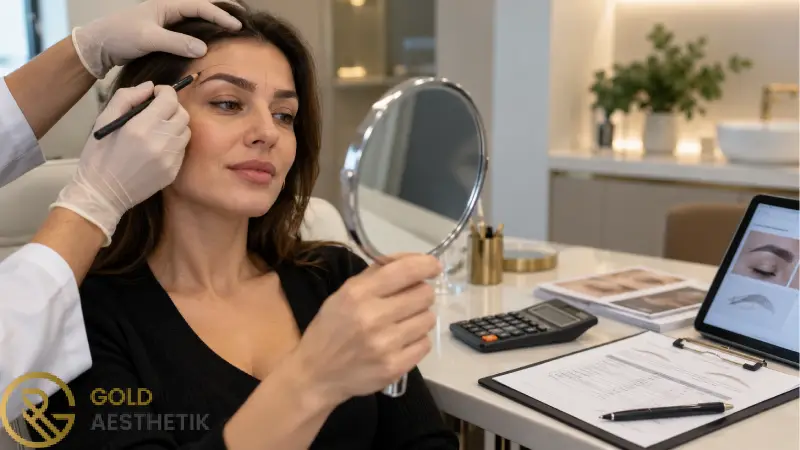
The cost of eyebrow transplantation in Hamburg cannot be reliably stated as a single flat rate. Key factors include the number of grafts required, the initial condition of the eyebrows, the characteristics of the donor area, the planning effort, and the services included in the individual offer.
In this guide, you will learn which factors influence the price of eyebrow transplantation, why costs vary depending on the initial situation, and what to consider when comparing different offers. A reliable cost estimate is only meaningful after a medical assessment of the individual requirements.
What Does Eyebrow Transplantation Cost in Hamburg?
The cost of eyebrow transplantation can vary significantly depending on the initial situation. Particularly relevant are the required number of grafts, the desired density and shape, the characteristics of the donor area, and the individual effort involved in planning and implantation. Therefore, a reliable cost estimate should be based on a personal examination and treatment plan.
| Influencing Factor | Impact on Treatment Plan and Cost |
|---|---|
| Required Number of Grafts | As the graft count increases, so does the scope of extraction and implantation steps |
| Extent of Eyebrow Thinning | Larger areas usually require a more extensive implantation plan |
| Eyebrow Shape and Design | A more precise design can increase the time and complexity of the treatment |
| Condition of the Donor Area | Hair structure, follicle quality, and available extraction volume must be individually assessed |
| Transplantation Technique | The chosen method can influence the effort required for extraction, preparation, and implantation |
| Aftercare | The type and scope of aftercare may be part of the individual treatment plan |
Why Is There No Fixed Price for All Patients?
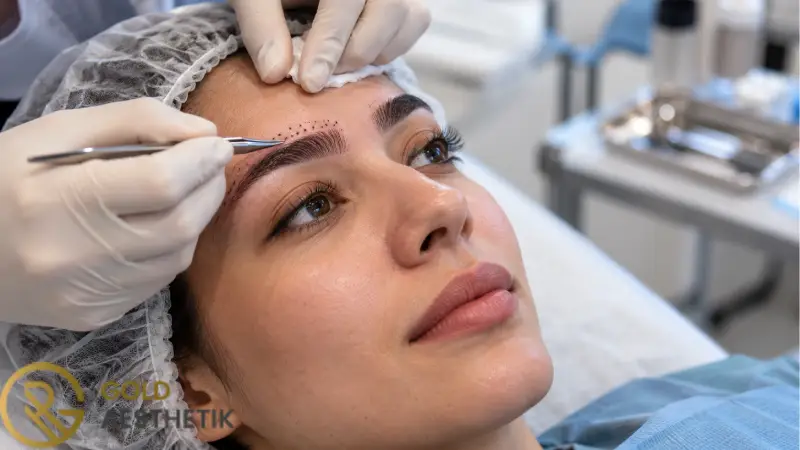
Eyebrow transplantation is planned individually. For some patients, thinning affects only the outer area of the eyebrow, while in other cases a larger section needs to be reconstructed. Accordingly, the treatment scope and required graft count can vary considerably.
The desired density also plays a role. Sometimes the goal is simply to fill in individual gaps; in other cases, greater densification, correction of the arch, or more comprehensive reshaping of the eyebrow is desired.
In addition to personal preferences, medical planning should take into account facial proportions, existing eyebrow shape, growth direction of remaining hairs, skin condition, and donor area, among other factors. Therefore, a binding price cannot usually be reliably determined based solely on a photo or brief description.
How Does the Number of Grafts Influence the Cost of Eyebrow Transplantation?
An important factor for cost is the number of grafts required for the planned coverage. However, in eyebrow transplantation, quantity is not the only consideration: the selection of suitable grafts and their precise placement are also crucial for treatment planning.
The growth direction and angle of natural eyebrow hairs vary by area. A higher graft count does not automatically lead to a more natural-looking result if shape, spacing, implantation angle, and hair placement are not appropriately planned.
| Approximate Initial Eyebrow Condition | Treatment Goal | Relative Complexity |
|---|---|---|
| Limited Thinning | Filling in a few small areas | Lower |
| Moderate Thinning | Increasing density in multiple areas | Medium |
| Shape Correction | Limited shape modification with additional coverage | Medium to High |
| Extensive Reconstruction | Design and transplantation in a large portion of the eyebrow | Higher |
This classification serves only to illustrate the differences between treatment scenarios. The exact graft count should be determined after examination of the eyebrows and donor area.
The exact graft count should therefore not be viewed in isolation, but always coordinated with shape planning, donor area, and desired density.
How Do Thinning and Current Eyebrow Shape Affect the Price?

The extent of thinning directly influences the size of the treatment area. If only a limited part of the eyebrow needs correction, the treatment plan is usually smaller. Pronounced thinning or the absence of a large portion of the eyebrow may require a more extensive design and larger transplantation.
The desired shape also influences the treatment effort. Filling in the tail of the eyebrow differs significantly from reshaping the arch or densifying along the entire length of the eyebrow.
If there is a history of tattoo or microblading, the existing pigment lines and skin condition should also be assessed. In some cases, the new shape can be adapted to the existing markings; in other cases, a different plan may be advisable.
What Services Are Included in the Cost of Eyebrow Transplantation?
When comparing treatment offers, it should be clarified which steps are included in the stated amount. Price differences do not always arise solely from graft count; accompanying services can also vary.
| Step or Service | Purpose |
|---|---|
| Initial Consultation | Assessment of the eyebrows, medical history, and discussion of individual expectations |
| Eyebrow Shape Design | Planning a shape that suits facial proportions and existing hair |
| Donor Area Assessment | Evaluation of hair structure, follicle quality, and available extraction volume |
| Graft Extraction and Preparation | Selection and preparation of suitable follicles |
| Follicle Implantation | Placement according to angle, direction, and desired density |
| Initial Care | Discussion of individual instructions for the initial healing phase |
| Follow-up Examination | Monitoring of healing progress and hair growth, if medically necessary |
When comparing costs, it is advisable to inquire about all these steps so that it is clear exactly which services the proposed plan includes.
Which Factors Determine Treatment Effort and Therefore Cost?

The number of follicles is only one part of the treatment plan. For the most natural-looking result possible, eyebrow design, graft selection, implantation angle, spacing, treatment technique, and skin condition must be assessed together.
Therefore, costs can vary even with similarly pronounced thinning. Differences arise, for example, from the required shape planning, desired density, or condition of the donor area.
| Treatment Factor | Role in Treatment Plan | Possible Influence on Complexity |
|---|---|---|
| Eyebrow Shape Design | Determination of area and implantation pattern | Medium to High |
| Number of Grafts | Determines the scope of extraction and implantation | High |
| Desired Density | Determines the required coverage level | Variable |
| Treatment Technique | Influence on extraction and implantation steps | Medium |
| Condition of Donor Area | Determines quality and number of usable grafts | Variable |
| History of Tattoo, Microblading, or Scarring | Requires more detailed assessment of skin and design | Variable |
How Do Shape Planning and Eyebrow Design Influence Treatment Effort?
A central step in eyebrow transplantation is planning an individually suitable shape. In addition to personal preferences, facial proportions, existing brow base, arch, tail, and natural growth direction should be considered.
For some patients, it is sufficient to supplement a small area; in other cases, correction of the arch, densification, or reconstruction of a larger section is required.
Shape planning also determines which areas should be more densely filled and in which direction and with what spacing the grafts will be placed. Eyebrow design is therefore not only an aesthetic but also an essential technical component of the transplantation plan.
Why Are Implantation Angle and Growth Direction So Important?
Eyebrow hairs do not grow in the same direction in all areas. The natural pattern differs between the inner brow area, middle, arch, and tail. These differences should be considered when implanting the grafts.
If the growth direction is inappropriately planned, even a high graft count can lead to an uneven or unnatural-looking appearance. Therefore, precise placement of the grafts is just as important as their number.
| Factor | Role for the Result | Possible Problem with Unsuitable Design |
|---|---|---|
| Eyebrow Shape | Harmony with facial structure | Inconsistent appearance |
| Density | Creating appropriate coverage | Thinning or excessively dense look |
| Implantation Angle | Supports the most natural hair placement possible | Unnaturally protruding hairs |
| Growth Direction | Orientation to natural growth pattern | Growth in inappropriate direction |
| Graft Distribution | Sensible use of extractable follicles | Uneven density in different areas |
What Influence Does the Eyebrow Transplantation Technique Have on Cost?
The technique used can influence follicle extraction, graft preparation, and implantation. Which method is appropriate in individual cases should be decided based on individual requirements; no single technique can be designated as the best option for all patients.
Extent of thinning, skin condition, donor area quality, and desired design can play a role in method selection. The decision should therefore not be made solely based on price or a particular technique designation.
Why Are Medical Experience and Precise Planning Important?
In eyebrow transplantation, small technical details can significantly influence the final appearance. The selection of suitable grafts, a shape that suits facial proportions, and orientation to natural growth direction require careful medical planning and precise execution.
When comparing different clinics, in addition to cost, the quality of consultation, individual shape planning, transparent explanation of limitations and risks, and the aftercare concept should be considered.
A higher price alone does not guarantee a better result, and a lower price is also not a suitable selection criterion without examining treatment details.
How Is the Condition of the Donor Area Assessed?
Before treatment, it should be verified that suitable follicles are available for extraction in the donor area. Hair structure, follicle quality, and reasonable extraction volume are among the factors that may be considered.
Not every donor hair is equally suitable optically for the eyebrow region. The selection of appropriate grafts can help ensure that transplanted hairs integrate as harmoniously as possible into the existing eyebrow structure.
| Assessment Point | Why Important |
|---|---|
| Approximate Graft Count | Determination of approximate treatment scope |
| Initial Design | Determination of area and shape of implantation |
| Implantation Angle and Growth Direction | Supports the most natural alignment of transplanted hairs possible |
| Donor Area Quality | Assessment of grafts usable for transplantation |
| Eyebrow Skin Condition | Identifying factors that may alter the treatment plan |
| Post-Treatment Aftercare | Monitoring of healing progress and growth |
How Do Costs of Eyebrow Transplantation Differ Depending on Initial Situation?
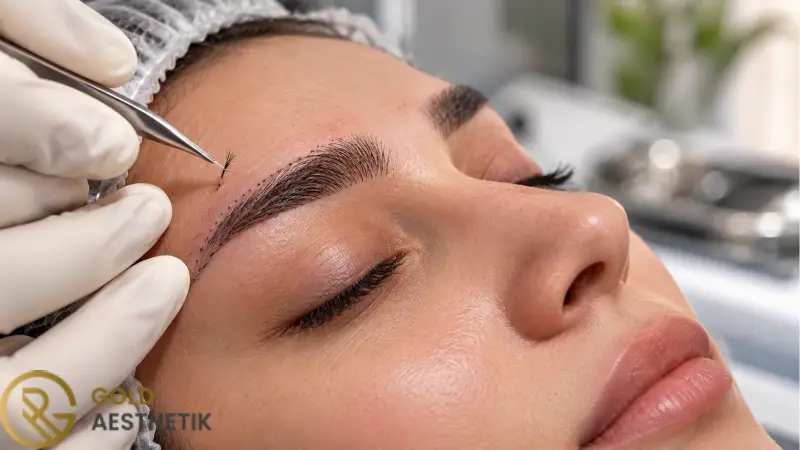
The initial situation before eyebrow transplantation can vary greatly. Some patients have only slight thinning, while in other cases previous tattoos, microblading, skin changes, or scars must be considered.
In each of these situations, skin condition, existing eyebrow shape, donor area, and treatment goal should be individually assessed.
| Initial Situation | Main Treatment Goal | Relative Complexity |
|---|---|---|
| Limited Thinning | Filling in small areas | Lower |
| Pronounced Thinning | More coverage in a large portion of the eyebrow | Medium to High |
| Tattoo History | Coordinating transplantation with shape and skin condition | Variable |
| Microblading History | Correction or supplementation of existing shape | Variable |
| Scar | Assessing whether transplantation is possible in the desired tissue | Dependent on skin condition |
| Extensive Reconstruction | Creating a more complete eyebrow shape | Higher |
Eyebrow Transplantation for Thinning Eyebrows
One of the most common reasons for consultation is natural thinning or decreasing density over time. If the basic structure of the eyebrow is preserved, treatment can focus more on filling in gaps and matching grafts to existing natural hairs.
With pronounced thinning, design becomes more important, as the density and distribution of grafts along the eyebrow must be planned more carefully.
What Requirements Apply for Eyebrow Transplantation After a Tattoo?
An existing tattoo does not automatically mean that eyebrow transplantation is possible or ruled out. Skin condition, extent of pigmentation, and desired new shape should be assessed in advance.
If the existing shape largely corresponds to the desired pattern, transplantation planning may be oriented accordingly. Otherwise, it should be examined how the new shape can be sensibly coordinated with remaining pigment traces.
Is Eyebrow Transplantation Possible After Microblading?
Even after previous microblading, it can generally be assessed whether eyebrow transplantation is an option. However, the decision depends on skin condition, existing changes, and the history of previous treatments.
After repeated microblading or similar treatments, careful assessment of the skin is particularly important. Remaining pigment lines should also be incorporated into planning the new eyebrow shape.
Reconstruction of Scarred Areas
If hair loss resulted from injury, surgery, burn, or scarring, the requirements differ from ordinary thinning. The nature of scar tissue can influence treatment planning; whether transplantation in the desired area is advisable should therefore be medically assessed.
Scar tissue is not uniformly constituted in every case. Without prior examination, neither graft survival nor the final result can be reliably predicted.
Does More Density Always Require More Grafts?
A larger transplantation area or higher desired density can increase graft requirements. However, the relationship is not purely linear, because existing natural hair, hair structure, distribution pattern, and shape planning also play a role.
What matters is therefore not the maximum possible graft count, but a distribution that suits the donor area, existing hair structure, and planned design.
| Area Extent | Desired Density | Relative Graft Requirement | Treatment Complexity |
|---|---|---|---|
| Limited | Natural | Lower | Lower |
| Limited | Higher | Medium | Medium |
| Medium | Natural | Medium | Medium |
| Medium | Higher | Higher | Medium to High |
| Extensive | Natural | Higher | High |
| Extensive | Higher | Even Higher | High |
The final graft count should therefore always be determined in relation to donor area, desired density, and planned eyebrow shape.
What Should You Consider When Comparing Prices for Eyebrow Transplantation in Hamburg?
A price comparison is only meaningful if it is clear which treatment steps and services are included in each offer. A higher or lower total amount alone does not allow a reliable statement about quality, suitability, or expected result.
| Topic | Question You Should Ask |
|---|---|
| Initial Examination | Are skin condition and donor area assessed? |
| Eyebrow Design | How is the proposed shape adapted to the face? |
| Number of Grafts | What is the graft estimate based on? |
| Treatment Technique | Why was this technique chosen for the individual situation? |
| Aftercare | What instructions and follow-up examinations are offered? |
| Expectations for the Result | Are limitations and realistically achievable results explained? |
Consultation on the Cost of Eyebrow Transplantation at Gold Aesthetik in Hamburg
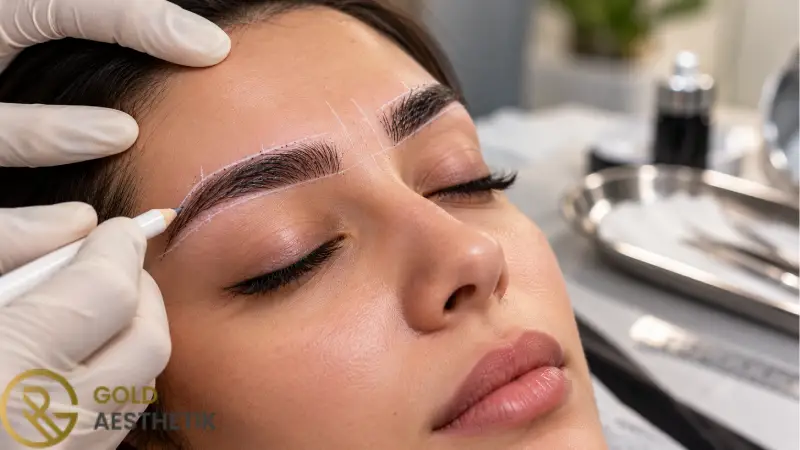
At Gold Aesthetik in Hamburg, planning for eyebrow transplantation is adapted to the individual initial situation. This includes consideration of existing eyebrow density, facial proportions, donor area, skin condition, and personal treatment goal. Shape planning and graft count should also match the actual requirements of the donor area.
Before transplantation, individual requirements are medically assessed to discuss shape, suitable method, and realistic expectations for the treatment. The final result can vary from person to person and depends on factors including donor area, graft survival, healing progress, and individual hair growth.
Gold Aesthetik clinic is located at Barmbeker Str. 40, 22303 Hamburg-Winterhude. If you would like to have your individual initial situation medically assessed and discuss the anticipated treatment effort, you can arrange a consultation appointment via the Gold Aesthetik contact page or call +49 170 1732608.

