



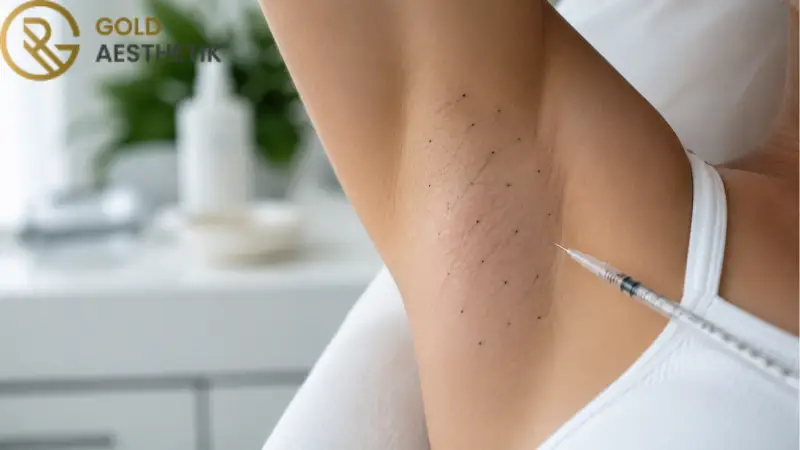
What is Botox for excessive sweating and how does it work?
Sweating is a natural bodily function for temperature regulation. However, when the amount of sweat increases disproportionately to heat, physical activity, or environmental conditions, it can impair a person’s daily life. Constantly wet clothes, difficulty shaking hands, objects slipping from the hand, moisture in shoes, and anxiety in work or social situations are common problems for people with excessive sweating.
This problem is medically known as hyperhidrosis. Botox for excessive sweating is a medical method that can temporarily reduce the activity of sweat glands in the treated area. This method is non-surgical, and its most well-known application is for heavy underarm sweating. Injections into the palms and soles of the feet may also be considered under certain circumstances and following a medical examination.
The treatment result is not the same for everyone and depends on the affected area, the intensity of sweating, the skin surface area, the type of product, the injection technique, and the body’s reaction. Before treatment, it must be clarified whether the sweating is primary or caused by an underlying disease, hormonal changes, or medication.
For individuals seeking Botox treatment for sweating in Hamburg, a pre-injection examination is of great importance. Treating sudden or widespread sweating without investigating the underlying cause can delay the diagnosis of the primary problem.
Botox for Sweating at a Glance
- Botox can temporarily inhibit the nerve impulses that stimulate the sweat glands in the injection area.
- The more well-known application of this method is for heavy and localized underarm sweating.
- Injections into the palms and soles are generally more painful and may be associated with more restrictions.
- The effect of the treatment is not permanent and gradually wears off after a few months.
- The full result is usually not visible in the first few days and takes time.
- Night sweats, sudden onset, or widespread sweating should be medically clarified before injection.
- The amount and injection points for underarms, palms, and soles are not identical.
- Unusual muscle weakness, difficulty breathing, or swallowing are warning signs that require immediate investigation.
What is hyperhidrosis and when is treatment necessary?
Hyperhidrosis is a condition in which the body sweats more than it needs to, and it can affect daily activities, work, social relationships, or a person’s quality of life. This problem can affect only one area, such as the underarms, palms, or soles, or occur in several parts of the body.
The intensity of sweating is not assessed solely by the visible amount of sweat. Its impact on clothing choice, handling equipment, writing, shaking hands, driving, wearing shoes, and the person’s well-being is also important for the treatment decision.
If sweating is mild and only occurs during exercise, heat, or anxiety, it may be part of a normal bodily response. In contrast, sweating that occurs without a specific trigger or leads to repeated soaking of clothing and impairment of activity requires further investigation.
Differences between primary and secondary hyperhidrosis
Primary hyperhidrosis usually begins in specific areas, bilaterally, and during the teenage or young adult years. Underarms, palms, soles, and sometimes the face are affected, and there may be a similar family history.
Secondary hyperhidrosis is caused by a disease, hormonal changes, or medication. This type of sweating can be widespread, occur during sleep, or start suddenly. Thyroid problems, infections, certain metabolic disorders, menopause, and some medications are factors that can be considered when searching for the cause.
If sweating starts suddenly, affects the whole body, persists during sleep, or is accompanied by fever, weight loss, palpitations, tremors, weakness, or other unusual symptoms, determining the cause should be a priority before injection.
| Feature | Primary Hyperhidrosis | Secondary Hyperhidrosis |
|---|---|---|
| Sweat Pattern | Often localized and bilateral | Can be widespread or asymmetrical |
| Onset | Often in adolescence or young adulthood | Can start suddenly at any age |
| Sweating During Sleep | Usually less common | May be present |
| Root Cause | Often no specific cause found | Disease or medication may play a role |
| Main Action | Assessment of intensity and choice of topical treatment | Diagnosis and management of the underlying condition |
When should excessive sweating be investigated more seriously?
Sudden onset of sweating, night sweats, full-body involvement, unexplained weight loss, fever, chest pain, shortness of breath, palpitations, or severe weakness are cases that should not be controlled with topical treatment alone.
With these symptoms, additional tests or an evaluation may be required. The type of investigation is determined by the physician based on age, medical history, medications, and other symptoms, and a series of tests is not necessary for all individuals.
How does Botox reduce sweat gland activity?
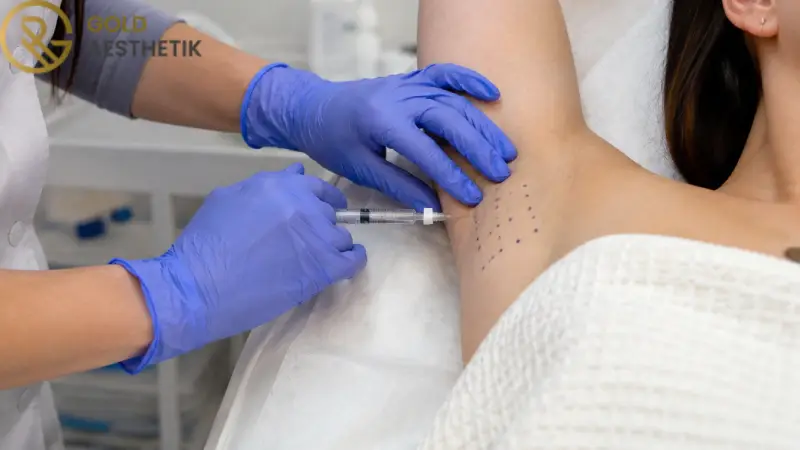
Sweat glands are activated by impulses they receive from nerve endings. Acetylcholine is one of the transmitters of these impulses and stimulates sweat production when it reaches the sweat glands.
By temporarily inhibiting the release of acetylcholine, botulinum toxin reduces the stimulating impulse for sweating at the injection site. The effect of the treatment is limited to the sites where the injections were made, and the sweat glands in other parts of the body remain active.
The effect of Botox is not permanent. Over time, the nerve connection gradually restores itself, and the amount of sweat may return to the pre-treatment state. A repeat treatment should be performed after the recurrence of symptoms and medical assessment.
Reducing sweating in a limited area such as the underarms normally does not affect the body’s overall ability to regulate temperature, but the simultaneous treatment of large or multiple areas should be assessed more carefully.
Who can be a candidate for Botox for sweating?
Botox is not necessary for every person who sweats slightly more than usual. This method is primarily considered for individuals who have moderate to severe localized sweating, whose problem impairs daily life, and for whom simpler treatments have not achieved sufficient results.
The following individuals may be candidates for treatment after an examination:
- Individuals whose underarm sweat constantly soaks their clothes.
- Individuals who have difficulty writing, typing, or shaking hands due to damp palms.
- Individuals whose foot sweat has led to constant moisture in shoes, slipping, or skin irritation.
- Individuals for whom medical antiperspirants were insufficient or caused severe skin irritation.
- Individuals seeking a non-surgical and temporary method to reduce localized sweating.
Active infections or inflammation at the injection site, known allergies to the product, certain neuromuscular diseases, and swallowing or breathing problems can influence the treatment decision. All illnesses, medications, and previous injections must be disclosed to the physician.
Who should postpone the treatment?
In the case of wounds, infections, purulent pimples, or active inflammation in the target area, the injection is usually postponed until the skin has healed. An injection on infected skin can increase the risk of complications.
During pregnancy and breastfeeding, elective treatments with botulinum toxin are usually postponed to a later date due to limited safety information. The final decision should be based on individual circumstances and medical opinion.
Individuals with neuromuscular diseases or a history of extensive muscle weakness should be assessed with greater caution. No medications, especially blood thinners, should be discontinued without medical consultation.
Is Botox the first choice for excessive sweating?
The choice of treatment depends on the intensity of sweating, the affected area, and the cause of the problem. For many individuals, medical antiperspirants are considered first. For palms and soles, iontophoresis can also be a non-injectable option.
Oral medications may be considered for some individuals but can cause general side effects such as dry mouth, blurred vision, constipation, or urinary problems. Surgical methods are usually considered for selected and resistant cases.
| Treatment Method | Possible Application | Advantage | Limitation |
|---|---|---|---|
| Medical Antiperspirants | Mild to moderate cases | Non-invasive and applicable at home | Can irritate the skin or be insufficient in severe cases |
| Iontophoresis | Mostly for palms and soles | Without injection | Requires regular sessions and maintenance therapy |
| Oral Medications | Some cases after medical consultation | Possibility of effect on multiple areas | Possible general side effects |
| Botox | Moderate to severe localized sweating | Local effect and non-surgical | Temporary effect and possible need for repetition |
| Surgical Methods | Selected and resistant cases | Possibility of a longer-lasting effect | Invasive and associated with risks such as compensatory sweating |
Botox also has other therapeutic applications. For example, you can learn about another medical application in the article Botox for Chronic Migraine. The injection site, product quantity, and treatment goal differ between these two applications.
Botox Treatment for Underarm, Palm, and Foot Sweat
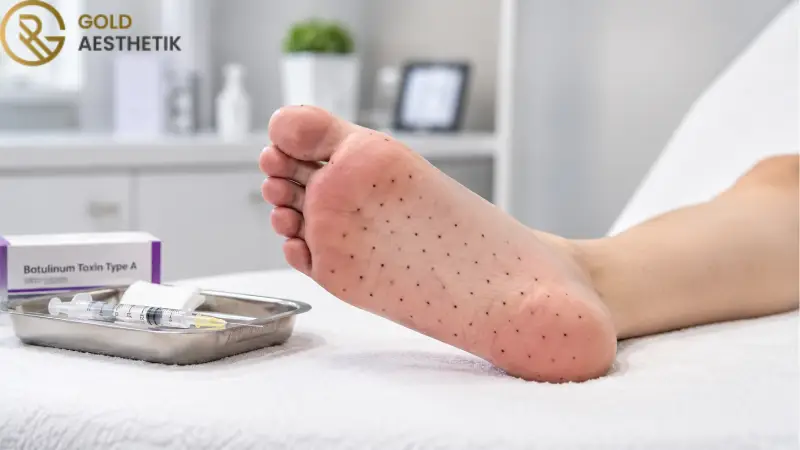
Although the mechanism of action of Botox is similar in different areas, the injection technique, scope of treatment, skin sensitivity, and likelihood of side effects differ in each area. The physician must assess the intensity of sweating and the boundaries of the active area and then decide on the suitability of the injection.
The approval and registered use of each botulinum toxin product can vary in different countries and regions. Underarm treatment is a more well-known application, while injections into the palms or soles may occur outside the product’s registered use and require more detailed information and informed consent.
Botox for the Underarms
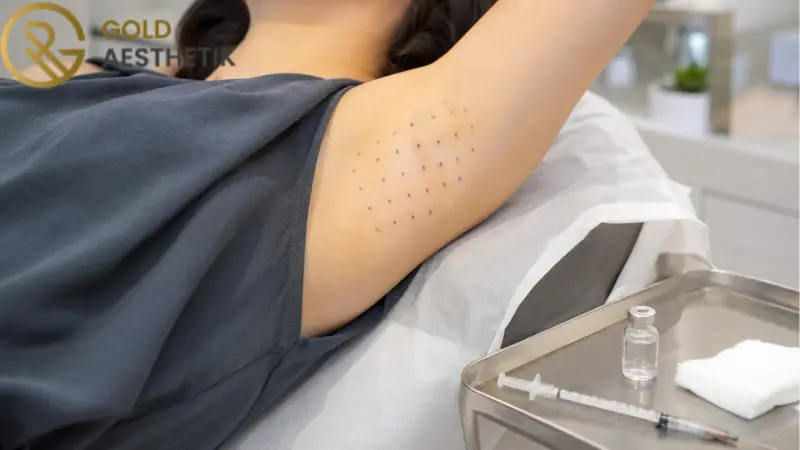
The underarms are one of the most common areas for treating hyperhidrosis with Botox. The injections are performed superficially and at several points on the skin to cover the areas with the highest sweat gland activity.
In some cases, the physician uses an iodine-starch test to determine the active sweat area. Areas with heavier sweating change color, and the planning of the injection points becomes more precise.
The reduction in sweating usually begins gradually. The reduction in moisture may also reduce underarm odor in some individuals, but Botox is not a direct treatment for body odor, infections, or skin problems.
Botox for the Palms
Heavy sweating of the palms can make working with paper, keyboards, mobile phones, tools, and driving difficult. Many people also feel uncomfortable when shaking hands or in social situations.
The palm has many sensitive nerve endings, and injections in this area can cause more pain compared to the underarms. The method for pain control should be chosen considering individual circumstances and the scope of treatment.
Temporary weakness of some hand muscles is a possible side effect of this treatment. This is particularly important for individuals whose profession depends on grip strength, fine movements, or precise manual skills, such as musicians, surgeons, technicians, and athletes.
Botox for the Soles
Excessive sweating of the soles can lead to constant moisture in shoes, slipping, skin irritation, and increased unpleasant odor. Prolonged moisture can also increase the risk of fungal and skin problems, but Botox is not a substitute for treating fungal infections.
Injections into the soles can be more uncomfortable due to the thickness and sensitivity of the skin and may require a more precise pain control plan. The scope of the area, the intensity of sweating, and the impact of the problem on walking or daily activities should be assessed before treatment.
In the case of deep cracks, wounds, inflammation, or active infections, the skin condition should first be assessed and treated.
Botox Treatment Process for Sweating at Gold Aesthetik
At Gold Aesthetik, the treatment journey begins with an assessment of the cause, intensity, and area of sweating. The physician asks about the onset of the problem, the presence of night sweats, medications taken, underlying diseases, and previous treatments.
Once the suitability of Botox has been established, the treatment area is defined. On the day of the injection, the skin is cleaned and disinfected, and if necessary, a suitable method for pain control is applied. The injections are performed with a fine needle and superficially at several points.
The duration of the session depends on the size of the area and the sensitivity of the site. Most individuals can leave the practice after treatment, but the post-injection recommendations should be followed according to the treated area.
| Step | Main Action | Goal |
|---|---|---|
| Initial Consultation | Assessment of sweat intensity, medications, and medical history | Diagnosis of sweat type and choice of appropriate treatment |
| Area Determination | Assessment of the location and scope of sweating | Precise planning of injection points |
| Preparation | Skin cleansing and pain control if necessary | Reduction of discomfort and risk of contamination |
| Injection | Superficial injection at multiple points | Even coverage of the active area |
| Aftercare | Recommendations according to the treatment area | Reduction of discomfort and possible side effects |
| Result Check | Review of the extent of sweat reduction after full effect | Assessment of the reaction and possible need for follow-up |
Is the amount of Botox the same in all areas?
No. The required amount depends on the type of product, the treatment area, the skin surface area, the intensity of sweating, and the individual’s previous reaction. The units of different products are also not necessarily directly convertible into one another.
For palms and soles, no fixed amount can be suggested without an examination. Increasing the injection amount does not always mean a better result and can increase the likelihood of muscle weakness or other side effects.
When choosing centers, do not just compare the number of units. The product name, the treated area, the distribution of injections, and the aftercare plan should also be clear.
Duration, Care, and Side Effects of Botox for Sweating
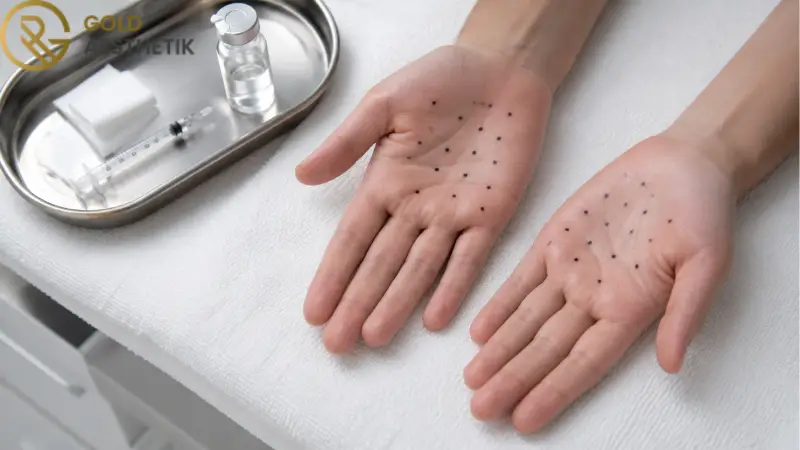
Knowledge about the onset of action, duration, and possible side effects helps to form realistic expectations. Botox is not a permanent treatment for hyperhidrosis, and some sweating may persist after treatment.
When does the effect of Botox for sweating begin?
The reduction in sweating can begin within the first few days, but the full result should not be assessed immediately after the injection. For many individuals, the effect of the treatment becomes more apparent within about two weeks.
If part of the area is still sweating heavily after sufficient time, the physician can check the treatment area and the body’s reaction. An additional injection should not be performed in the first few days and without assessment.
How long does Botox for sweating last?
The duration of the treatment depends on the injection area, the intensity of sweating, the product used, and the individual’s reaction. For many individuals, the effect of the treatment lasts several months, and in the underarms, it can last about four to six months or longer.
The duration of the result in the palms and soles can vary. As the Botox effect gradually wears off, sweating usually returns to its previous state, and this does not necessarily mean a worsening of the condition.
The timing for repeating the injection should be determined based on the recurrence of symptoms and medical opinion. An early repetition without actual need does not necessarily lead to a better or longer-lasting result.
| Factor | Possible Influence on Result and Duration |
|---|---|
| Treatment Area | The duration of action can vary in the underarms, palms, and soles |
| Sweat Intensity | In severe cases, some sweating may persist |
| Product Type | Properties and units of different products are not identical |
| Area Coverage | The planning of injection points influences the uniformity of sweat reduction |
| Body Reaction | Onset and duration of action vary among different individuals |
Care Before and After Injection
Inform the physician before treatment about all illnesses, allergies, medications, and dietary supplements you are taking. The use of blood thinners or medications that affect nerve and muscle function must be explicitly stated.
No prescribed medications should be discontinued without consulting the treating physician. The purpose of the medication review is to assess the risk of bruising, interactions, or increased side effects.
The skin in the treatment area should be clean and free of inflammation on the day of the appointment. Inquire at the practice about shaving underarm hair and using antiperspirants before the appointment; if a test to determine the sweat area is performed, different instructions may be given.
After the injection, you should not press or massage the treatment area without medical instruction. It is advisable to avoid heavy activities, intense heat, and skin irritation in the first few hours. The exact time for resuming sports or sauna visits should be determined based on the treatment area.
| Timing | Care Recommendation |
|---|---|
| Before Treatment | Disclosure of illnesses, medications, supplements, and injection history |
| Before Treatment | Avoidance of unauthorized discontinuation of prescribed medications |
| On the Day of the Appointment | Clean skin and no inflammation or active infections |
| First Few Hours | No massaging and no heavy pressure on the area |
| First Day | Avoidance of heavy exercise and intense heat according to medical recommendation |
| Following Days | Observation of symptoms and contacting the physician if concerned |
Possible side effects of Botox for sweating
Like any medical procedure, Botox can be associated with side effects. Redness, slight swelling, sensitivity, pain, or limited bruising at the injection site are more common and usually temporary reactions.
With injections into the palms, temporary weakness of the hand muscles may occur. On the soles of the feet, pain during injection or temporary sensitivity may be stronger than in the underarms. The likelihood of side effects depends on the area, the injection amount, the technique, and individual circumstances.
Severe allergic reactions, difficulty breathing or swallowing, extensive muscle weakness, unusual drooping, or speech disorders are rare but require immediate medical evaluation.
Severe pain, increasing swelling, fever, discharge, or signs of infection at the injection site should also not be ignored.
| Possible Side Effect | Normal Condition | Appropriate Action |
|---|---|---|
| Redness and Slight Swelling | Often temporary | Follow medical recommendation and avoid irritation |
| Limited Bruising | May last a few days | Follow-up check if unusual spreading occurs |
| Pain or Sensitivity | Can be stronger on palms and soles | Consultation with the physician for appropriate care |
| Temporary Muscle Weakness of the Hand | Rarer and dependent on the injection site | Inform the physician and observe the healing process |
| Difficulty Breathing or Swallowing | Rare but important | Immediate medical care |
| Fever or Signs of Infection | Unusual | Prompt contact with the physician |
The injection technique is different for each application. For example, injection into the jaw muscle to reduce the activity of the masticatory muscles is not identical to the superficial skin injection to control sweating. The article Masseter Botox and Teeth Grinding explains this difference in more detail.
How are the costs for Botox for sweating in Hamburg calculated?
The costs for Botox for sweating in Hamburg can be determined based on the treatment area, skin surface area, required product quantity, number of injection points, and aftercare services. The costs for underarm treatment are not necessarily identical to those for palms or soles.
A price comparison based only on units is not precise; the units of different products are not directly comparable, and the scope of area coverage also influences the treatment plan.
When inquiring about the price, ask which areas, what type of product, consultation, and follow-up sessions the specified amount includes. If simultaneous treatment of several areas is considered, costs and risks should be explained separately.
Cost coverage by insurance in Germany depends on the type of insurance, the severity of the condition, medical records, and previous treatments. The conditions should be inquired about directly with the insurance company or health insurance fund before treatment.
Choosing a Center for Botox for Sweating in Hamburg
Persian-speaking residents of Hamburg and Germany should consider medical assessment, the physician’s experience, the type of product, and the possibility of post-injection aftercare in addition to the price when choosing a treatment center for sweating.
Hyperhidrosis is not always a simple skin problem, and sometimes investigating the underlying disease is more important than the injection itself. A reputable center should explain the type of sweating, alternative methods, the limited duration of the treatment, and possible side effects.
The promise of a permanent end to sweating or an identical result for all individuals is not consistent with the nature of this treatment. Also, quickly performing an injection for sudden, widespread, or night sweating without further investigation is not considered an appropriate approach.
Criteria for Choosing a Reputable Center
| Criterion | Point to Check |
|---|---|
| Pre-injection Examination | Assessment of cause, intensity, and pattern of sweating before treatment recommendation |
| Transparency Regarding the Product | Disclosure of the product name and explanation of its application in the target area |
| Experience in the Treatment Area | Consideration of differences in injections for underarms, palms, and soles |
| Explanation of Side Effects | Disclosure of the likelihood of pain, bruising, and temporary muscle weakness |
| Offering Alternatives | Review of medical antiperspirants, iontophoresis, or other methods |
| Aftercare Plan | Presence of a clear path for reviewing the result or unusual symptoms |
Botox also has numerous cosmetic applications, but the goal and technique differ from the treatment of sweating. To learn about facial applications, you can read the article Botox for Forehead and Frown Lines and the Aesthetic Medicine in Hamburg page.
Frequently Asked Questions about Botox for Excessive Sweating
Does Botox stop sweating completely?
The goal of the treatment is a significant reduction in sweating in the injection area, but the extent of the reaction is not the same for different individuals. Some sweating may persist, and the result depends on the severity of the problem, the scope of the area, and the injection technique.
Does another part of the body sweat more after Botox?
Compensatory sweating is more commonly associated with certain surgical methods and is usually not a primary concern after local Botox injections. However, any significant and unusual change in the sweat pattern should be discussed with the physician.
Does Botox injection into the underarms hurt?
The injections are performed with a fine needle, and many individuals experience brief, tolerable discomfort. The sensitivity of the palms and soles is generally higher and may require a different method for pain control.
Is Botox a permanent treatment for hyperhidrosis?
No. Botox temporarily reduces the activity of the sweat glands. As the nerve connection gradually restores itself, sweating increases again, and a repeat treatment can be considered.
Can palms and underarms be treated simultaneously?
Simultaneous treatment of several areas requires a larger product quantity, more time, and a more precise assessment. The physician must assess the scope of the area, the health status, and the likelihood of side effects and then decide on simultaneous or phased treatment.
Does Botox in the underarms cause more odor?
Botox is not directly designed to treat odor. A reduction in moisture may reduce underarm odor in some individuals, but if unusual odor, discharge, or inflammation is present, another cause should be investigated.
Can you exercise immediately after the injection?
It is usually recommended to avoid heavy activities, intense heat, and pressure on the area in the first few hours. The exact time for resuming activity depends on the injection site and medical recommendation.
Are treatment costs covered by insurance?
Cost coverage depends on the type of insurance, the severity of hyperhidrosis, medical records, and previous treatments. Cost coverage for one person does not automatically mean cost coverage for others.
Treatment of Excessive Sweating at Gold Aesthetik Hamburg
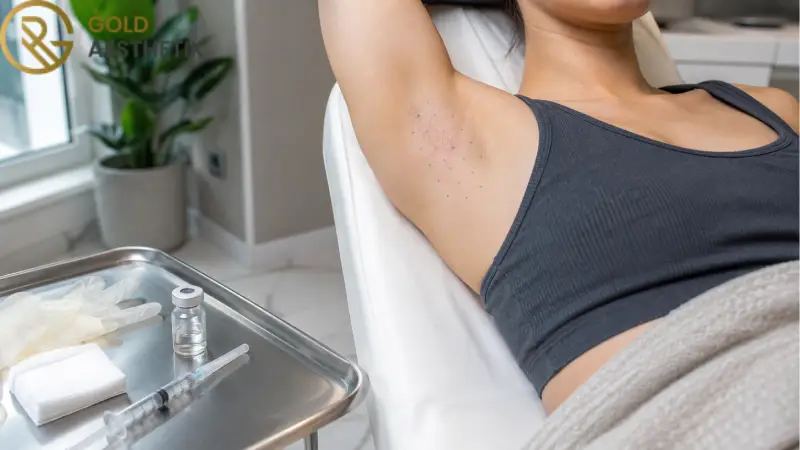
Botox can help to temporarily reduce underarm sweat and, in some individuals, also control palm or foot sweat. However, the diagnosis of the type of hyperhidrosis and the investigation of possible causes should occur before the injection.
At Gold Aesthetik, each patient’s circumstances are reviewed individually, and the benefits, limitations, alternative methods, and expected result are explained. The amount and type of injection are determined based on the treatment area, the intensity of sweating, and medical opinion.
The Gold Aesthetik practice is located at Barmbeker Str. 40, 22303 Hamburg-Winterhude. Persian-speaking residents of Hamburg and Germany can schedule a consultation appointment to discuss their situation and learn about a suitable treatment plan.
Summary; Who is Botox for sweating in Hamburg suitable for?
Botox for excessive sweating is a temporary and local treatment primarily considered for severe underarm hyperhidrosis and, in selected cases, for palms or soles. This method works by temporarily reducing the nerve impulses that stimulate the sweat glands.
Before injection, it must be clarified whether the sweating is primary or could be related to a disease, hormonal changes, or medication. Sudden onset, night sweats, and widespread sweating are cases that require a more detailed investigation.
The result, duration, and side effects are not the same for different individuals. Choosing a physician familiar with the treatment of hyperhidrosis, using a reputable product, and having an aftercare plan in place after treatment are important factors when choosing a Botox center for sweating in Hamburg.

