



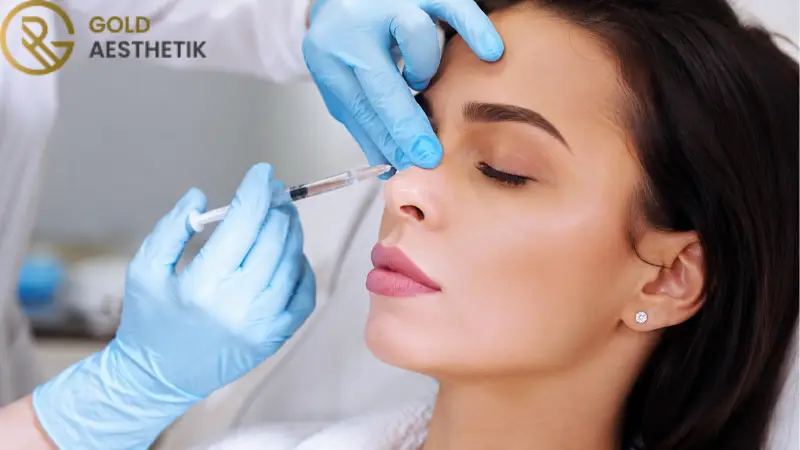
Nose correction with fillers is a non-surgical method for making limited and targeted changes to the appearance of the nose. With this method, the physician can make certain depressions and irregularities less visible by injecting a specific amount of filler at selected sites, smooth the nasal bridge, and establish better visual proportion between the different parts of the nose. The initial result is usually visible immediately, but for a more accurate assessment, the initial swelling must subside and a follow-up examination by the physician is required.
Nose fillers are not a complete replacement for nasal surgery. This method can neither reduce bone or cartilage, reduce the nasal wings, nor treat breathing problems or extensive structural changes. On the other hand, the nose has a delicate and complex vascular network; therefore, injection in this area should be performed with precise knowledge of anatomy, careful patient selection, and readiness to manage possible complications. Common side effects are usually local and temporary, but vascular occlusions and tissue or visual disturbances are considered rare and serious complications.
What is nose correction with fillers and what changes does it produce?
Nose correction with fillers, sometimes referred to as non-surgical nose reshaping, is a minimally invasive method for limited modification of the contours, angles, and external proportions of the nose. With this method, no bone or cartilage is removed. The physician attempts to reduce height differences and make the nose appear more harmonious from the front or in profile by adding controlled volume at specific sites.
Hyaluronic acid-based fillers are among the options used in aesthetic treatments, but the choice of product, injection amount, placement, and even the suitability of the treatment itself must be determined after an examination. The shape of bone and cartilage, skin thickness, the condition of the nasal tip, history of surgeries or injections, and the anatomical characteristics of each person are different, and there is no fixed protocol for all patients.
How is nose correction with fillers performed?
The first step is to examine the nose from the front, in profile, and from various facial angles. In addition to the nasal shape, the physician must also consider its proportions to the forehead, lips, chin, and other facial areas. During the consultation, questions are asked about expected results, pre-existing conditions, allergies, medications and supplements taken, history of nasal surgeries, and previous injections.
After the examination and provided the person is suitable for treatment, the skin is prepared and disinfected, and the required amount of filler is placed in a controlled manner at the planned sites. Depending on the nasal shape, the goal may be to make a depression less visible, smooth the nasal bridge, or improve the proportions of a specific area of the nasal tip in a limited way.
More volume does not necessarily mean a better result. Since fillers are volume-adding substances, excessive injection can make the nose appear larger, wider, or heavier. One of the most important principles in non-surgical nose correction is the targeted use of volume and attention to a natural result.
The initial result is usually visible on the same day, but swelling, redness, tenderness, or bruising can alter the appearance of the nose in the first few days. For this reason, the decision about supplementary correction should only be made after the initial reactions have subsided and a reassessment by the physician has taken place.
What nasal shape problems can be corrected with fillers?

Fillers can be used in some individuals to correct limited external irregularities. For example, in the case of a slight nasal hump, the physician can reduce the height difference by adding a controlled amount of filler above or below the hump, making the nasal bridge appear smoother. In this case, the hump itself is not removed, and the change is the result of volume addition in the surrounding areas.
A limited depression on the nasal bridge, slight asymmetries, and some small irregularities may also be correctable after an examination. Sometimes a more regular nasal bridge results in the nose appearing visually more proportionate or refined, even though its actual size has not been reduced.
In some individuals who have already had nasal surgery, a small irregularity may remain, but injection into a surgically altered nose requires more precise assessment. Scar tissue and the resulting anatomical changes can make the treatment plan more complex, and the decision should be made after a personal examination.
Fillers are not designed to correct severe deviations, very large noses, wide nasal wings, significant bone or cartilage problems, and breathing disorders. Any type of nasal tip drooping is also not correctable with fillers. In some nasal shapes, the addition of volume can even accentuate the external problem.
Can fillers make the nose smaller?
No, fillers cannot structurally reduce the nose. The injected substance creates volume and does not reduce bone, cartilage, skin, or nasal tissue. What is sometimes described as nose reduction is actually the result of correcting lines and visual proportions.
For example, smoothing the nasal bridge can divert attention from a slight bulge. Improved symmetry can also make the nose fit more harmoniously with the face. However, if the main goal is to reduce the overall size of the nose, narrow the bone, reduce the nasal wings, or comprehensively change the nasal tip, fillers are not a suitable option to achieve these goals.
Realistic expectations before treatment are very important. The promise of actual nose reduction through filler injection is not precise in terms of the function of this substance. Nose correction with fillers is more suitable for individuals who desire subtle and limited changes.
For whom is nose correction with fillers suitable?
This method can be considered for individuals who desire subtle, non-surgical changes and whose main problem is a depression, height difference, or limited asymmetry in the nasal shape. The suitable person should know that the result of fillers is not permanent and the extent of possible change depends on the nasal anatomy and individual conditions.
In contrast, a person whose goal is actual nose reduction, correction of severe deviation, treatment of a breathing disorder, or comprehensive structural change of the nose should generally consider other options. The choice of method should not be based solely on fear of surgery or the short recovery time after fillers.
Active infections or inflammation at the injection site, certain pre-existing conditions, taking certain medications, a history of complications after fillers, or injection of unknown substances must be disclosed to the physician before treatment. Assessment of treatment suitability is not complete based solely on photos or online consultations, and a personal examination plays an important role in decision-making.
| Condition or Goal | Could nose fillers be suitable? |
|---|---|
| Limited depression on the nasal bridge | In some individuals and after examination, yes |
| Slight and visually concealable hump | Could be considered |
| Slight asymmetry | Assessable depending on the cause of asymmetry |
| Actual nose reduction | No |
| Breathing problems or severe structural deviation | Fillers are not a suitable treatment for the main problem |
| Comprehensive and permanent changes | Structural methods should generally be considered |
Benefits and Limitations of Nose Correction with Fillers
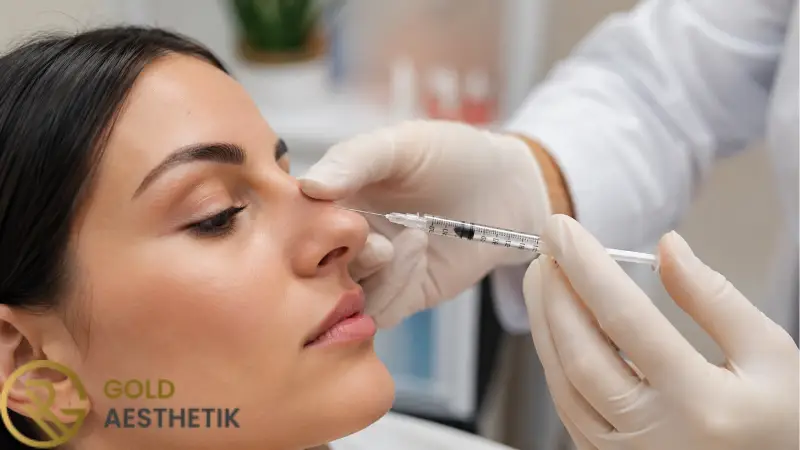
Nose correction with fillers is attractive for individuals who desire a limited change in the external nasal shape without surgery. The absence of a surgical incision, the rapid visibility of the initial result, and a generally shorter recovery time than surgery are reasons for the popularity of this method. However, the benefits of fillers are only valuable when the person’s problem can actually be corrected by controlled volume addition.
The choice of a filler should not be based solely on before-and-after pictures on social media. Skin thickness, bone and cartilage structure, treatment history, the relationship of the nose to other facial areas, and patient expectations must be considered simultaneously.
What are the main benefits of non-surgical nose correction?
One of the benefits of this method is the rapid visibility of the initial change. Generally, the overall effect on the nasal line is visible immediately after filler injection, although the result at that moment should not be considered the final result; because the initial swelling can alter part of the nasal shape.
With this method, no surgical incisions, sutures, or direct grinding of bone and cartilage are performed. For this reason, many people have a shorter recovery time compared to surgery. Nevertheless, “non-surgical” does not mean “risk-free,” and the nose is considered one of the sensitive areas for filler injections.
Another benefit is the ability to make limited and controlled corrections. In suitable individuals, the physician can make a depression less visible or make the nasal bridge more regular with minimal and planned volume, without the goal being a complete change in facial features.
The temporary nature of the result is also an advantage for some people, as the original nasal structure is not permanently altered. However, this characteristic also means that reassessment may be required in the future to maintain the result.
| Benefit | Explanation | Important Note |
|---|---|---|
| Rapid visibility of initial result | Shape change is visible immediately after injection | Initial swelling can alter the actual appearance |
| Without surgical incision | Bone and cartilage are not surgically altered | The method remains a sensitive medical procedure |
| Shorter recovery time | Return to many daily activities is generally faster | Specific physician instructions must be followed |
| Subtle changes | Controlled volume can be used for limited corrections | Not suitable for comprehensive changes |
| Non-permanent result | Fillers are gradually broken down over time | Reassessment for touch-up may be required in the future |
What limitations do nose fillers have?

The most important limitation of nose correction with fillers is that the injected substance adds volume to the nose. Therefore, fillers cannot reduce the actual size of the nose. After correcting a height difference, the nose may appear more proportionate, but bone, cartilage, nasal wings, and nasal tissue are not reduced.
Fillers also do not remove a bony hump. In some cases, only by adding controlled volume around a slight bulge can the profile appear smoother. For this reason, this method is not always the right choice for large humps or noses that already have significant volume.
Another limitation is the temporary nature of the result. The longevity of fillers is not the same for everyone, and the type of product, tissue characteristics, injection site, amount of substance, and individual response can influence degradation.
Fillers cannot treat breathing problems, internal nasal septum deviations, or comprehensive structural anomalies. If the patient’s main complaint is a breathing disorder, a functional assessment of the nose is more important than an aesthetic injection.
| Limitation | What can fillers not achieve? | What measure is more appropriate? |
|---|---|---|
| Actual nose reduction | Does not reduce bone and cartilage | Consider surgical methods if needed |
| Hump removal | Does not remove a bony hump | Structural assessment of the nose |
| Treatment of breathing problems | Does not correct the internal airway | Specialized examination of nasal function |
| Correction of severe deviations | Does not alter the original nasal structure | Consider structural options |
| Permanent result | The effect of fillers diminishes over time | Assessment for touch-up or alternative method |
Nose fillers or nasal surgery – which is better?
There is no universal answer for everyone. If the goal is to correct a limited depression, smooth a slight hump, or achieve a subtle and temporary change, fillers can be considered after an examination. If the goal is actual nose reduction, narrowing of the bone, reduction of the nasal wings, or comprehensive structural change, surgery generally offers more modification options.
In cases of structural deviations or breathing problems, nasal function should also be examined by a specialist. Injection of fillers cannot treat a disorder attributable to the internal nasal structure.
The choice between fillers and surgery should ideally be based on the main problem, the expected extent of change, breathing status, medical history, and physician opinion, not solely on price, speed of treatment, or fear of surgery.
| Patient Goal | Nose Correction with Fillers | Nasal Surgery |
|---|---|---|
| Smoothing a slight hump | Could be suitable | Assessable |
| Correction of a limited depression | Could be suitable | Assessable depending on conditions |
| Actual nose reduction | Not possible | Assessable |
| Narrowing of the nasal bone | Not possible | Assessable |
| Reduction of the nasal wings | Not possible | Assessable |
| Resolution of breathing problems | Does not treat | Requires specialized assessment |
| Limited and temporary change | Assessable in suitable individuals | May not be necessary |
| Structural and comprehensive change | Not suitable | Generally offers more correction options |
Can fillers be injected after nasal surgery?
In some individuals, a limited depression or asymmetry may remain after nasal surgery, the correction of which can be considered with fillers. However, a surgically altered nose should be assessed with greater caution. Scar tissue, changes in nasal structure, and possible differences in vascular pathways can make the injection plan more complex.
The history of nasal surgery, the timing of the procedure, previous injections, and possible complications must be fully disclosed to the physician. The suitability of fillers after surgery cannot be determined solely by viewing photos, and in some individuals, non-injection may be the safer choice.
Longevity, Cost, and Side Effects of Nose Correction with Fillers
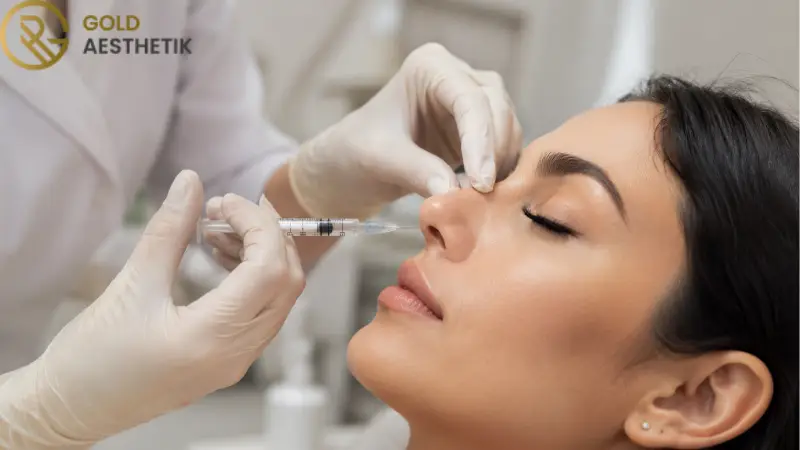
The longevity and safety of nose correction with fillers depend on various factors. The type of product, the amount and site of injection, the nature of the nasal tissue, history of surgeries or injections, and the body’s response can influence the duration of the result. Therefore, it is not meaningful to establish a fixed and uniform timeframe for all patients.
Also, in terms of safety, a distinction must be made between the usual reactions after injection and warning signs. Swelling, tenderness, redness, or limited bruising may occur in the first few days, but severe or increasing pain, unusual skin discoloration, or visual disturbances require immediate medical examination.
How long do nose fillers last?
Nose fillers are not a permanent treatment. The result diminishes over time, and the speed of this process varies from person to person. Various sources and studies cite different timeframes for the duration of the result, and this discrepancy shows that a specific number cannot be guaranteed for all individuals.
In many cases, the result lasts several months and may be visible for up to a year or longer in some individuals. However, the type of filler, product properties, injection amount, nasal anatomy, and body conditions influence the actual duration of effect.
The degradation of the effect generally does not occur suddenly either. The injected substance is gradually broken down, and the nasal shape gradually approaches the original state. The appropriate time for re-injection should be determined after medical assessment. Adding filler before actual need can lead to volume accumulation and a larger-appearing nasal image.
What factors influence the longevity of nose fillers?
The type of filler is an important factor. Hyaluronic acid fillers are not equal in terms of consistency, physical properties, and degradation rate. Product selection should be made considering anatomy and treatment goal, and the advertised longest longevity should not be the sole selection criterion.
The amount of filler is also important, but using a larger volume does not necessarily lead to longer longevity or a better result. In nose correction, maintaining proportions is more important than volume enlargement, and the injection amount should be determined according to actual need.
The site and depth of filler placement, tissue structure, and surgical history can also influence the result. The body’s response to fillers is also not the same in all individuals, and this explains part of the differences in longevity.
| Factor | Why is it important? |
|---|---|
| Type of filler | Different products have different properties and degradation rates |
| Injection amount | Volume should be determined according to the actual need of the nose |
| Site and depth of injection | Tissue characteristics at different sites of the nose vary |
| Individual conditions | The degradation process of fillers is not the same in all individuals |
| History of surgeries or injections | Scar tissue and previous treatments can alter the treatment plan |
| Timing of touch-up | Re-injection should be performed after assessment of the remaining result |
How are the costs for nose correction with fillers determined?
The cost of nose fillers is not the same for all individuals, and it is advisable not to make the decision about treatment based solely on the price per syringe. The type and amount of filler needed, the complexity of the nasal shape, history of surgeries or previous injections, and the treatment plan can influence the final cost.
In some individuals, the desired change can be achieved with a limited amount of filler, while for others, fillers are fundamentally not a suitable option. For this reason, establishing an exact price before examining the nasal shape can be misleading. To learn more about the factors determining price, you can read the guide Cost of Fillers in Hamburg.
When choosing the treatment location, medical expertise, accurate assessment, the type of product, and the possibility of follow-up care in case of possible complications are more important than selecting based solely on the lowest price; especially in the nasal area, whose injection is vascularly sensitive.
What are the common side effects of nose fillers?
Swelling, redness, tenderness, limited pain, and bruising may occur after injection. These reactions often occur around the injection site and generally subside over time. An asymmetric appearance of the nose in the first hours or days may also be due to swelling and should not always be interpreted as an inadequate result.
Infections, nodule formation, displacement or asymmetry of the filler are other problems that may require medical examination. The likelihood of complications depends on the product, injection technique, individual conditions, and treatment location.
What are the warning signs after nose fillers?
The most important safety aspect of nasal injections is the rare but serious possibility of circulatory disturbance. Severe or unusual pain, increasing pain, marked skin pallor, gray or blue discoloration, coldness of the tissue, wound formation, or sudden visual disturbances should be taken seriously.
If blurred vision, vision loss, unusual pain, or marked skin discoloration occur after injection, do not wait for the next follow-up appointment. These symptoms require immediate contact with the physician and, if necessary, emergency medical care.
| Type of Reaction | Possible Symptoms | Appropriate Action |
|---|---|---|
| Common initial reaction | Swelling, redness, or limited tenderness | Following physician recommendations and observing symptom reduction |
| Bruising | Limited discoloration around the injection site | Care as instructed by the physician |
| Possible infection | Increasing redness, warmth, pain, or unusual discharge | Immediate contact with the physician |
| Vascular warning sign | Severe pain or pale, gray, or blue skin | Immediate medical examination |
| Very serious sign | Blurred vision, vision loss, or sudden neurological symptoms | Seek emergency medical care |
Can nose fillers be dissolved?
If hyaluronic acid fillers were used, the physician may consider the application of hyaluronidase to reduce or dissolve the filler under certain circumstances. However, the dissolution of fillers should not be viewed as a simple or home-based measure, and the decision about the necessity, amount, and injection site of hyaluronidase must be made by the physician.
The possibility of dissolution is also not a sufficient reason to regard nose fillers as harmless. Prevention of improper injections, proper patient selection, and knowledge of anatomy remain of paramount importance, and in the event of a vascular complication, rapid medical management is essential.
Care Before and After Nose Correction with Fillers
Proper care begins before the injection. Part of treatment safety depends on the physician being informed about medical history, medications taken, previous treatments, and current skin condition. After injection, recommendations should also be tailored to the injection site and individual conditions.
What points should be communicated to the physician before nose filler treatment?
Before treatment, all pre-existing conditions, allergies, history of skin infections or inflammation, medications and supplements taken must be discussed. History of nasal surgery, previous filler injections, or use of injectable substances whose name or type is unknown are also important information.
If there is an active infection or inflammation in the nasal area, treatment may be postponed until the problem is resolved. Prescription medications, anticoagulants, or supplements should also not be discontinued independently and solely for a filler treatment.
What should not be done after nose fillers?
After injection, pressing, massaging, or manipulating the nose independently should be avoided unless the physician has given specific instructions. Direct pressure from glasses, sleeping on the face, or any activity that exerts pressure on the injection site should be managed according to the physician’s specific recommendation.
Cleanliness of the injection site and reduction of unnecessary touching in the first hours are important. Upon physician recommendation, a cool compress without pressure may be used to reduce swelling, but ice should not be placed directly on the skin.
Intense physical activity, extreme heat, and certain other activities may be restricted for a limited time after treatment. The duration of these restrictions should be determined considering individual conditions and physician opinion, and the physician’s specific recommendation should take precedence over general internet recommendations.
| Timing | Care | Goal |
|---|---|---|
| Before treatment | Disclosure of medications, supplements, allergies, and pre-existing conditions | Assessment of treatment safety |
| Before treatment | Disclosure of history of surgeries or previous nasal injections | More precise treatment planning |
| First hours | Avoidance of unnecessary touching and pressure | Reduction of irritation at the injection site |
| First days | Following physician instructions regarding exercise, heat, and pressure on the nose | Swelling management and care of the treatment area |
| In case of unusual symptoms | Immediate contact with the physician | Early examination of possible complications |
| At the scheduled time | Visit for result assessment | Review of symmetry, swelling, and any follow-up needs |
When should the physician be contacted immediately after injection?
Limited swelling and tenderness are not the same as severe pain or marked skin discoloration. If severe or increasing pain, unusual skin pallor, gray or blue discoloration, coldness of the tissue, skin wounds, or any visual disturbances occur, medical assessment should not be postponed.
In such situations, it is not advisable to massage the nose independently, take medications without physician recommendation, or wait for symptoms to subside. The patient should have a rapid contact option with the physician or treatment facility.
Frequently Asked Questions About Nose Correction with Fillers
Does nose correction with fillers hurt?
Pain perception during injection varies from person to person. Individual sensitivity level, injection site, type of product, and pain control method can influence the treatment experience. The physician can decide on the appropriate method for pain reduction based on individual conditions.
How many milliliters of filler are needed for nose correction?
There is no fixed volume for all individuals. Nasal shape, skin thickness, correction site, and treatment goal determine how much filler is needed. Using a larger volume does not necessarily lead to a better result, and in the nose, excessive volume enlargement can compromise proportions.
Can glasses be worn after nose fillers?
The answer depends on the placement of the filler and the pressure the glasses exert on the nose. It is advisable to ask the physician about wearing glasses before leaving the practice and to avoid unnecessary pressure on the injection area during the timeframe established by the physician.
When is the actual result of nose fillers visible?
The initial change is usually visible immediately, but the result in the first hour is not a suitable standard for final assessment. Swelling and tenderness can temporarily alter the nasal shape. A more accurate assessment occurs after the initial reactions have subsided and at the time determined by the physician.
Are nose fillers permanent?
No. Resorbable fillers break down over time, and the duration of the result depends on the type of product and individual conditions. Re-injection should only be performed when the physician deems it appropriate after assessing the remaining result.
Are nose fillers suitable for all nose types?
No. Some nasal shapes do not improve through volume addition. In a large nose, severe deviation, a prominent hump, or structural problems, fillers may not be able to achieve the expected result. A personal examination clarifies whether non-surgical correction has therapeutic and aesthetic value for the individual.
Nose Correction with Fillers at Gold Aesthetik Hamburg

When performing nose correction with fillers, the selection of the appropriate method is more important than simply administering the injection to all interested parties. At Gold Aesthetik, the patient’s nose shape, its proportions to other facial features, treatment history, and expectations are thoroughly evaluated before a decision is made. The goal is to achieve a controlled change tailored to individual facial characteristics, rather than adding unnecessary volume.
Gold Aesthetik is located at Barmbeker Str. 40, 22303 Hamburg-Winterhude, and Dr. Mohammadreza Hagh-Dad specializes in vascular surgery and aesthetic medicine. For injection treatments, medical assessment and review of the patient’s history are of particular importance, especially in the nasal area, where knowledge of vascular structures is essential for treatment safety.
During the consultation, the extent of change achievable with fillers, treatment limitations, the potential need for an alternative method, approximate durability, and possible complications are discussed. If the nasal structure is not suitable for fillers, it may be the more logical choice not to proceed with an injection.
Nose correction with fillers is part of aesthetic medicine in Hamburg, and the treatment plan should be determined individually after a medical examination. A good result does not necessarily mean a major change; in many cases, the primary goal is to preserve natural facial features and correct a limited irregularity.

