




Both fillers for the nasolabial fold and cheek fillers are used to correct volume and improve facial proportions—however, the goal, injection area, and type of change are not identical. Fillers for the nasolabial fold focus directly on the nasolabial fold, i.e., the line that runs from the side of the nose to the corner of the mouth. Cheek filler is more commonly used to restore or harmonize volume in the midface, emphasize the cheek shape, and create better balance between facial features.
Important: A more pronounced nasolabial fold does not always mean that this exact fold must be injected directly. In some individuals, volume loss in the cheek and a change in tissue position in the midface make the fold appear deeper. In such cases, assessing the cheek structure before injecting the fold directly can allow for a more natural result. The appropriate method should be chosen after evaluating face shape, skin quality, cheek volume, degree of tissue descent, symmetry, and the patient’s expectations.
How do fillers for nasolabial folds differ from cheek fillers?
The main difference relates to the cause of the concern and the treatment goal. Injecting the nasolabial fold is usually a more localized treatment intended to make the fold next to the nose and mouth less visible. Cheek filler takes a more structural approach and aims to correct volume deficits or an imbalance in the midface.
In some individuals, the nasolabial fold is an independent fold and remains clearly visible even with sufficient cheek volume. In others, cheek volume loss, tissue changes, and descent of the midface play a greater role in the development or deepening of this fold. Therefore, you cannot decide solely based on the visible fold that filler must be injected exactly at that spot.
Which area does a filler for the nasolabial fold correct exactly?
The nasolabial fold begins at the side of the nose and runs to the corner of the mouth. It is a natural part of the face’s structure and movement—the goal of treatment is generally not to remove it completely. With a balanced approach, the physician aims to reduce the depth and shadow of the fold while preserving natural expression when smiling and maintaining facial movement.
Direct injection is primarily considered when the cheek has relatively good volume but the fold next to the nose and mouth remains independently visible. The amount and injection point are very important, because too much volume in the mouth area can make this part of the face look heavy or unnatural.
What effect does cheek filler have on face shape?

Cheek filler is used to increase or restore volume in the midface. The goal may be to emphasize cheek shape, correct volume loss, improve symmetry, or create a better relationship between the cheek, lower eyelid, lips, and jaw.
A natural result does not mean creating extremely prominent cheeks. The amount and placement of filler should be tailored to the face shape. In a narrow face, the main goal may be to restore lost volume, whereas in a round or full face, unnecessary volume increase can make the face appear wider or puffy.
Can cheek filler reduce the nasolabial fold?
In some individuals, this can be the case. If volume loss in the midface is among the factors that deepen the nasolabial fold, a controlled correction of the cheek can better support the surrounding tissue and make the fold appear partially softer.
However, cheek filler is not a direct treatment of the nasolabial fold, and you cannot expect this fold to disappear in everyone. If the fold is independent or strongly pronounced, a limited injection directly into the fold may still be necessary after assessing the cheek result.
In such situations, a stepwise approach can be sensible: First, the structural cause is evaluated and, if needed, the cheek is corrected. Once the actual result is visible and swelling has subsided, the physician reassesses the nasolabial fold to decide whether direct injection also provides therapeutic benefit.
Comparison: cheek filler vs. filler for the nasolabial fold
| Criterion | Filler for the nasolabial fold | Cheek filler |
|---|---|---|
| Main treatment area | Fold from the side of the nose to the corner of the mouth | Midface and cheek contour |
| Main goal | Soften the depth and shadow of the fold | Restore or harmonize cheek volume and shape |
| Type of effect | more localized | more structural |
| Impact on the nasolabial fold | direct | indirect in some individuals |
| More suitable for | an independent fold with sufficient cheek volume | volume loss or imbalance in the midface |
| Risk of overcorrection | a heavy feeling in the mouth area | swelling or excessive cheek projection |
Is cheek filler better, or filler for the nasolabial fold?

Neither method is universally better. The right choice depends on the cause of the fold, the extent of cheek volume loss, face shape, skin quality, and the desired result. If the fold itself is the main issue, a limited, direct injection may be more appropriate. If a cheek volume deficit contributes significantly to the deepening, focusing only on the nasolabial fold may overlook the actual cause.
The goal of treatment should not be to simply “fill” every visible line. In aesthetic medicine, a balanced result is achieved when the visible cause is identified and the smallest possible volume is used for an appropriate correction.
If the cause of the nasolabial fold is cheek volume loss
Due to natural tissue changes, aging, or weight loss, volume in the midface can decrease. In such cases, the cheek appears flatter and the nasolabial fold may look deeper.
If the nasolabial fold is accompanied by clearly noticeable cheek volume loss, a change in the shape of the midface, or a tired facial expression, assessing the cheek becomes more important. A controlled restoration of volume can better support the tissue and reduce part of the fold’s shadow.
Nevertheless, part of the fold may remain even after cheek correction. The natural appearance of a fold when smiling should also be preserved—the goal of treatment should not be to turn the face into a completely line-free surface.
When is direct injection of the nasolabial fold more suitable?
Direct injection is more suitable for individuals whose cheek volume and midface are sufficient, but who still have a clearly visible, independent fold next to the nose and mouth. In this case, adding volume to the cheek does not necessarily correct the desired concern.
The injection amount should be controlled. Overcorrection of the nasolabial fold can reduce natural dynamics around the mouth and make this area appear emphasized or heavy. The goal is to soften the fold and shadow—not to remove the natural facial structure completely.
When is simultaneous treatment of the cheek and nasolabial fold appropriate?
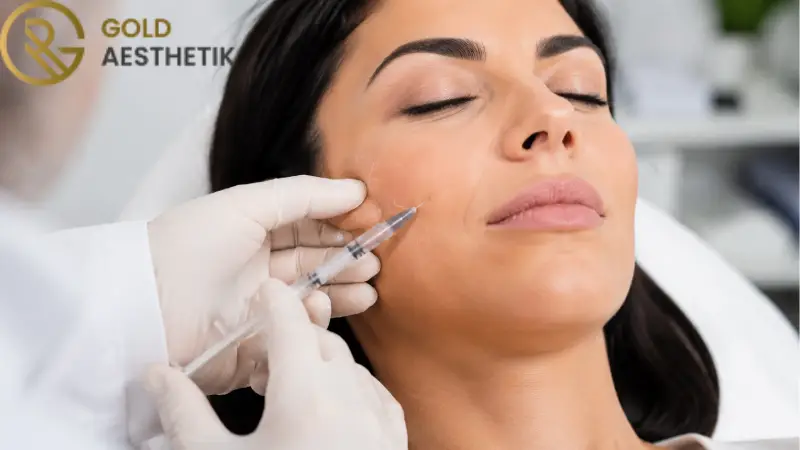
A combined treatment may be considered if there is both cheek volume loss and the nasolabial fold remains clearly visible after correction of the midface. In such cases, part of the treatment can be allocated to the cheek and a smaller amount directly to the fold.
The two areas do not necessarily have to be treated in one session. In some individuals, the cheek is treated first; once swelling has subsided and the actual effect becomes visible, the need for treatment of the nasolabial fold is reassessed. This approach can reduce the risk of unnecessary injections and overcorrection.
| Main concern | Area that should be assessed | Important note |
|---|---|---|
| Significant cheek volume loss | Cheek and midface | The nasolabial fold may be less visible after cheek correction |
| Independent fold next to the nose | Nasolabial fold | Too much volume in the mouth area is not appropriate |
| Volume loss plus a clearly visible fold | Cheek, then reassess the nasolabial fold | A stepwise approach can be more precise |
| Asymmetry in the midface | Cheek | The injection amount does not necessarily have to be the same on both sides |
| Pronounced descent of facial tissue | Assessment of the overall facial structure | Filler alone may not provide a complete solution |
Why does more injection not always lead to a better result?
Fillers are used to correct proportions and volume—more volume is not automatically the treatment goal. Too much filler in the nasolabial fold can make the mouth area look heavy and emphasized; overcorrection of the cheek can make the face appear puffy or disproportionate.
The required amount varies from person to person. Skin thickness, tissue volume, bony structure, facial expressions, and the interaction between cheek, jaw, and lips should be assessed together. For many individuals, a conservative, stepwise approach allows better control of the result.
Choosing fillers for nasolabial folds and cheeks based on face shape

Face shape is an important factor when choosing the injection area and amount. Two people can have a similarly deep nasolabial fold but require different treatments due to differences in cheek volume, bony structure, skin thickness, and the degree of tissue descent.
The physician usually assesses the face at rest as well as in motion and when smiling. This evaluation helps clarify whether the nasolabial fold is primarily due to natural facial structure, is related to a volume deficit in the midface, or is visible as an independent fold.
Filler selection for a narrow, low-volume face
In narrow faces, a volume deficit in the midface can be associated with flatter cheeks and more visible shadows and lines. In such cases, directly injecting large amounts into the nasolabial fold does not necessarily improve the overall facial proportions.
First, the volume and position of the cheek should be assessed. If there is a true volume deficit, a limited cheek correction may be better suited to restore proportions. If the nasolabial fold is still clearly visible afterward, a direct, limited injection can be considered.
Filler for a round, full face
In a round or full face, too much volume in the anterior cheek area can make the face appear wider or puffy. Therefore, the injection point and direction of volume placement are particularly important—and only very limited treatment may be necessary.
If the nasolabial fold is independently visible in such a face, directly assessing this fold may be more appropriate than broad volume placement in the cheek. However, a “full” face alone is not sufficient as a decision criterion; the degree of tissue descent and volume distribution must also be assessed.
Filler for a long face
In a long face, a volume deficit in the midface can affect the relationship between length and width. If this deficit is present, cheek filler may be considered to improve balance.
If a nasolabial fold is also present, its relationship to cheek volume loss should be assessed first. Too much volume in the lower third of the face or directly in the fold can worsen the proportions of a long face.
Choosing the injection area in cases of tissue descent
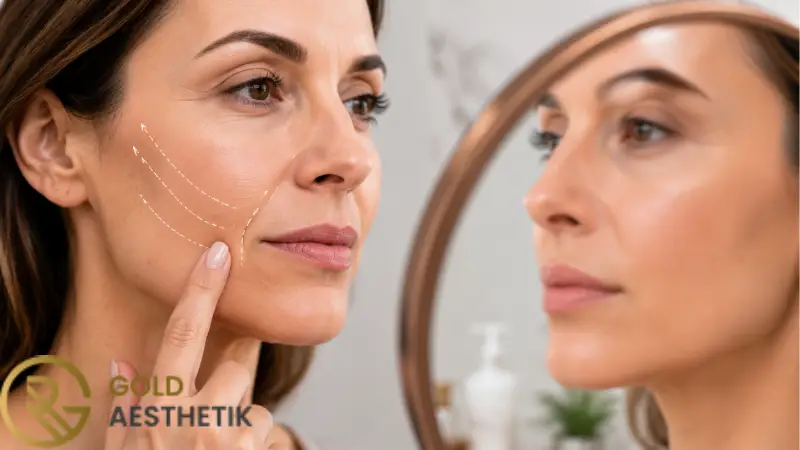
With tissue descent, the nasolabial fold may not be only a local indentation; the changed position of tissues in the midface can also contribute to its appearance. In such cases, directly filling the fold without assessing other facial areas does not always lead to a good result.
With mild tissue descent, a controlled correction of cheek volume can improve some proportions. With more pronounced tissue descent, filler may correct only part of the problem, and the physician should also explain the limitations of this method as well as other options.
Role of skin quality and symmetry in filler selection
Age alone does not determine the injection area. More important are skin quality, tissue thickness, elasticity, bony structure, and wrinkle depth. Even a young person may have little cheek volume due to facial structure or after weight loss, while an older person may still retain good volume in the midface.
Symmetry should also be assessed before treatment. The human face is usually not completely symmetrical, and one side may require a different injection site or amount. Exactly equal volumes on both sides do not necessarily lead to a more symmetrical result.
| Face shape/feature | Key focus in the assessment | Possible approach |
|---|---|---|
| Narrow and low-volume | Volume loss in the midface | Assess the cheek before direct fold injection |
| Round and full | Risk of widening with too much volume | Limited, targeted injection |
| Long | Balance between facial length and width | Assess appropriate volume distribution in the cheek |
| With tissue descent | Role of tissue displacement | Assess the entire midface |
| Asymmetrical | Structural differences between both sides | Individual planning for each side |
Longevity, side effects, and aftercare for cheek filler and nasolabial fold filler
The longevity of cheek filler and nasolabial fold filler is not the same for everyone. Product type, injection amount, placement, tissue characteristics, and individual factors can influence how long the result lasts. Therefore, no fixed duration or identical outcome for everyone should be promised before the examination.
Does cheek filler last longer than nasolabial fold filler?
Without knowing the product type, the exact injection site, and the individual conditions, no general statement can be made about the longevity of both areas. Even two people with the same filler can have different breakdown patterns.
The right time for a touch-up should also be determined based on the remaining amount of filler and the current face shape. Re-injecting simply after a fixed period—without assessing the previous result—can lead to unnecessary volume increase.
What common side effects occur after the injection?
Swelling, redness, tenderness, mild pain, and bruising can occur after a filler injection. Severity and duration vary individually, and assessment of the result in the first hours can be affected by swelling.
A filler injection is a medical procedure. In addition to the usual reactions, more serious complications can rarely occur. This is why it is important to choose a physician with strong knowledge of facial anatomy and the management of possible complications.
Which symptoms after filler require prompt evaluation?
Severe or unusual pain, marked skin discoloration, a cold sensation in the tissue, increasing discomfort, or any change in vision should not be dismissed as a normal reaction after injection. If unusual symptoms occur, the physician should be contacted and, if necessary, medical help should be sought immediately.
What aftercare is required after cheek filler and nasolabial fold filler?
The exact aftercare should be determined by the physician depending on the injection area, product type, and individual situation. In general: The injection site should not be massaged or pressed without medical recommendation, and unnecessary manipulation should be avoided.
Any medications and supplements taken, pre-existing conditions, allergies, and previous injections should be disclosed before treatment. Prescribed medications should also not be discontinued on your own solely for a filler treatment and without medical consultation.
How are the costs for cheek filler and nasolabial fold filler determined?
Treatment costs do not depend only on the name of the injection area. Product type, required amount, number of treatment areas, facial structure, and the plan chosen after the examination can influence the cost.
For example, one patient may need only a limited injection of the nasolabial fold, while another person may first need correction of cheek volume and then a reassessment of the fold. Therefore, comparing costs solely based on the number of syringes—without considering the treatment goal—can be misleading.
Frequently asked questions about nasolabial fold filler and cheek filler
For the nasolabial fold, is cheek filler better or a direct injection?
That depends on the cause of the fold. If a cheek volume deficit plays the main role, assessing the cheek is more important. If the cheek has sufficient volume and the fold is independently visible, a direct injection may be more targeted.
Can the cheek and nasolabial fold be injected in one session?
This can be considered for some individuals, but simultaneous treatment is not necessary for everyone. Sometimes a stepwise approach helps—first assessing the effect of cheek correction and only then deciding on the actual need for the nasolabial fold.
Does a nasolabial fold filler have to eliminate the fold completely?
No. The nasolabial fold is part of natural facial expression. The goal is usually to make the fold appear softer and reduce its shadow. Complete removal by using too much volume can make the area around the mouth look heavy or unnatural.
How can you prevent the face from looking puffy after filler?
A key factor is choosing the appropriate amount and injecting in a targeted way according to the actual facial structure. Unnecessary volume increase—especially in full or round faces—can make the face look puffy. Conservative treatment and stepwise assessment help control volume more effectively.
Is filler suitable for pronounced tissue descent?
Filler can compensate for part of the volume deficit in some individuals, but with clearly pronounced tissue descent it may not resolve the main issue on its own. The appropriate method should be chosen after assessing the degree of tissue descent, skin quality, and facial structure.
Cheek filler and nasolabial fold filler at Gold Aesthetik Hamburg
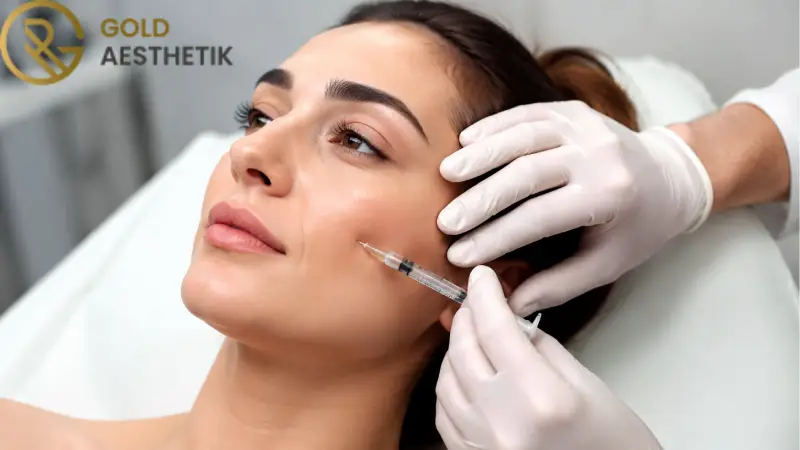
At Gold Aesthetik, the choice between cheek filler, nasolabial fold filler, or a stepwise treatment is made after assessing the face shape. The goal is not to choose a fixed area or a fixed volume for all patients; rather, the main cause is clarified and the method that preserves natural facial proportions with the smallest possible volume is selected.
Dr. Mohammadreza Hagh Dadeh, specialist in vascular surgery and aesthetic medicine, works together with the Gold Aesthetik team in Hamburg. Before treatment, facial structure, skin quality, symmetry, medical history, previous treatments, and the patient’s expectations are assessed to determine suitability and the injection area.
The Gold Aesthetik aesthetic medicine practice is located at Barmbeker Str. 40, 22303 Hamburg-Winterhude. During the consultation, you can ask about the differences between cheek filler and nasolabial fold filler, the expected extent of change, treatment limitations, possible side effects, and the aftercare plan.
If you are also researching additional contouring options with filler beyond the midface, the article Jawline contouring with filler can help you better understand the different goals of injections in various facial areas. Each region should be assessed separately and in the context of overall proportions.

