



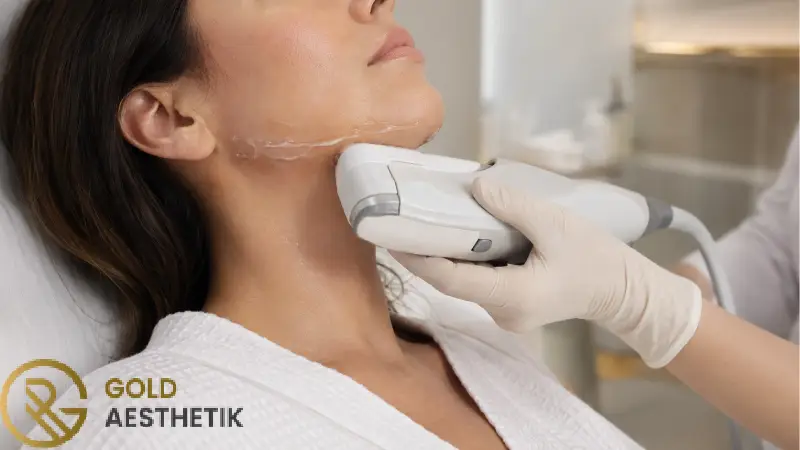
A double chin is not always solely caused by weight gain. Fat deposits under the chin, reduced skin firmness, hereditary factors, weight fluctuations, and the natural shape of the chin and jaw can all contribute to its formation. Therefore, the choice of the appropriate method to improve the appearance of a double chin should be based on its underlying cause.
HIFU, or High-Intensity Focused Ultrasound, is a non-surgical method that precisely targets specific deep tissue layers with focused ultrasound waves. In suitable individuals, this method can stimulate collagen regeneration, tighten the skin under the chin, and more clearly define the jawline. However, HIFU does not achieve the same effect for all types of double chins, and an assessment of skin condition, fat volume, and jaw structure before treatment is of great importance.
What is HIFU for the Double Chin and How Does It Help Lift the Jawline?
HIFU uses high-intensity focused ultrasound waves to deliver energy to a selected tissue depth. This energy creates controlled heat points in the target tissue without causing incisions or sutures, and can activate the natural repair and collagen regeneration process.
With the gradual increase in skin firmness, the area under the chin can appear tighter, and the boundary between the neck and jaw can become better defined. The extent of change is not the same for all individuals, and factors such as the cause of the double chin, tissue thickness, degree of skin laxity, age, skin quality, and treatment settings influence the outcome.
How Does HIFU Affect the Skin and Tissue Under the Chin?
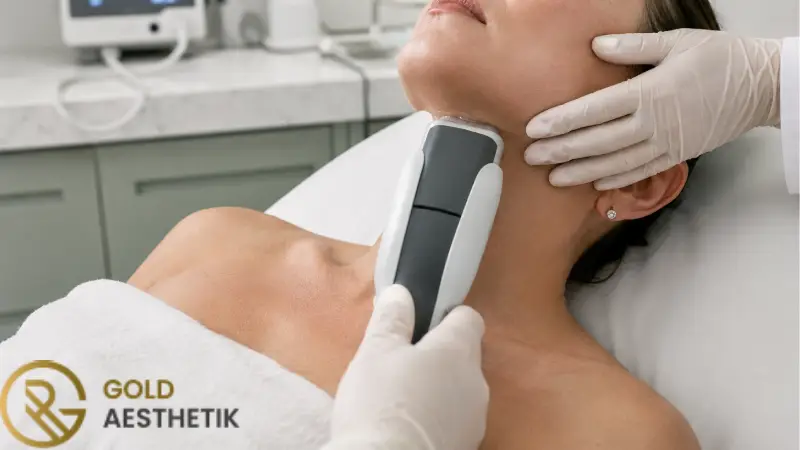
During the treatment, the physician first examines the condition of the double chin, neck, and jawline. After defining the target area, the device’s handpiece is placed on the skin, and ultrasound energy is delivered to the selected depth. The skin surface typically remains intact, and the main effect of the treatment occurs in the deeper target layers beneath the skin.
The depth and intensity of the treatment are not the same for all individuals. Tissue thickness, degree of skin laxity, treatment area, and the expected goal must be considered when selecting device settings. Correct energy settings and appropriate patient selection are crucial factors for the safety and outcome of the treatment.
| Target Area | Expected Function | Possible Result |
|---|---|---|
| Deep Skin Layers | Creation of controlled heat points | Activation of tissue regeneration process |
| Collagen-rich Tissue | Stimulation of collagen regeneration and organization | Gradual increase in skin firmness |
| Skin under the chin | Assistance in tightening lax tissue | Reduction of the appearance of a sagging double chin |
| Jawline Area | Improvement of tissue firmness around the jaw | Stronger definition of the boundary between jaw and neck |
The Role of Collagen in Tightening the Double Chin and Defining the Jawline
Collagen is one of the most important structural proteins of the skin, playing a crucial role in maintaining its firmness and elasticity. With age, natural changes in the quantity and quality of collagen can lead to a decrease in skin firmness in the face, neck, and under the chin.
HIFU can activate the tissue regeneration process by creating controlled thermal stimulation in the target layers. This process is not immediately visible, which is why a large part of the result develops gradually in the weeks and months following the treatment.
The stronger definition of the jawline is mainly due to the improvement of skin firmness and the boundary between the jaw and neck. HIFU does not alter the bone structure of the jaw or the size of the chin. If the blurriness of the jawline is more due to bone shape, a receding chin, or a large volume of fat, another method or a combined treatment plan may be more suitable.
Different Effects of HIFU on Local Fat and Skin Laxity
Not every bulge under the chin should be considered a fatty double chin. For some individuals, skin laxity is the main factor; for others, fat volume plays a larger role, and for a third group, it is a combination of fat, skin laxity, and the natural structure of the jaw and chin.
| Type of Double Chin | Dominant Feature | Potential Suitability of HIFU |
|---|---|---|
| Double chin due to skin laxity | Reduced firmness and limited skin sagging | Usually better suited for mild to moderate laxity |
| Double chin with significant fat content | Large volume of fatty tissue under the chin | HIFU alone may not achieve the desired result |
| Hereditary double chin | Natural shape of jaw, chin, or fat distribution | Requires an analysis of facial structure |
| Combined double chin | Fat in conjunction with skin laxity | A combined treatment may be necessary |
| Severe laxity | Excess and hanging skin | The effect of HIFU is generally more limited |
HIFU is considered more of a method for tissue tightening and lifting and should not be seen as a definitive substitute for specialized fat reduction methods. If the main part of the double chin consists of a large fat volume, the physician should assess whether another method better suits the patient’s primary goal.
Can HIFU completely eliminate a double chin?
The outcome depends on the cause of the double chin. In suitable individuals, HIFU can help reduce the appearance of sagging, tighten the skin under the chin, and more clearly define the jawline, but complete elimination of the double chin cannot be guaranteed.
Individuals with mild to moderate skin laxity are generally better candidates. In contrast, a large fat volume, excess skin, severe laxity, or certain bony features of the jaw and chin can limit the outcome. Therefore, realistic expectations are an important part of the decision-making process before treatment.
| Patient Expectation | Realistic Outcome | Possible Limitation |
|---|---|---|
| Tightening the skin under the chin | Possible in suitable individuals | The extent of change is individual and gradual |
| Stronger definition of the jawline | Possible through improvement of skin laxity | The bony jaw structure is not altered |
| Reduction of the appearance of a small double chin | Possible in some individuals | Depends on the main cause of the double chin |
| Removal of large amounts of fat | May have a limited effect | A specialized fat reduction method may be more suitable |
| Correction of severe laxity | The effect of HIFU is generally more limited | Another treatment option should be considered |
| Permanent elimination of the double chin | Cannot be guaranteed | Age, weight fluctuations, and skin quality influence the outcome |
The time until visible results also varies among individuals. Since part of the HIFU effect depends on gradual collagen regeneration, outcome assessment should not be based solely on the first few days after treatment. The article Longevity of HIFU and Timing of Results discusses this topic in more detail.
How is HIFU performed for double chin and jawline?
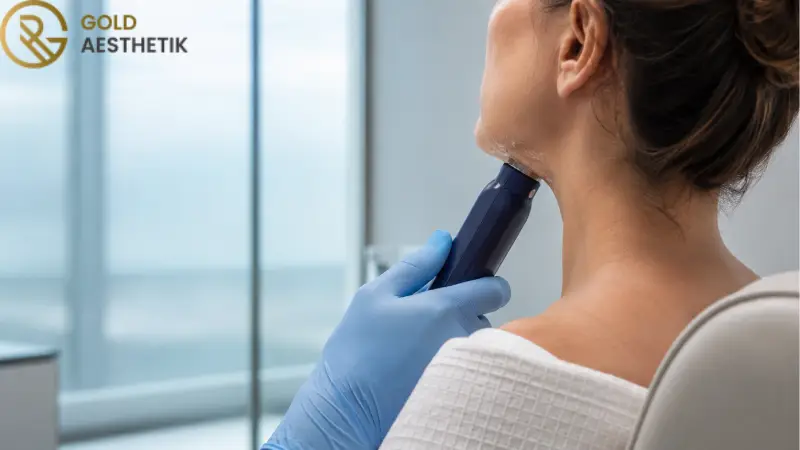
HIFU for double chin and jawline is a non-surgical treatment and is usually performed without incisions or sutures. However, being non-surgical does not mean that no examination and planning are required. The location of energy delivery, target depth, treatment intensity, and working area must be individually tailored to the person’s condition.
Before treatment, the main cause of the bulge under the chin must be determined. Sometimes the main cause is fat accumulation, sometimes skin laxity plays a larger role, and for some individuals, the jaw or chin structure also influences the appearance of the double chin.
Phase One: Examination of Double Chin, Skin, and Jaw Structure
In the first phase, the physician examines the area under the chin, the neck, and the jawline. Skin quality, degree of laxity, tissue thickness, approximate fat volume, and the symmetry of both sides of the face are factors that can influence the choice of treatment plan.
Medical history, medications taken, previous cosmetic treatments, and active skin problems should also be discussed. This information helps determine whether HIFU is the right choice or if another option should be considered.
| Step | Main Action | Goal |
|---|---|---|
| Initial Consultation | Reviewing the patient’s goal and expectations | Establishing realistic expectations |
| Double Chin Examination | Diagnosing the role of fat and skin laxity | Assessing the suitability of HIFU |
| Jaw and Chin Assessment | Analyzing facial shape and symmetry | Identifying potential limitations |
| Treatment Planning | Defining the area and target depth | Individualized execution according to conditions |
| End of Session | Reviewing skin reaction | Providing aftercare recommendations |
Phase Two: Defining Area, Depth, and Treatment Settings
After the examination, the treatment area is determined. This area may include only the chin or also parts of the jawline and neck in the plan. A larger treatment area does not necessarily mean a better result, and the selection of the area should be based on the main concern.
The depth of energy delivery and the device settings are also selected based on tissue characteristics and the treatment goal. Improper execution or the choice of unsuitable settings can both limit the treatment outcome and increase the likelihood of complications.
Phase Three: Skin Preparation and Application of a Special Gel
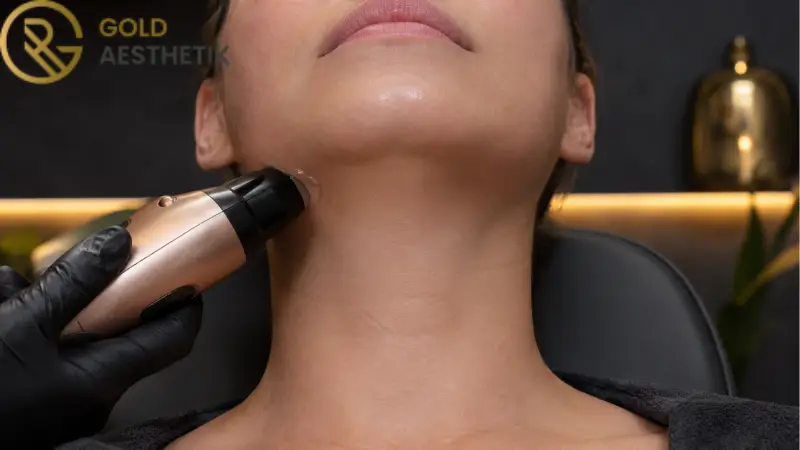
On the day of treatment, the skin in the area under the chin and jawline is cleansed, and if necessary, the target areas are marked on the skin. A special gel is then applied to the skin to ensure good contact of the handpiece with the skin surface and the correct transmission of the waves.
If there are open wounds, infections, severe inflammation, or active skin problems in the treatment area, the treatment may be postponed until recovery. The final decision should be based on the medical examination.
Phase Four: Transmission of Ultrasound Waves to the Target Points
The device’s handpiece is gradually placed on the designated points, and ultrasound energy is delivered to the target depth. This energy creates controlled heat points that can stimulate the tissue response and collagen regeneration process.
The number of pulses and the duration of the session depend on the size of the area, skin condition, device type, and treatment plan. Therefore, the treatment time is not the same for all patients.
Phase Five: Skin Examination and Post-Session Aftercare
After the treatment is completed, the gel is removed, and the skin reaction is examined. Mild redness, sensitivity, or slight swelling may occur in some individuals and are usually temporary.
Aftercare recommendations should be followed according to the skin reaction and the physician’s instructions. It is advisable not to expose the treated area to strong pressure or massages in the first few hours. If the physician has given specific recommendations regarding exercise, heat, sauna, skin products, or other activities, these instructions take precedence over general recommendations.
What Sensation Occurs During HIFU Treatment?
Individuals’ experiences vary. Some report warmth or a slight tingling sensation, and increased sensitivity may occur in areas near the jawbone. The intensity of the sensation depends on the treatment area, device settings, and individual pain threshold.
| Sensation or Sign | Possible Condition | Appropriate Action |
|---|---|---|
| Controlled Warmth | May be felt during energy delivery | Inform the physician if uncomfortable |
| Slight Tingling | May occur with some pulses | Intensity should be discussed with the physician |
| Mild Sensitivity After the Session | Temporary in some individuals | Care according to physician’s recommendation |
| Limited Redness or Swelling | Is a possible skin reaction | Observe the healing process |
| Severe or Increasing Pain | Requires examination | Contact the physician |
| Blisters, Burns, or Persistent Numbness | Not considered a normal reaction | Medical assessment required |
HIFU should not be presented as a completely pain-free or risk-free treatment. Proper patient selection, appropriate device settings, and attention to tissue reaction during the session are important factors for a safe treatment.
For Which Type of Double Chin and Which Individuals is HIFU Suitable?

HIFU can help some individuals tighten the skin under the chin and more clearly define the jawline, but not all types of double chins respond equally to this method. The suitability of the treatment is not determined solely by the visible size of the double chin.
Skin quality, degree of laxity, tissue thickness, fat volume, shape of jaw and chin, medical history, and the person’s expectations for the outcome must be assessed together.
HIFU for Mild to Moderate Skin Laxity
Individuals whose skin under the chin shows mild to moderate laxity are generally better candidates for HIFU treatment. In these cases, stimulating collagen regeneration can help increase skin firmness and make the boundary between the jaw and neck more visible.
In contrast, if there is excess skin and severe laxity, the extent of skin tightening with a non-surgical method may be limited. The physician should provide a realistic explanation of the expected outcome before treatment.
| Condition of the Double Chin | Dominant Feature | Initial Assessment |
|---|---|---|
| Mild Skin Laxity | Limited decrease in firmness under the chin | Usually better suited for HIFU assessment |
| Moderate Laxity | Visible sagging without severe excess skin | Requires examination and precise settings |
| Limited Fat Under the Chin | Small fat layer with relatively good skin | The main cause of the double chin must be investigated |
| Hereditary Double Chin | Influence of jaw shape, chin, or tissue distribution | The outcome depends on facial structure |
| Combined Double Chin | Fat in conjunction with skin laxity | A combined treatment may be necessary |
| Severe Laxity | Excess and hanging skin | The HIFU outcome is generally more limited |
HIFU for Limited Fat Accumulation Under the Chin
If a limited amount of fat is present in conjunction with skin laxity, the physician can assess the extent to which HIFU aligns with the treatment goal. However, skin tightening and fat volume reduction are two different goals and should not be considered equivalent outcomes.
For individuals with a significant volume of fat under the chin, a method that focuses more on fat reduction may be more suitable. The choice of method depends on the cause of the double chin, skin condition, medical history, and expected outcome.
Effect of HIFU on Hereditary or Weight-Related Double Chin
A hereditary double chin can occur even in individuals of normal weight. The shape of the chin, the jaw angle, and the distribution of tissue under the chin can play a role in this case. HIFU does not alter the bony jaw structure, and therefore, the outcome for a hereditary double chin depends on the main factor causing the appearance under the chin.
Weight fluctuations can also affect the appearance of the double chin. Weight gain can increase the volume of fatty tissue under the chin, and significant weight loss can be accompanied by skin laxity in some individuals. Relative weight stability can be important when assessing the appropriate timing for treatment.
Who Might Achieve Only Limited Results from HIFU?
Individuals who expect complete elimination of the double chin or a surgery-like result in one session may not have realistic expectations for this method. Severe laxity, significant excess skin, a large fat volume, or certain structural features of the jaw and chin can limit the extent of change.
In such cases, the goal of the consultation is to determine, before starting treatment, whether HIFU alone meets the person’s needs or if another option should be considered.
Who should not undergo HIFU without medical assessment?
Before HIFU, medical history and skin condition should be reviewed. Open wounds, infections, or active inflammation in the treatment area may lead to the session being postponed. The presence of certain medical devices or implants near the treatment area should also be communicated to the physician before HIFU treatment.
Pregnancy, certain underlying medical conditions, clotting disorders, and the use of certain medications also require a medical examination. The presence of these conditions does not necessarily mean an absolute contraindication to treatment, but a decision without medical information is not advisable. No prescription medications should be discontinued on one’s own initiative to undergo the treatment.
Do Age or Skin Type Affect HIFU Results?
Age alone is not a decisive factor for HIFU suitability. Two individuals of the same age can have different conditions regarding skin quality, collagen quantity, fat volume, and degree of laxity. An actual assessment should be based on the condition of the tissue, not just the age number.
Skin color alone is also not a primary criterion for choosing HIFU, but skin health, the presence of inflammation or wounds, previous treatments, and the person’s general condition must still be reviewed.
| Influencing Factor | Possible Impact on Outcome | Assessment Note |
|---|---|---|
| Age | Tissue regeneration capacity can vary with age | Skin quality is more important than age number |
| Degree of Skin Laxity | Mild to moderate laxity is generally more suitable | Severe laxity can limit the outcome |
| Fat Volume | A lot of fat can reduce the visible lifting effect | The main cause of the double chin must be determined |
| Shape of Chin and Jaw | Influences the clarity of the jawline | HIFU does not alter bone structure |
| Weight Fluctuations | Can affect the appearance and longevity of the outcome | Relative weight stability is important |
| Lifestyle | Factors like sun and smoking affect skin quality | The outcome does not depend solely on the treatment session |
Ultimately, the suitability of HIFU for the double chin must be determined through an individual examination. This assessment helps the person approach the treatment with realistic expectations, and if HIFU does not sufficiently suit their conditions, to consider a more appropriate option.
HIFU for Double Chin at Gold Aesthetik Hamburg
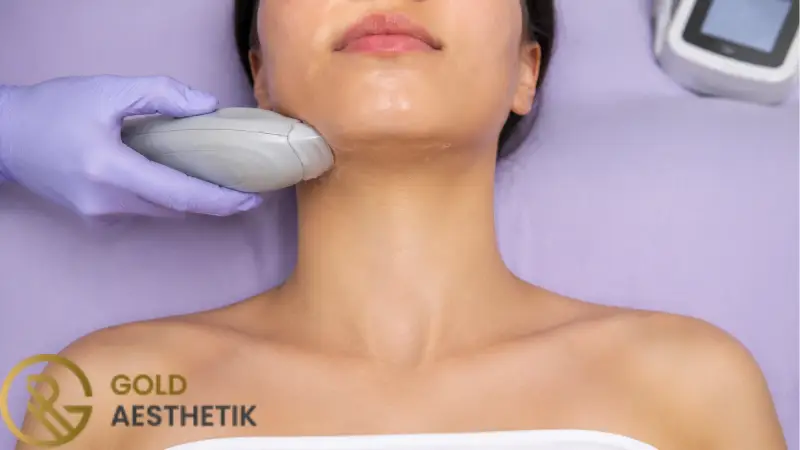
If a double chin, sagging skin under the chin, or an undefined jawline has led you to consider treatment, the first step should be to identify the main cause of this change. At Gold Aesthetik, skin condition, volume of tissue under the chin, jaw and chin structure, medical history, and the person’s expectations for the treatment are reviewed before choosing a method.
Dr. Mohammadreza Haghdadeh, a specialist in vascular surgery and active in the field of aesthetic medicine, along with the Gold Aesthetik team, follows a patient-centered approach to treatment assessment. The goal is to suggest HIFU only when it meets the person’s needs and conditions, and to provide a clear explanation of the limitations and expected outcome.
The Gold Aesthetik practice is located at Barmbeker Str. 40, 22303 Hamburg-Winterhude. To check the suitability of HIFU for double chin and jawline, you can arrange a consultation appointment via the Gold Aesthetik contact page.

