



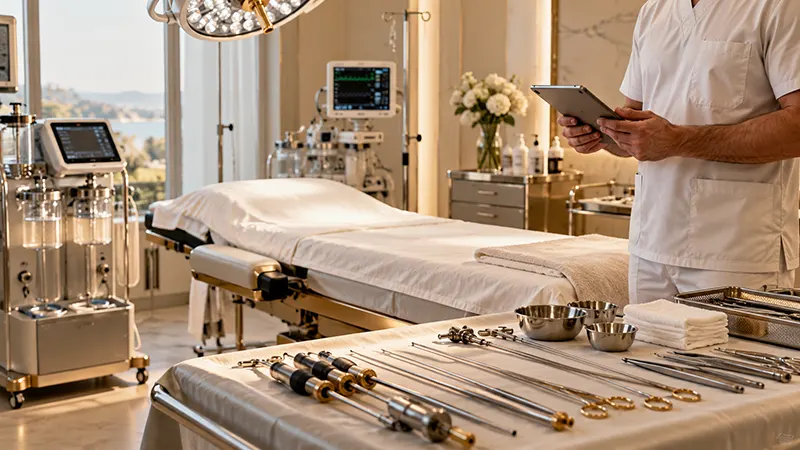
GOLD AESTHETIK · HAMBURG-WINTERHUDE
Liposuction in Hamburg – Body Contouring
Liposuction is a surgical procedure that removes selected deposits of fat beneath the skin to change body contours. Learn about suitability, treatment options, risks, recovery and costs before discussing your situation with a qualified clinician.
- Individual medical assessment
- Clear information about risks
- Consultations in Hamburg
Understanding the treatment
What is liposuction, and what can it achieve?
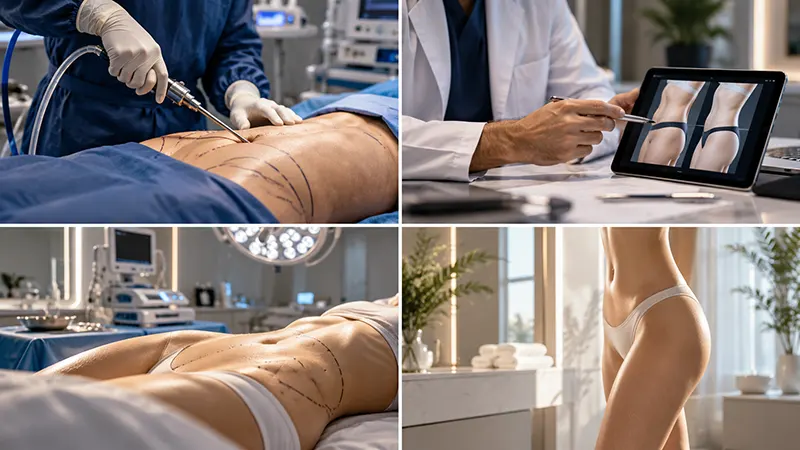
During liposuction, subcutaneous fat is removed through small incisions using suitable suction cannulas. The aim is to change the contours of selected areas. Liposuction does not treat obesity or the underlying causes of excess weight.
It may be considered for localised fat deposits in people whose weight is reasonably stable. The degree of change depends on fat distribution, anatomy, skin elasticity and the individual healing process. A particular cosmetic result cannot be guaranteed.
Important limitations: Liposuction does not remove visceral fat deep inside the abdomen. It also cannot reliably correct significant excess skin, cellulite or stretch marks. Alternative or additional treatment may be more appropriate.
Possible treatment areas
Which parts of the body can be assessed for liposuction?
The decision to treat any area requires a clinical examination. These are examples of areas that may be considered, rather than a promise of suitability.
Abdomen and waist
Localised fat may be assessed separately from loose skin and abdominal muscle separation.
Hips and flanks
A clinician assesses fat distribution alongside overall body proportions.
Thighs
The inner and outer thighs are potential areas; skin quality is particularly relevant.
Upper arms
Localised fat may be assessed, but liposuction alone has limitations when the skin is loose.
Back and torso
Suitability depends on anatomy, tissue characteristics and operative risk.
Chin and neck
Small deposits beneath the chin require particular care around nearby structures.
Suitability and safety
Who may be a suitable candidate for liposuction?
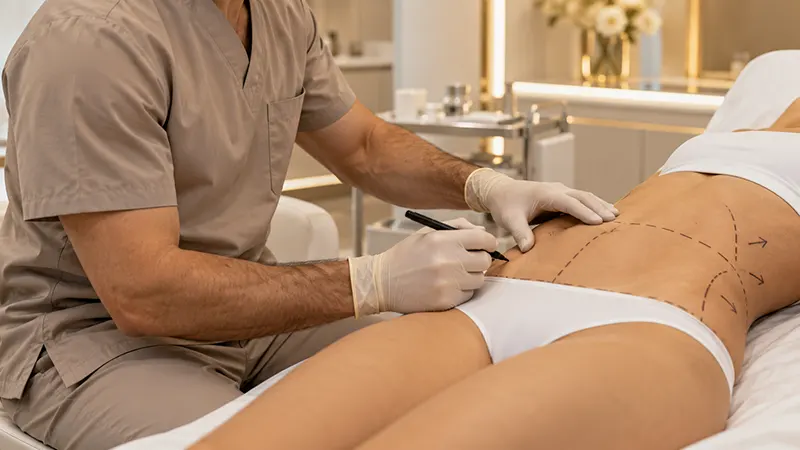
Potential candidates often have localised fat deposits, relatively stable weight and realistic expectations. The clinician also considers overall health, skin elasticity and how much tissue might need to be removed.
Poorly controlled medical conditions, a high surgical risk or unrealistic expectations may make cosmetic liposuction unsuitable. Only an individual assessment can establish the balance of possible benefit and harm.
Lipoedema is a separate medical condition. It requires its own diagnosis and treatment pathway; it must not be equated with a purely cosmetic liposuction procedure.
- Medical history, long-term conditions and prior surgery
- Medications, blood clotting and individual risk factors
- Fat distribution, skin quality and intended contour
- Alternatives, anaesthesia and postoperative support
Before treatment
How should you prepare for a liposuction consultation?
You should disclose existing illnesses, allergies, previous surgery, regular medication and possible bleeding or clotting problems. Any required examinations will be determined by the treating team.
Do not stop or change prescribed medicines on your own. This includes blood thinners. Tell your clinician about over-the-counter painkillers, supplements, smoking and nicotine use.
Before consenting, clarify who will perform the operation, where it will take place, the anaesthetic plan, what happens in an emergency, and how follow-up care will be arranged.
The treatment pathway
What happens during liposuction?
The actual procedure varies with the treatment area, planned extent and the person’s medical condition.
- 01
Assessment and consent
Your concerns, examination findings, alternatives, risks and suitability are discussed.
- 02
Individual plan
The area, technique, anaesthesia, operating facility and aftercare are agreed.
- 03
Surgical procedure
Following preparation, subcutaneous fat is removed using cannulas. Time and extent vary.
- 04
Recovery and review
Wound care, mobility, any prescribed compression garment and follow-up visits are explained.
Surgical techniques
What types of liposuction are available?
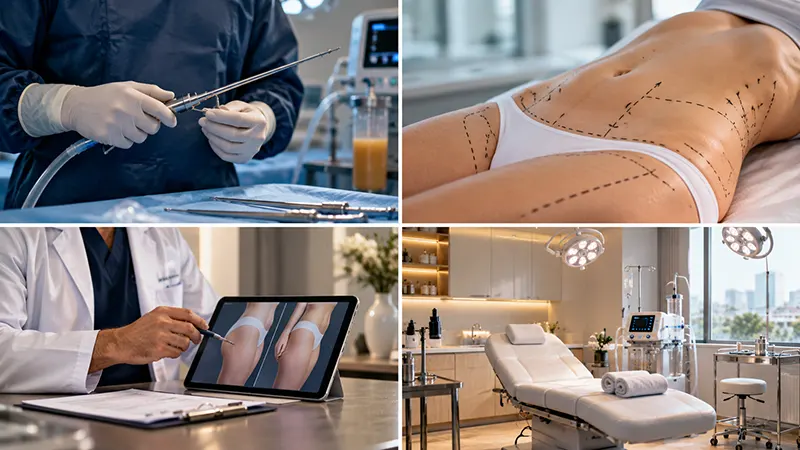
Several technical approaches exist. Selection depends on the clinical indication and the operating team’s expertise. Not every method is available at every provider.
Tumescent technique
Fluid is introduced into the tissues before suction. The form of anaesthesia is chosen to suit the procedure and patient.
Power-assisted liposuction (PAL)
Mechanically moving cannulas assist fat removal; suitability is assessed individually.
Water-assisted liposuction (WAL)
A directed water jet helps loosen tissue in some techniques. This does not establish that it is universally superior.
Patient safety
What are the possible risks and side effects?
Liposuction is surgery. Complications can occur despite appropriate care, and no specific outcome or complication-free recovery can be guaranteed.
Common temporary effects
Swelling, bruising, discomfort, tenderness and temporary changes in sensation can occur.
Contour and tissue problems
Uneven contour, asymmetry, loose skin, scars or persistent numbness may occur.
General surgical complications
Bleeding, infection, delayed wound healing, allergic reactions and complications related to anaesthesia are possible.
Rare but serious events
Deep vein thrombosis, pulmonary embolism, fat embolism, damage to deeper structures and fluid-balance complications, including pulmonary oedema, can occur.
Aftercare and healing
How long does recovery take after liposuction?
Recovery depends on the extent of surgery, the body area, your health and the type of physical activity involved in work or sport. This is general guidance only.
| Period | General guidance |
|---|---|
| First few days | Rest balanced with clinician-advised gentle movement, wound checks and monitoring for unusual symptoms. |
| Following weeks | Wear compression garments if prescribed. Increase activity and return to exercise only as advised. |
| Subsequent months | Swelling may take time to settle. The final body contour often cannot be assessed for several months. |
Understanding your options
Liposuction or fat-dissolving injections: what is the difference?
Injection lipolysis and surgical liposuction are different procedures. An individual benefit-risk assessment is needed to determine whether either approach is appropriate.
| Feature | Liposuction | Injection lipolysis |
|---|---|---|
| How it works | Surgical suction of subcutaneous fat | Injection of a suitable active substance |
| Usual scope | Localised, potentially larger fat deposits | Generally smaller, well-defined deposits |
| Recovery | Surgery with postoperative care | Injection treatment with local and other possible side effects |
| Limitations | Not a weight-loss treatment | Not an equivalent substitute for surgery |
An important distinction
Cosmetic liposuction is not the same as treatment for lipoedema
Lipoedema is a distinct condition that requires medical diagnosis. Surgical treatment for lipoedema follows different indications and quality requirements from a procedure undertaken solely for cosmetic contouring.
In Germany, liposuction for diagnosed lipoedema can be covered by statutory health insurance when defined clinical and quality-assurance requirements are met. This is not automatic for every person or provider and does not apply to purely cosmetic procedures.
Planning and pricing
How much does liposuction cost in Hamburg?
A reliable quote requires an individual assessment. Costs depend on the number and size of treatment areas, technique, anaesthesia, operating venue and postoperative support.
Treatment extent
The number, size and anatomical characteristics of selected areas.
Surgery and anaesthesia
Method, theatre time, qualified staff and any monitoring required.
Aftercare and possible extra costs
Appointments, compression garments, additional services and potential complication-related costs.
A responsible decision
Medical guidance and a clearly defined treatment plan

Gold Aesthetik is based in Hamburg-Winterhude. The practice website introduces Dr. (IR) M. Haghdadeh as a specialist in vascular surgery. This does not establish who would personally perform liposuction surgery.
Before proceeding, please confirm whether the operation is offered, who the responsible surgeon is, where it takes place, and how anaesthesia, follow-up and emergency arrangements are organised.
Frequently asked questions
Liposuction in Hamburg: FAQs
Can liposuction help me lose weight?
No. It is a body-contouring procedure, not a treatment for obesity or a replacement for comprehensive weight management.
Which areas of the body can be treated?
Possible areas include the abdomen, flanks, thighs and upper arms, but suitability requires individual examination.
When can I return to work and exercise?
Timing depends on the procedure, your occupation and how you recover. Resume more demanding activity only when your clinician approves.
Will I have scars?
Small skin openings can leave scars; their appearance varies from person to person.
Are the results permanent?
The number of fat cells in treated areas is reduced, but weight changes and ageing can alter the contour afterwards.
What serious complications should I know about?
Rare risks include blood clots, embolism, injuries to deeper structures and fluid-related complications, alongside bleeding and infection. Individual counselling is essential.
Does health insurance cover lipoedema surgery?
Under specific medical and quality-assurance conditions, German statutory health insurance may cover it. Cosmetic liposuction is generally not covered.
Does Gold Aesthetik perform the surgery on-site?
The availability of surgery, the responsible operating surgeon and the treatment location must be confirmed with the practice. This information page is not a guarantee that surgery is provided on-site.
Your next step
Considering liposuction in Hamburg? Start with informed questions.
Contact Gold Aesthetik to discuss medical assessment, treatment availability, risks, costs and the responsible clinician. Barmbeker Str. 40 · 22303 Hamburg-Winterhude.
